
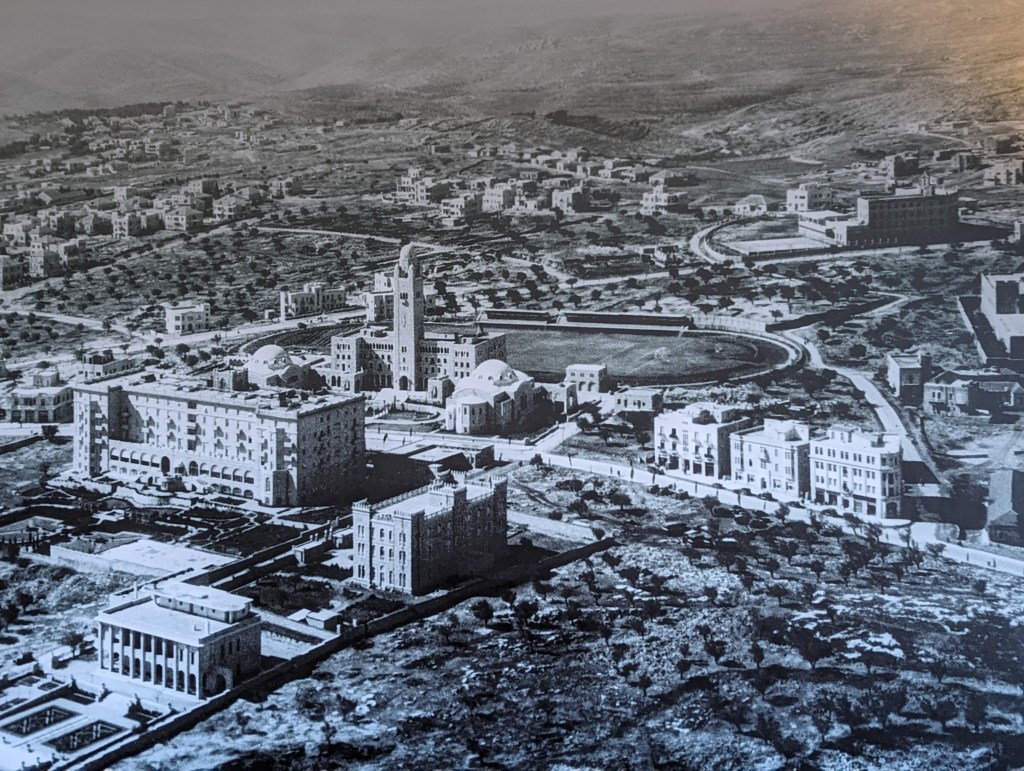
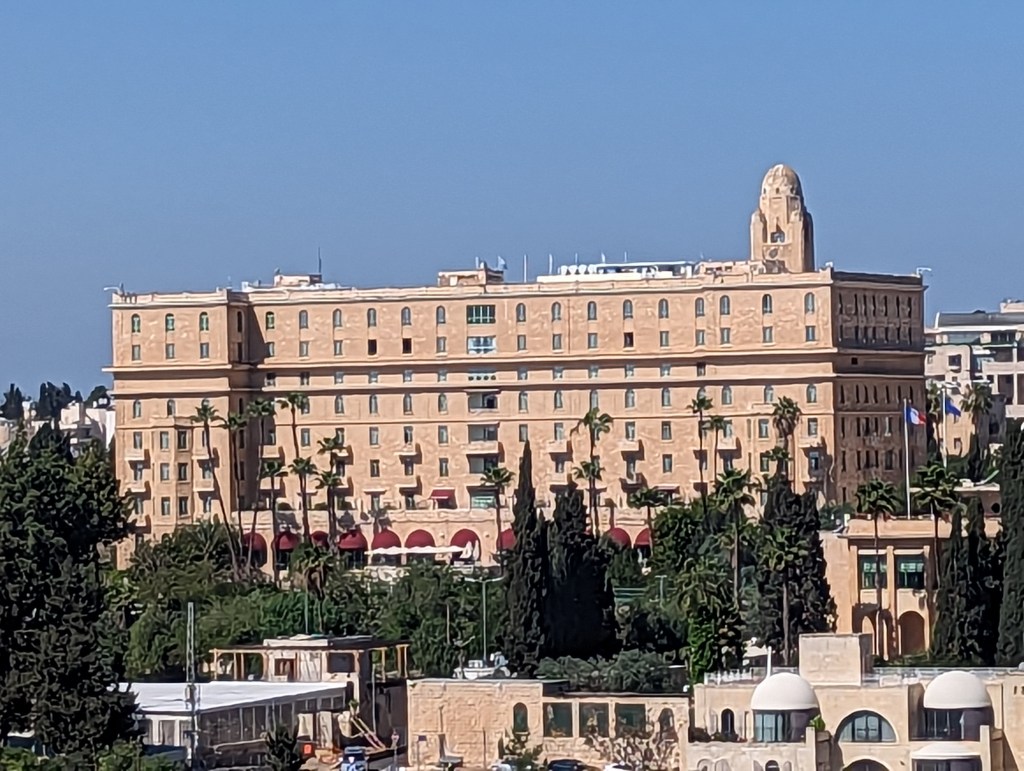
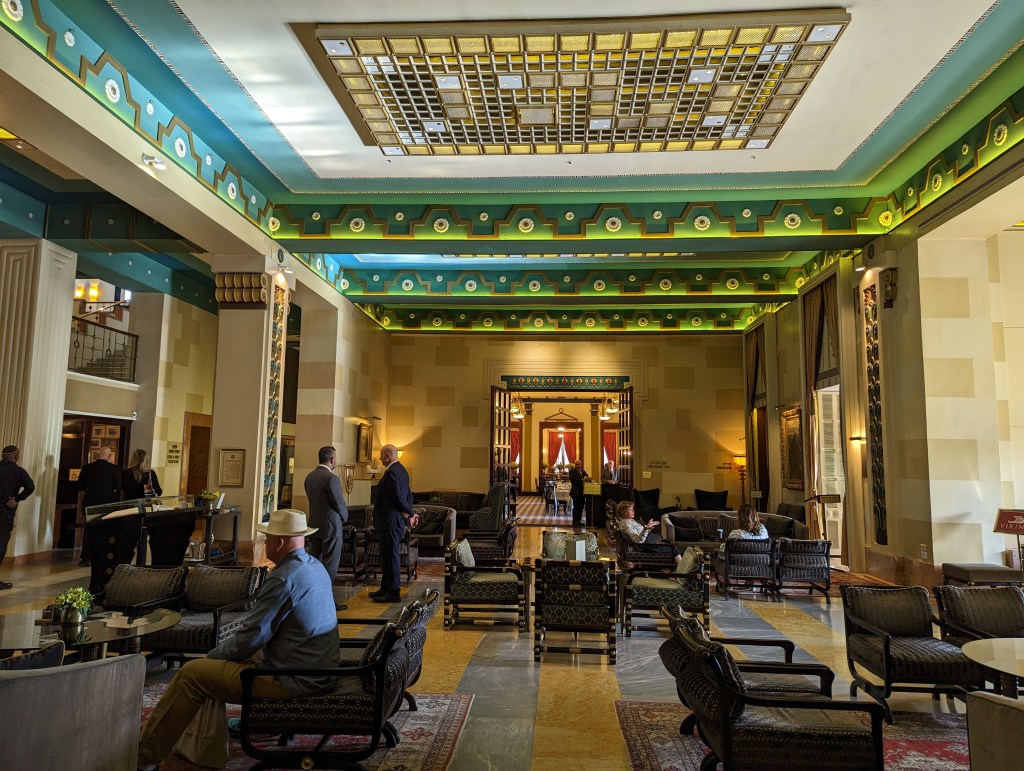
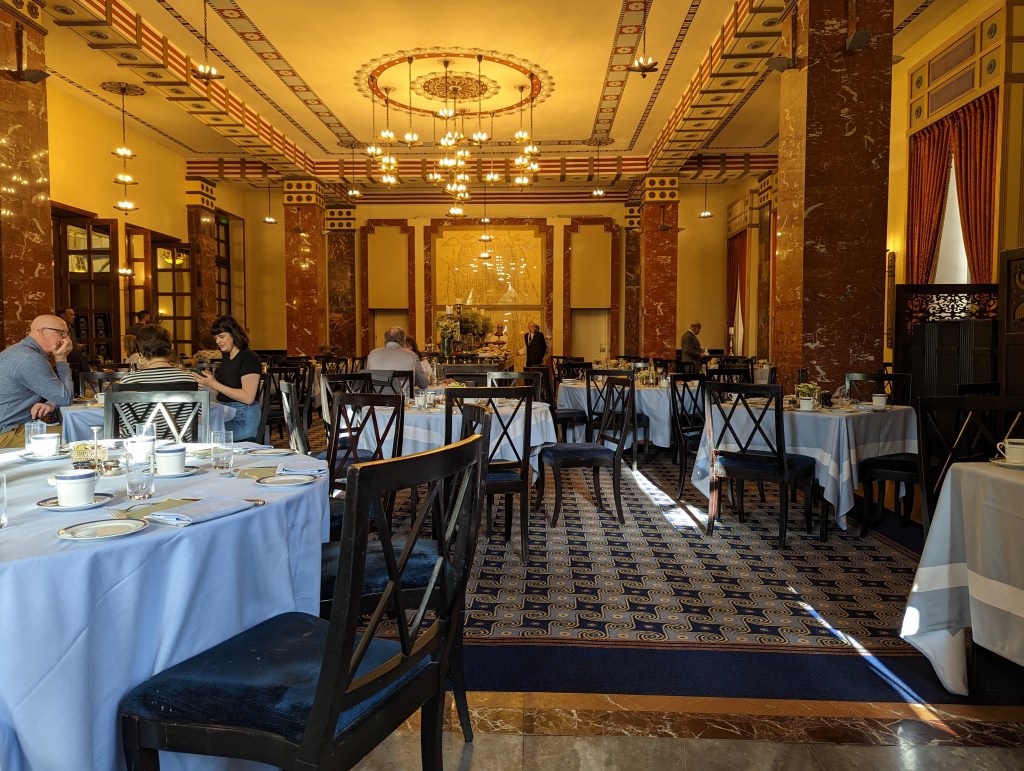
Our 20-day Viking tour began in Jerusalem where we stayed for 4 days at the King David Hotel, which is an historic hotel built in 1931, situated in the center of Jerusalem. Turns out we happened to be in Jerusalem during the rare—every 30 years— convergence of Ramadan, Passover and Easter. So, needless to say, there were crowds throughout the city. Our local guide took us to all the major Christian and Judaic sights. We also traveled by bus to Bethlehem which is in the West Bank, Palestine.

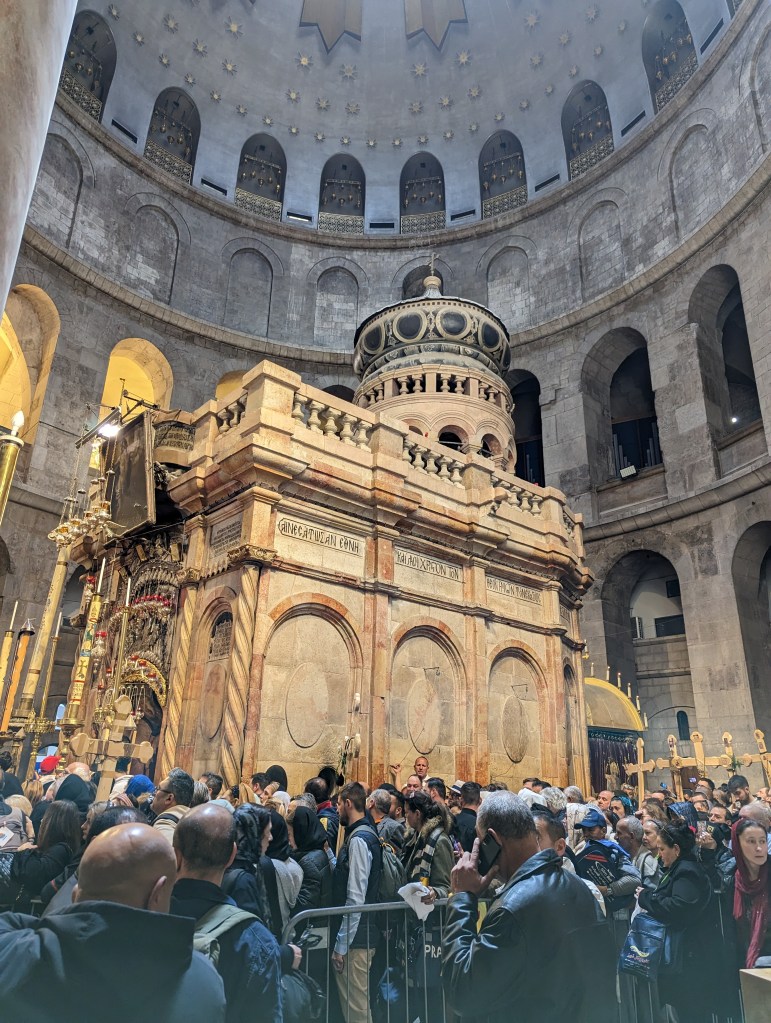
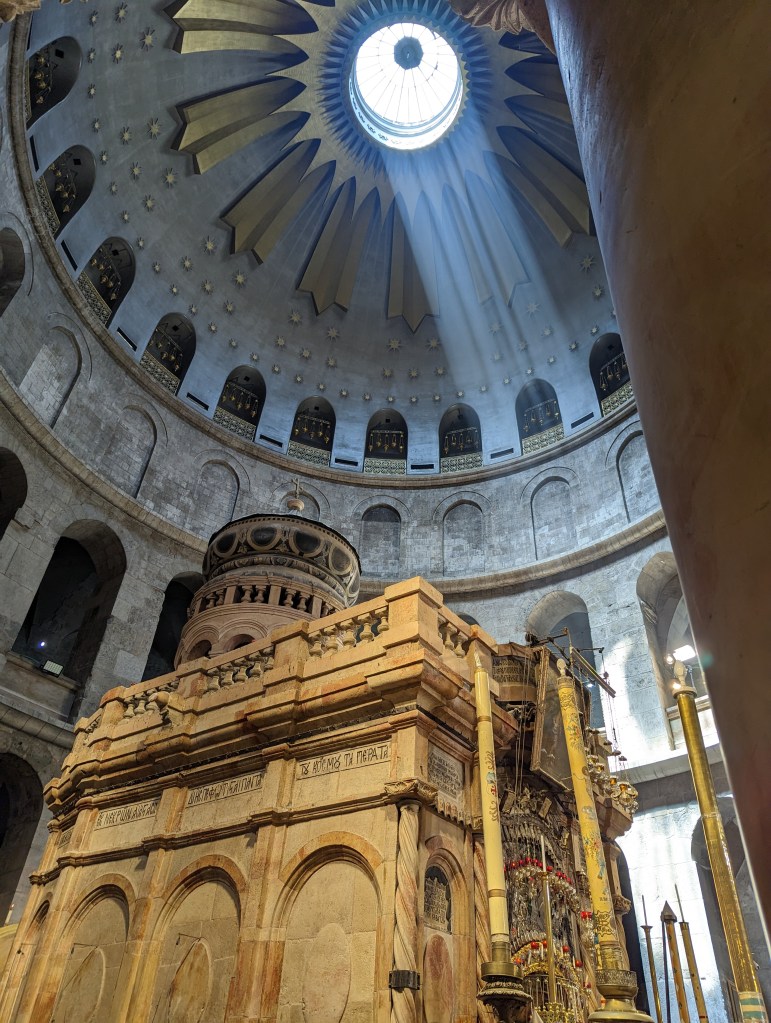
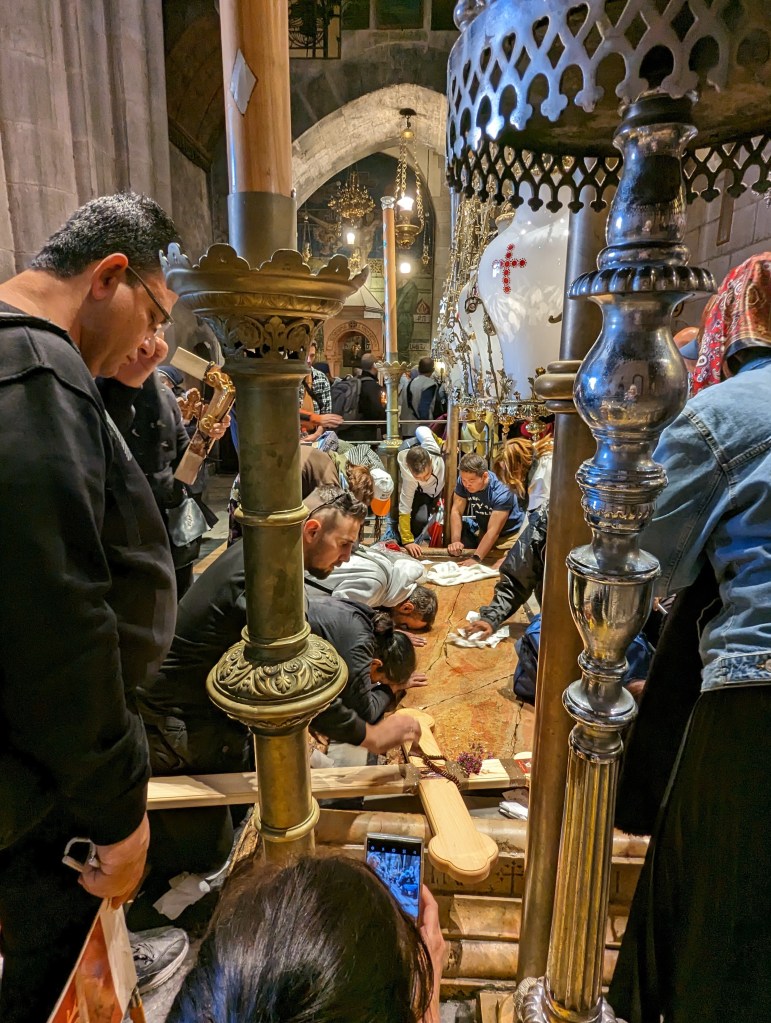
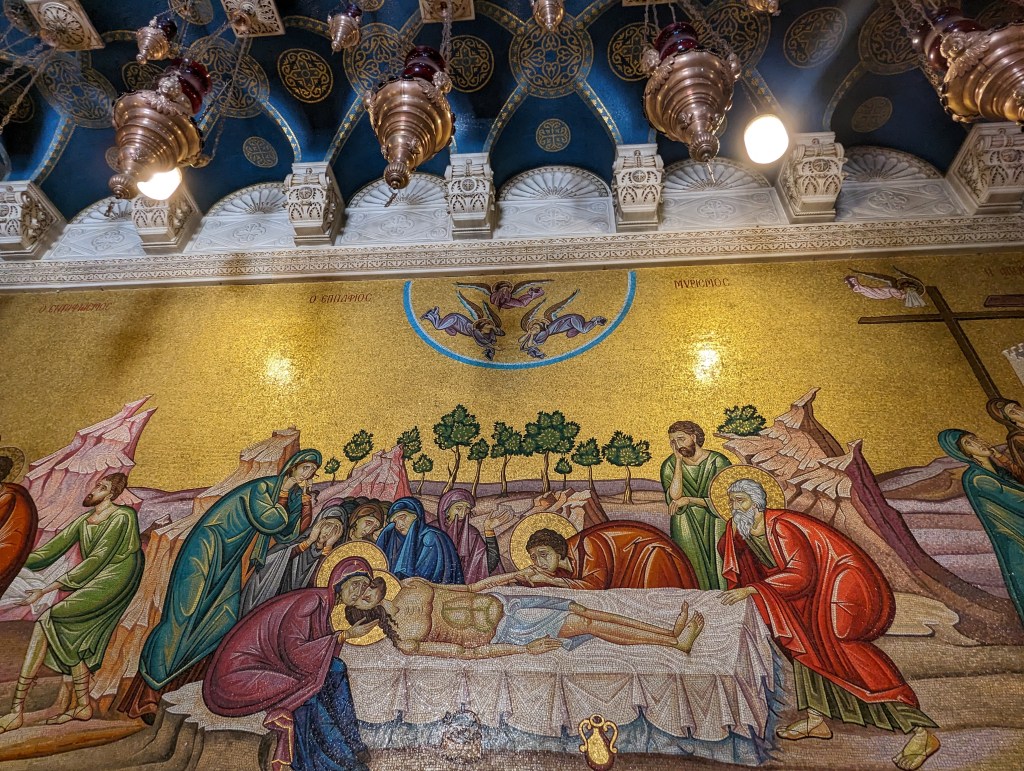
One of the highlights was visiting the CHURCH OF THE HOLY SEPULCHRE, which is built on the holiest Christian site of Jesus’ crucifixion, entombment and resurrection. Control of the church is shared among several Christian denominations—Roman Catholic, Greek Orthodox, Armenian Apostolic, Coptic, Syriac, and Ethiopian Orthodox. And I’d say we mingled with most of them while we were there. All sorts of traditional garb, and a cacophony of foreign voices, chanting and praying.



The DOME OF THE ROCK is the Islamic shrine at the center of the Al-Aqsa compound on the Temple Mount in the Old City of Jerusalem. It’s situated on top of the site of the Second Jewish Temple (516 BCE). It is the world’s oldest surviving work of Islamic architecture (685-91). It is built on top of the Foundation Stone which is sacred to both Jews and Muslims. For Muslims, its significance is tied to the creation of the world and the belief that Muhammad’s journey to heaven began from the rock at the center of the structure. It is the third holiest site in Islam, after Mecca and Medina. For Jews, it is believed the rock is where Abraham attempted to sacrifice his son, and as the place where God’s divine presence is manifested more than in any other place, towards which Jews turn during prayer.

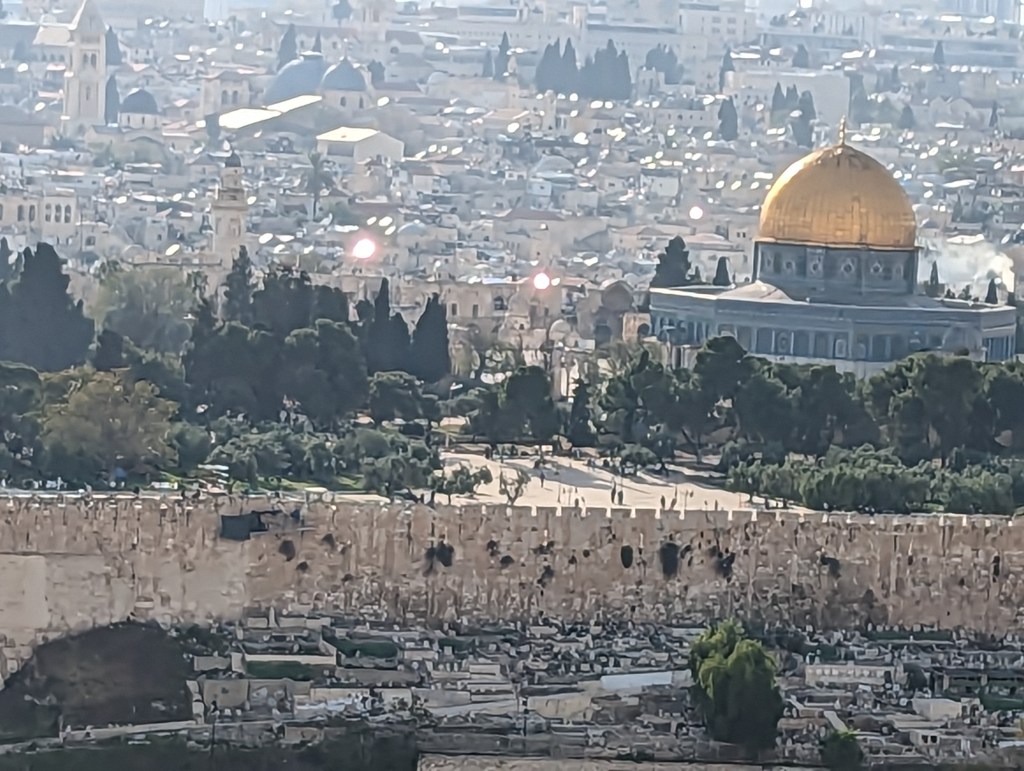
MUSLIM QUARTER: Covers 77 acres of the walled Old City of Jerusalem. The Via Dolorosa starts in this quarter. The quarter had a mixed populations of Jews, Muslims and Christians until the 1929 Palestine riots. Some 60 Jewish families now live here:
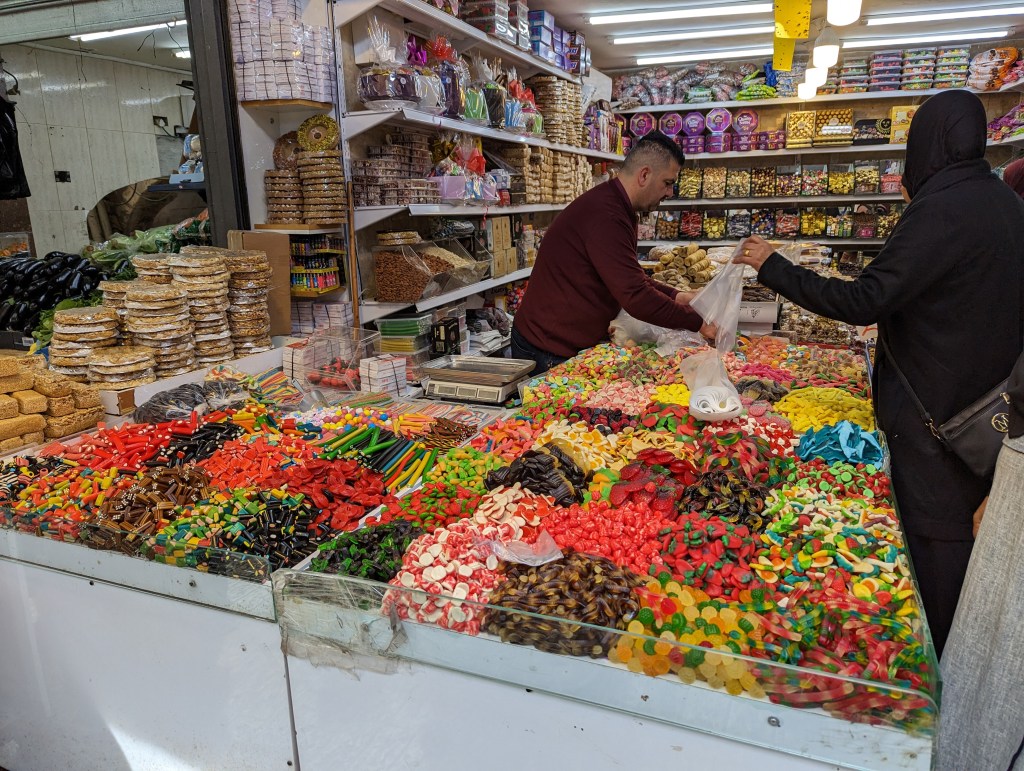

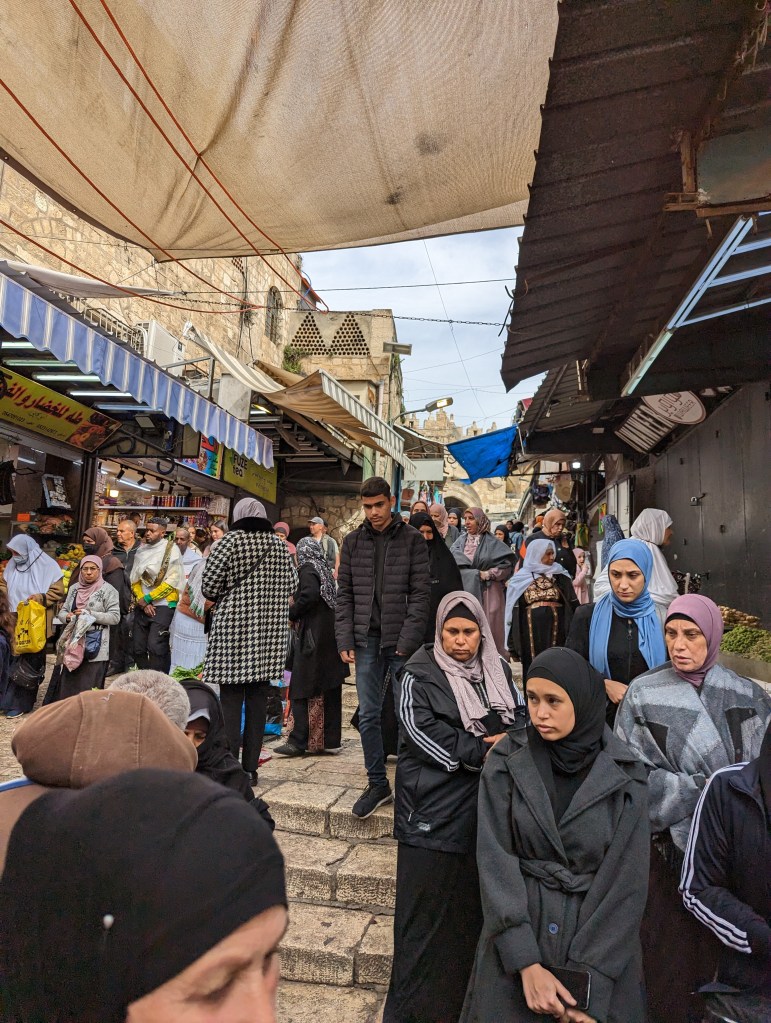
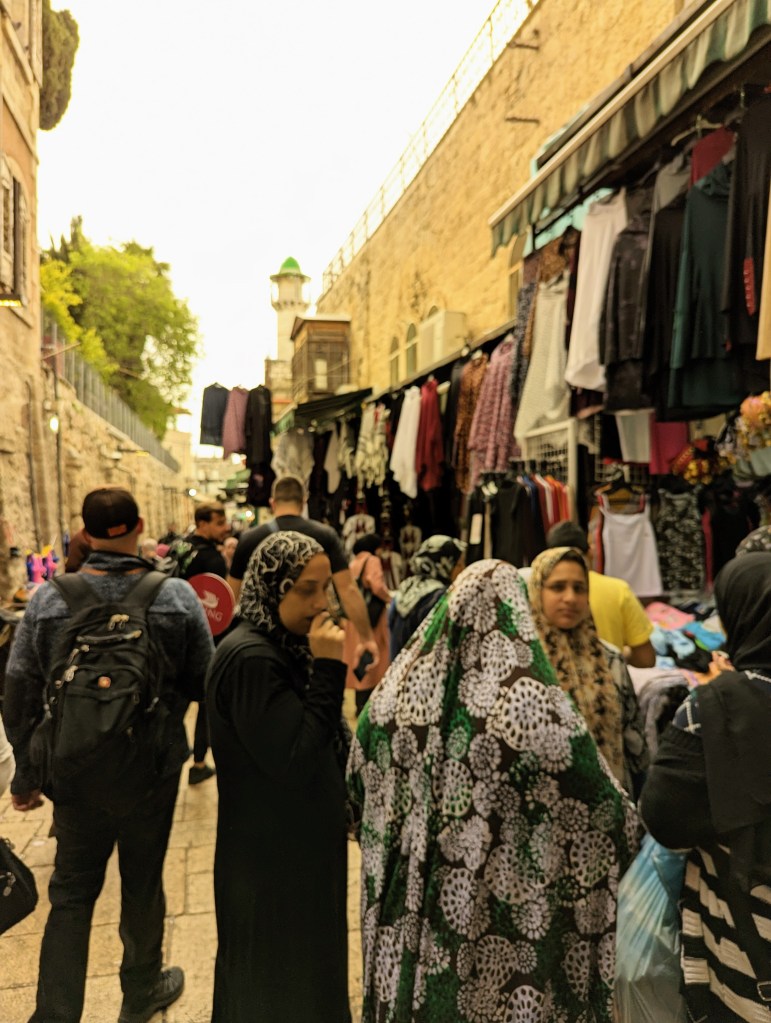
VIA DOLOROSA (“Sorrowful Way”) is the route through the Old City of Jerusalem that is believed to be the path Jesus walked to Golgotha where he was crucified. There are 14 Stations of the Cross, beginning where Jesus was condemned to death, and ending where he was laid in the tomb.


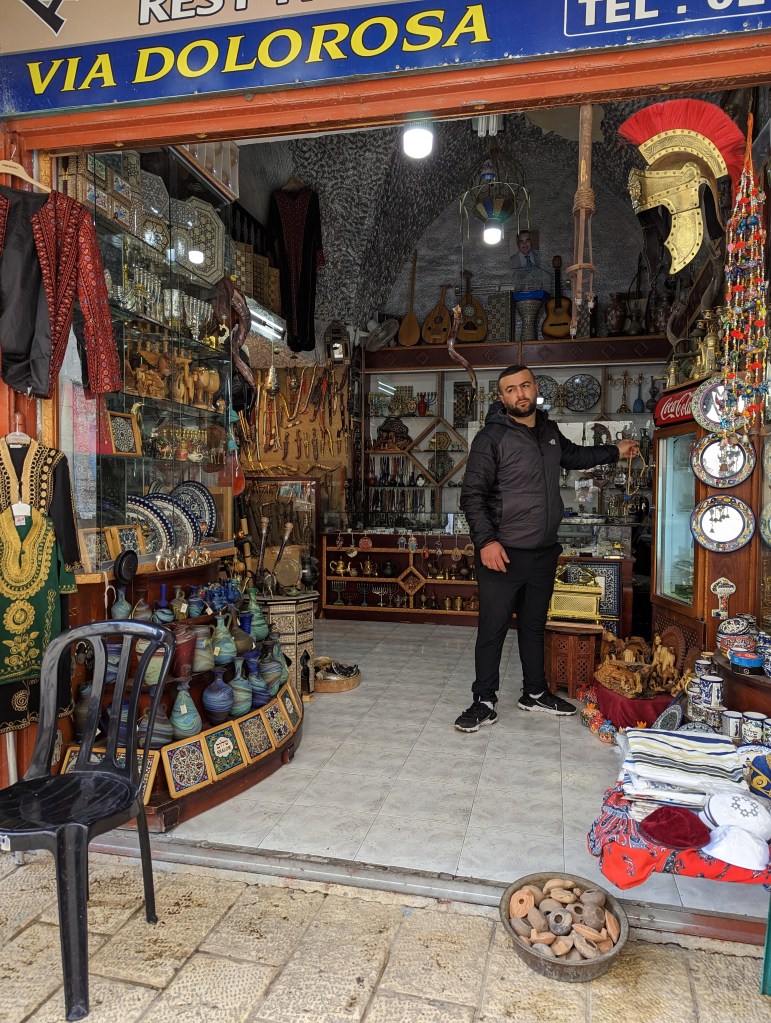
WESTERN WALL (WAILING WALL) is a remnant of the retaining wall of the Temple Mount, where King Solomon built the First Temple of the Jews over 2,000 years ago. It is a place of prayer and pilgrimage, and is the most holy site in the Jewish faith. It is part of the larger wall that surrounds the Al-Aqsa compound.

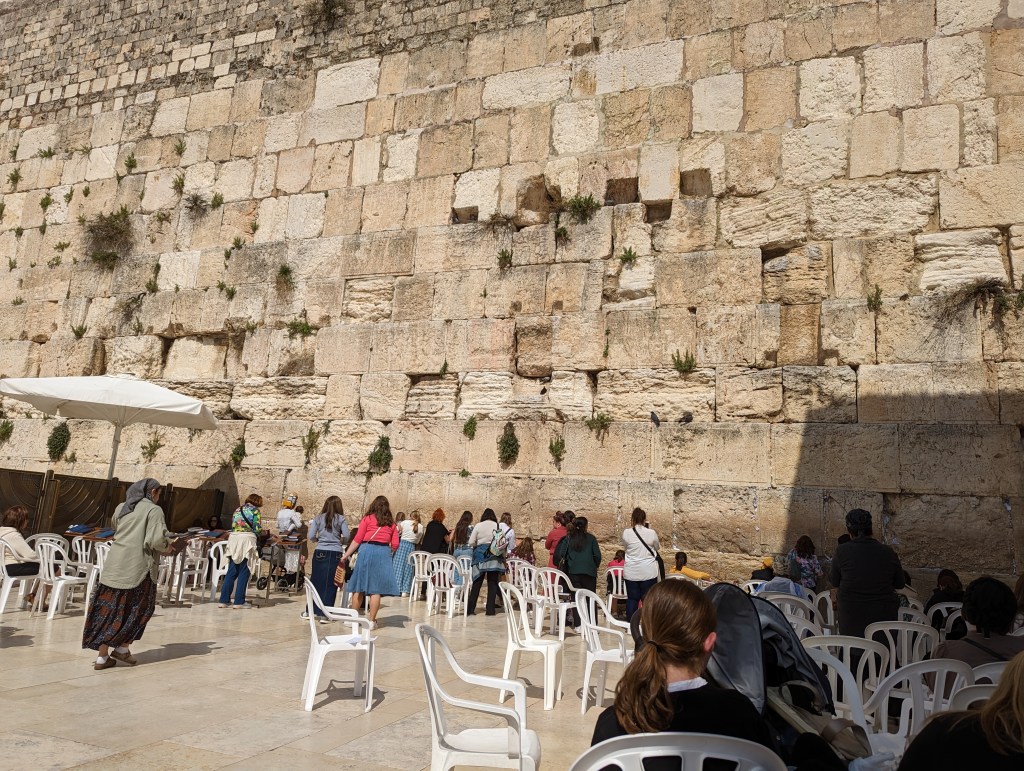

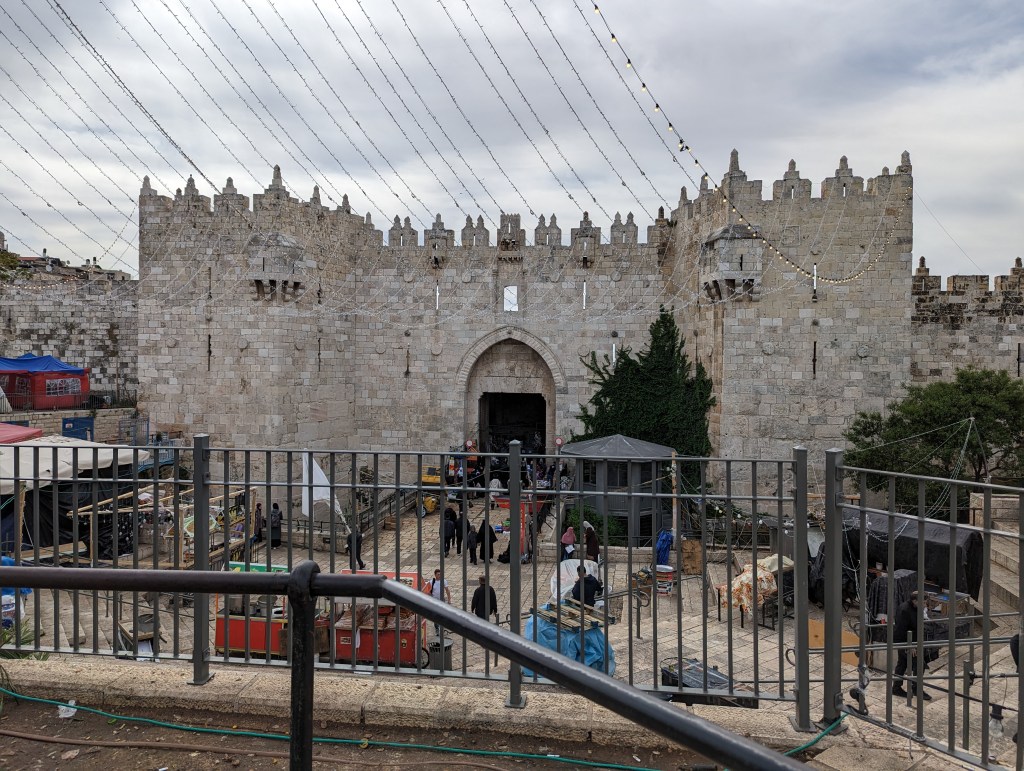
OLD CITY GATES: The current walls (1533-40) enclosing the Old City have 8 gates. Four of old Jerusalem’s gates are no longer open.
GOLDEN GATE: In Jewish tradition, the Messiah will enter Jerusalem through this gate to raise the dead. Christians and Muslims believe this was the gate through which Jesus entered Jerusalem coming down from the Mount of Olives. It was sealed in the Middle Ages.

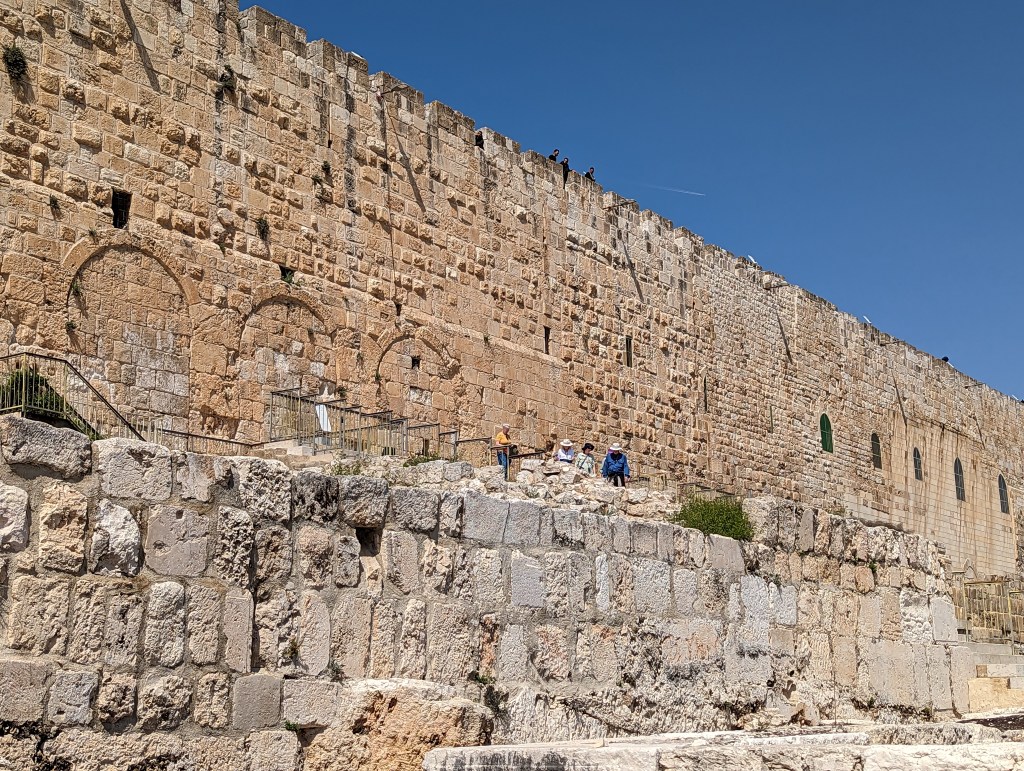
DAMASCUS GATE: The main entrance to the Old City. Underneath, remains of a gate dating to the Roman rule of Hadrian (2nd century AD) have been discovered and excavated. HULDAH GATES: Jesus visited the Temple in Jerusalem many times during that final week of the Passover feast. He and other visitors would have ascended the Temple courtyard from the southern steps through the Huldah Gate. Due to excavations in 1968 below the southern wall, we were able to walk on the same steps Jesus did.
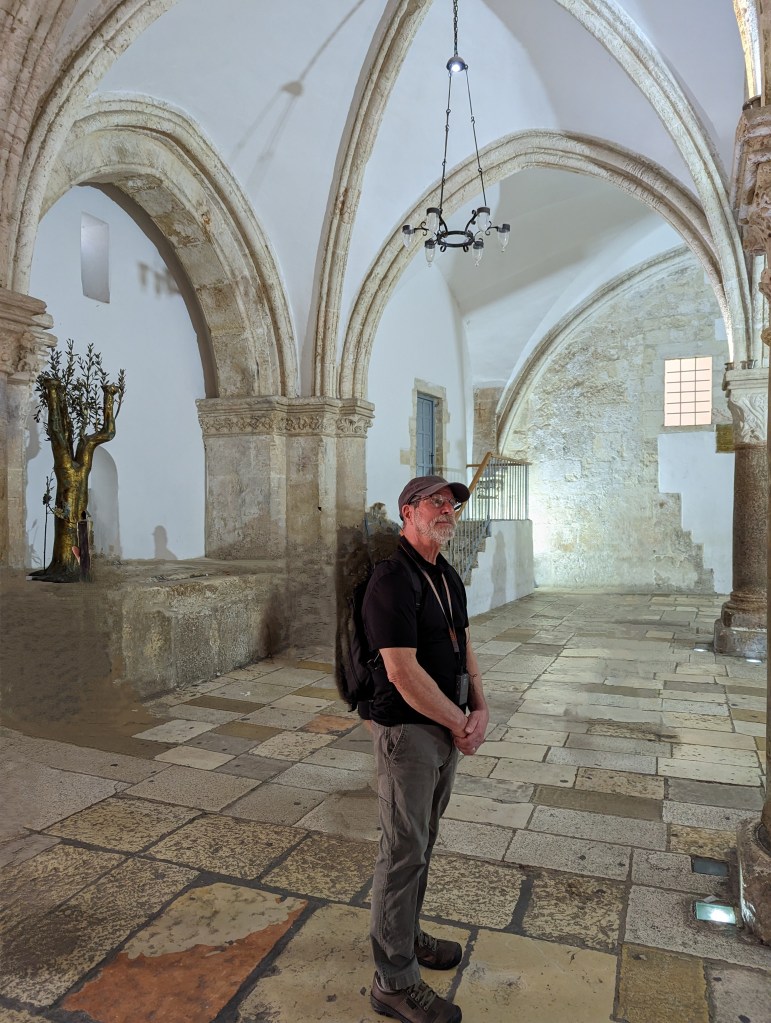
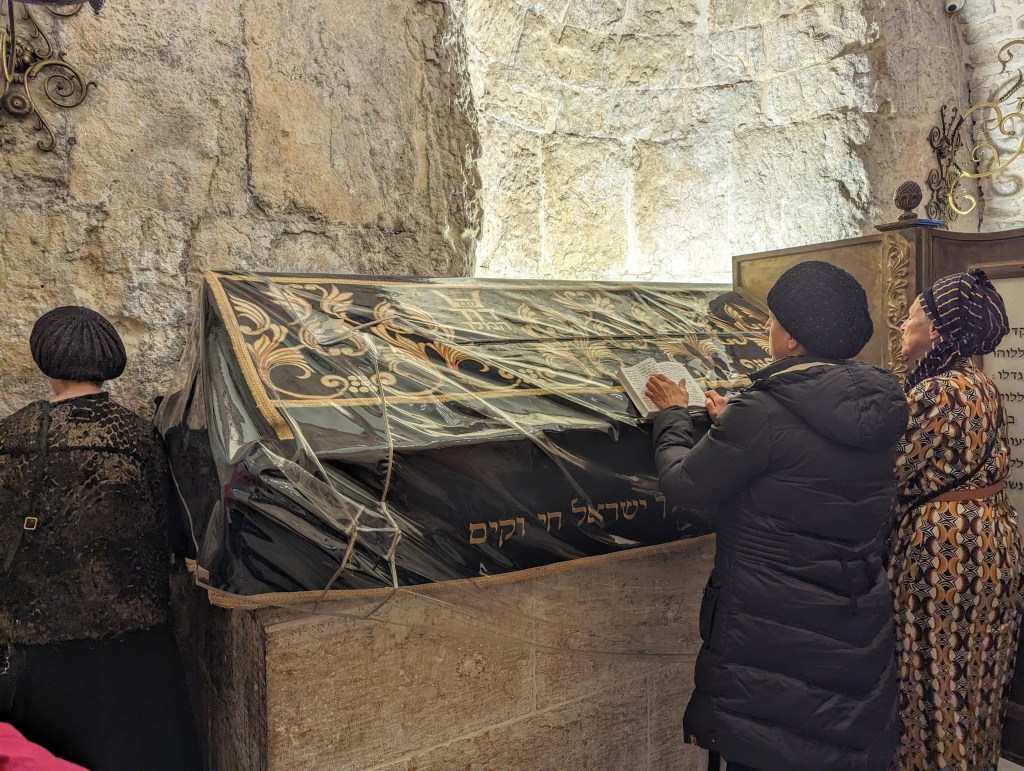
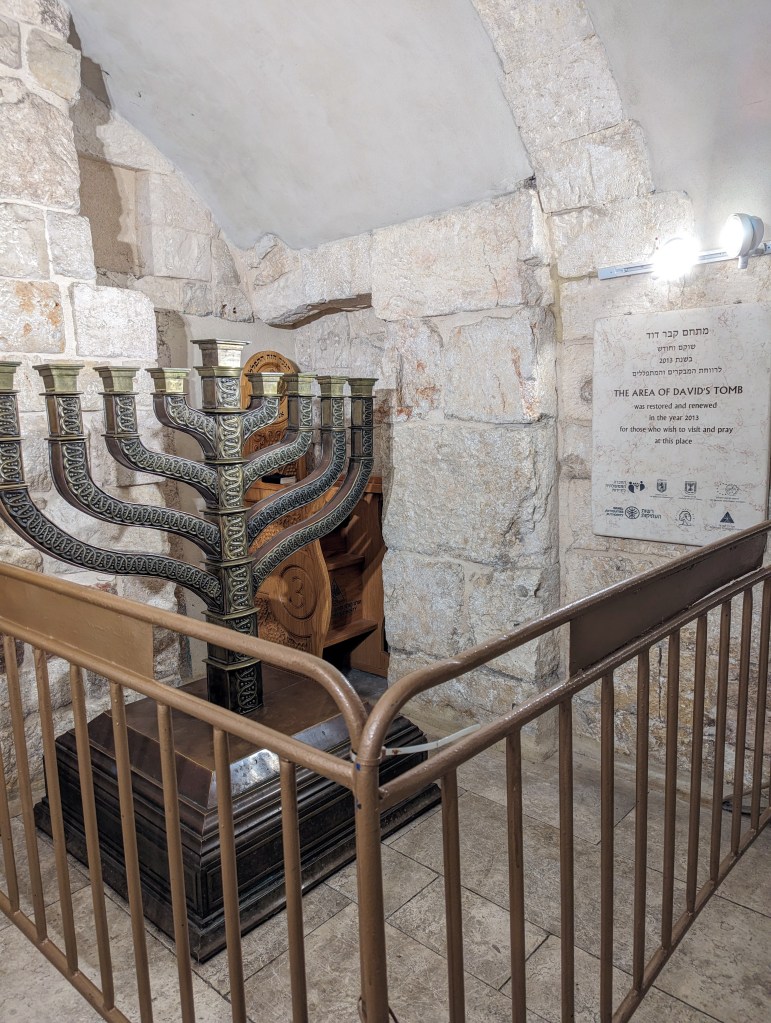
THE ROOM OF THE LAST SUPPER (THE CENACLE) and KING DAVID’S TOMB (MOUNT ZION): According to Christian tradition, both are located in the same building:
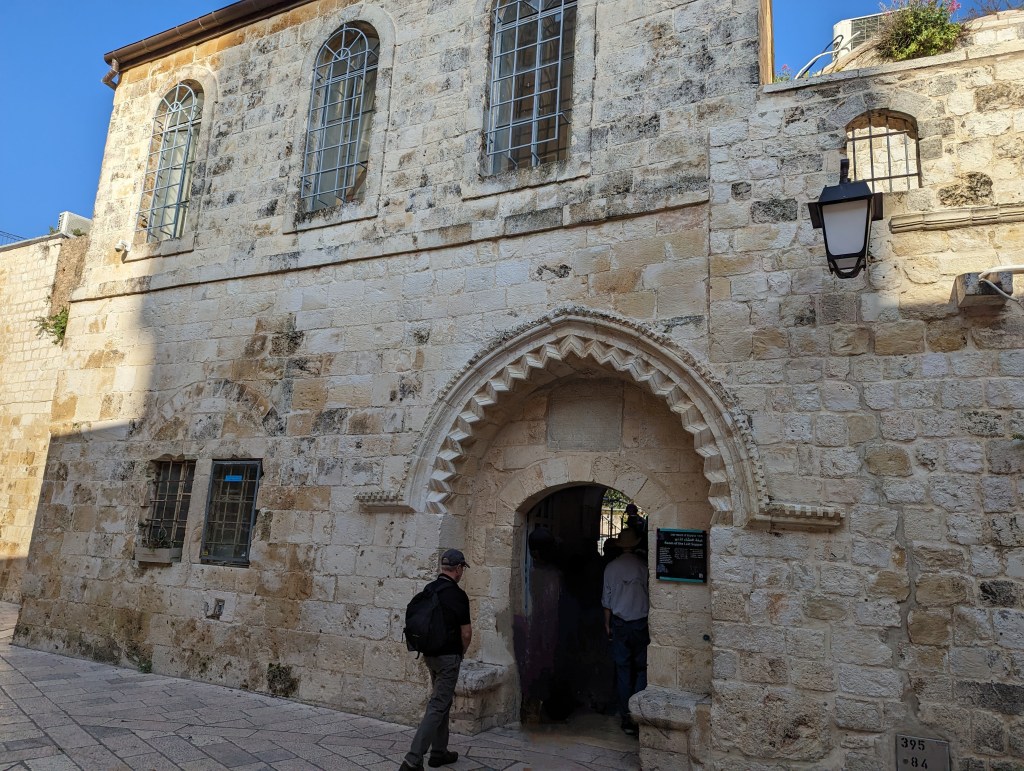
THE CENACLE: The dining room, which was customarily located on a second floor, is where Jesus and his disciples held the Passover feast, before he was taken to be tried:

KING DAVID’S TOMB: One of the most holiest places for Jews, Christians and Muslims. One of the few sites in the world that is shared by the three religions. King David was the second king of Israel, and is credited with uniting the tribes of Israel and establishing Jerusalem as its capital. The CENOTAPH is the empty tomb, a monument erected to honor Kind David.
GETHSEMANE (means “olive press”): At the foot of the Mount of Olives where, according to the Synoptic Gospels (Matthew, Mark and Luke), Jesus went to pray before his betrayal and arrest. According to the Eastern Orthodox Church, Gethsemane is the garden where the Virgin Mary was buried and was “assumed” into heaven. A small olive orchard with trees that date back 2,000 years is on the site. The trees still bear olives that are harvested and pressed. The oil is used for Gethsemane’s sanctuary lamps, and the olive pits are used to make rosary beads, given by the Franciscan Custos (guards) of the Holy Land to pilgrims.

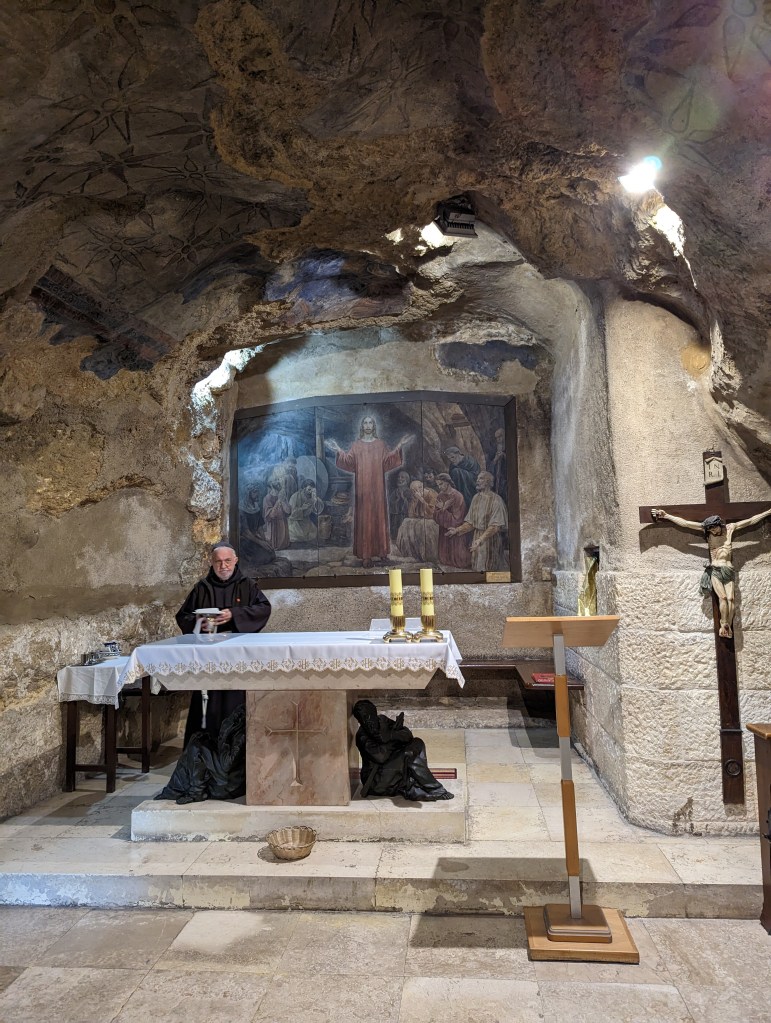
GETHSEMANE GROTTO: Basically unchanged from the time of Jesus, it is a natural grotto believed to be where the disciples slept while Jesus prayed before his arrest:

CHURCH OF THE SEPULCHRE OF SAINT MARY, aka TOMB OF THE VIRGIN MARY: The church was initially built around the time of Constantine in the 4th century AD. It was destroyed and built several times over the centuries. The current structure was built by Franciscan friars in the 14th century. Most Eastern Christians believe this to be Mary’s actual grave site, though no one claims that her remains are still there.

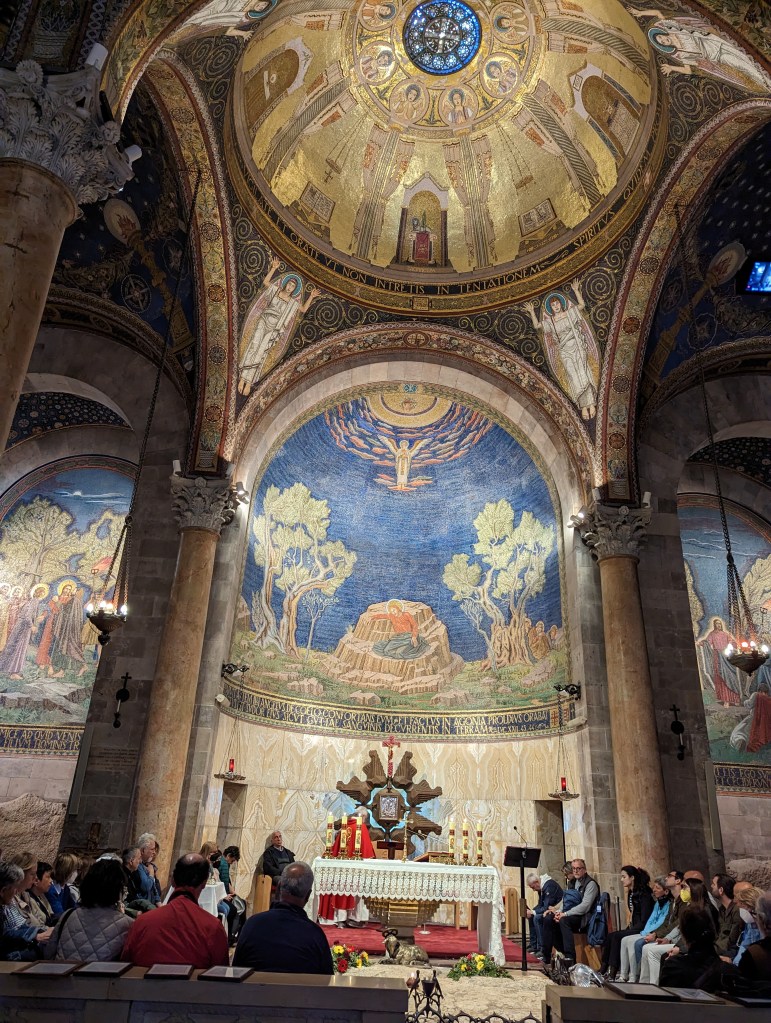
CHURCH OF ALL NATIONS (1919-24): Built over the rock where Jesus prayed before his arrest:

Bethlehem

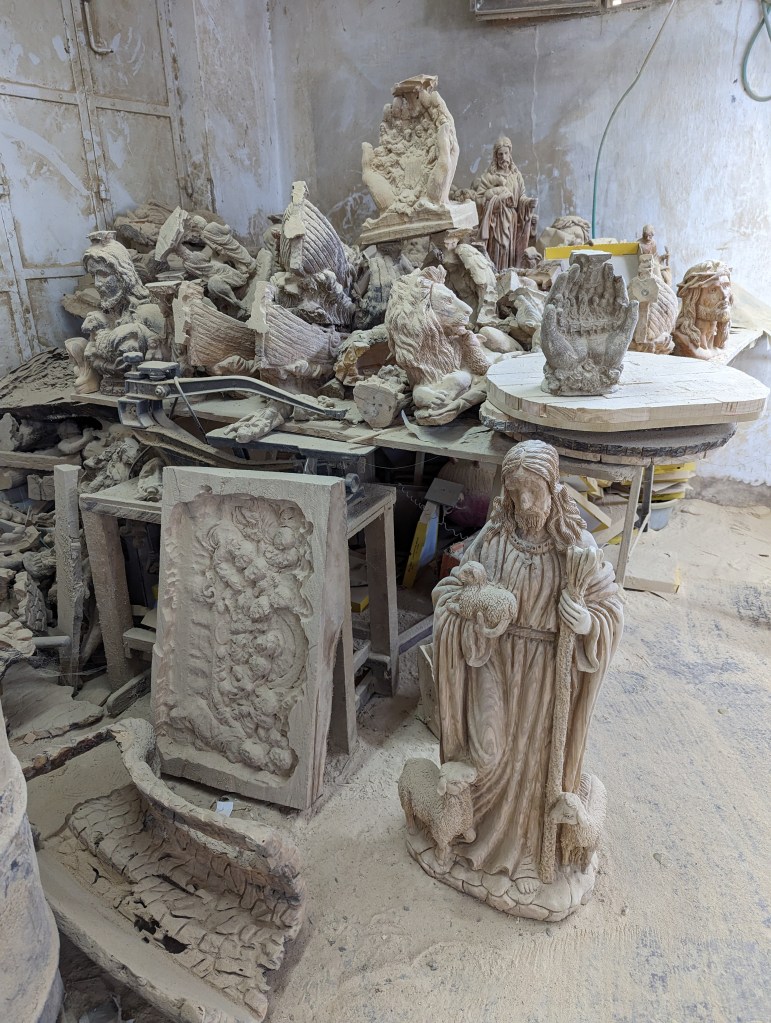
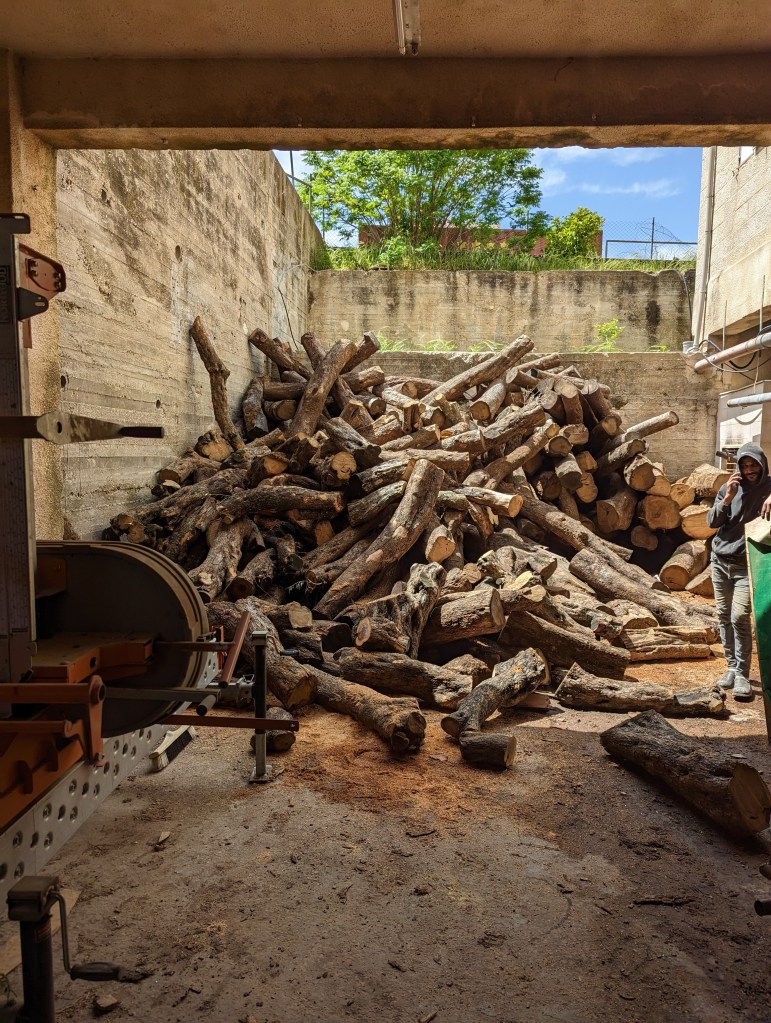
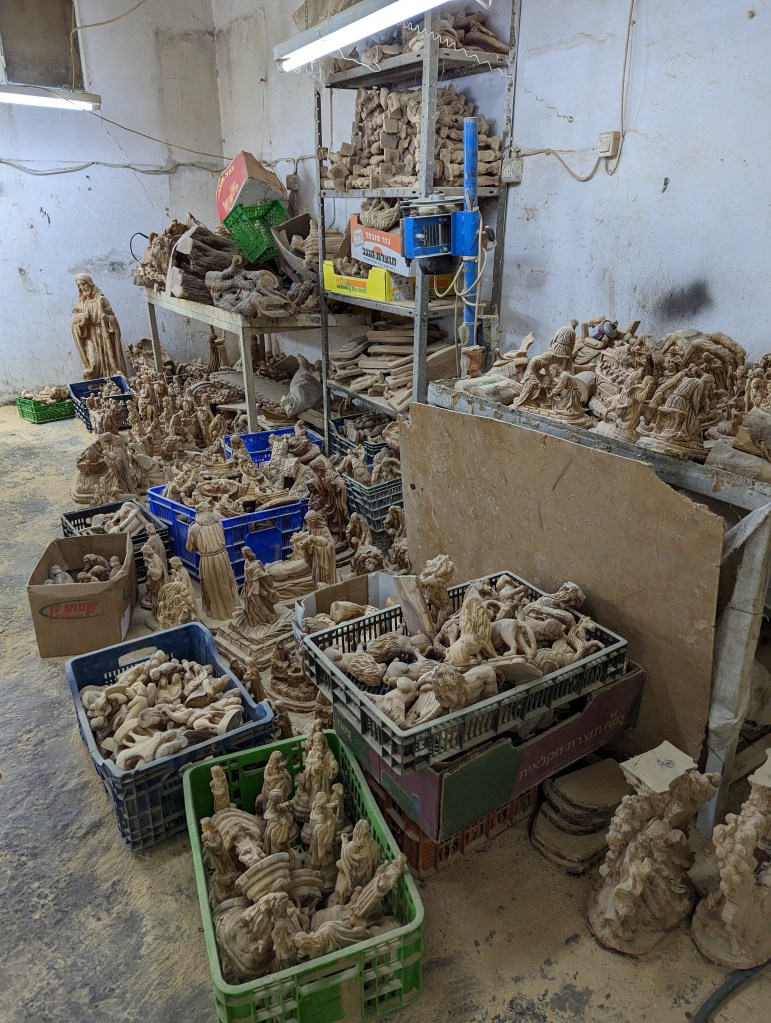
We bused to Bethlehem which is located in the West Bank, Palestine, about 10 miles south of Jerusalem. We were instructed to carry our passports, and were stopped at a checkpoint before crossing. We first stopped at a store which specializes in items carved from olive trees. Some were somewhat primitive, and others were incredibly intricate:

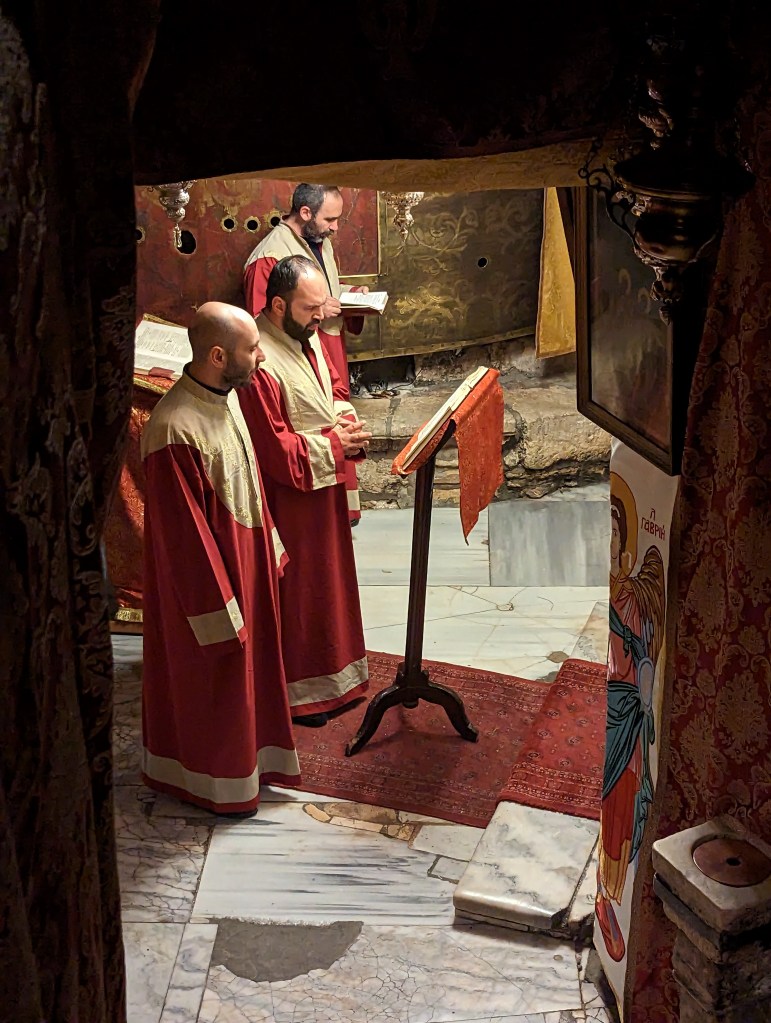
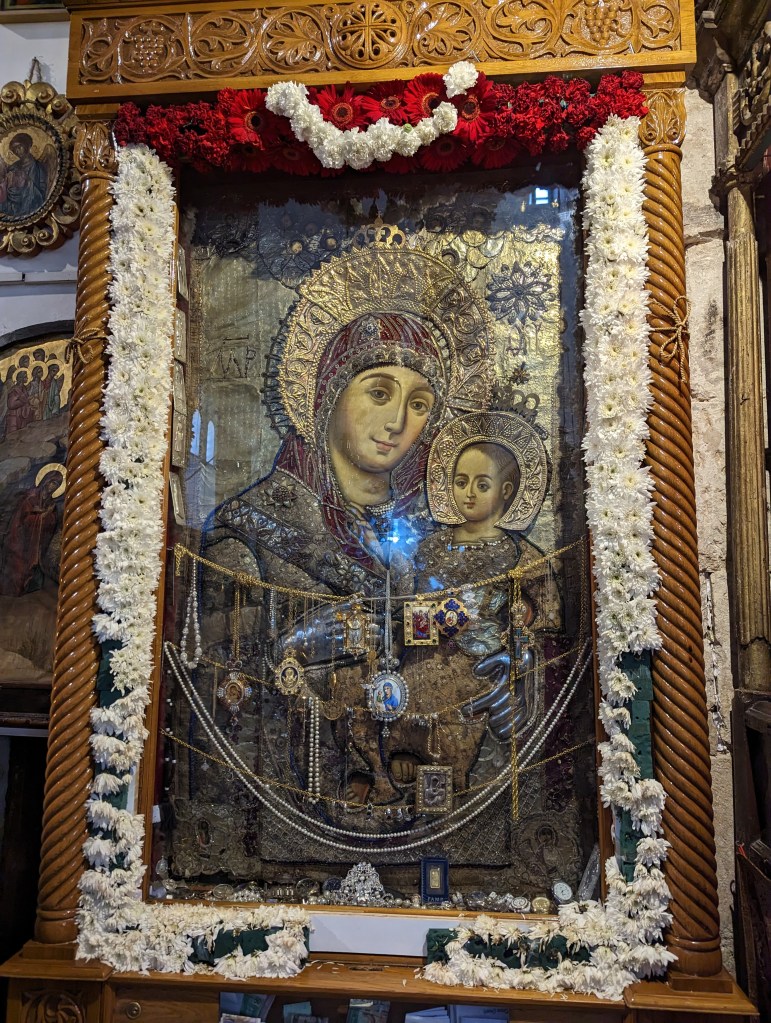
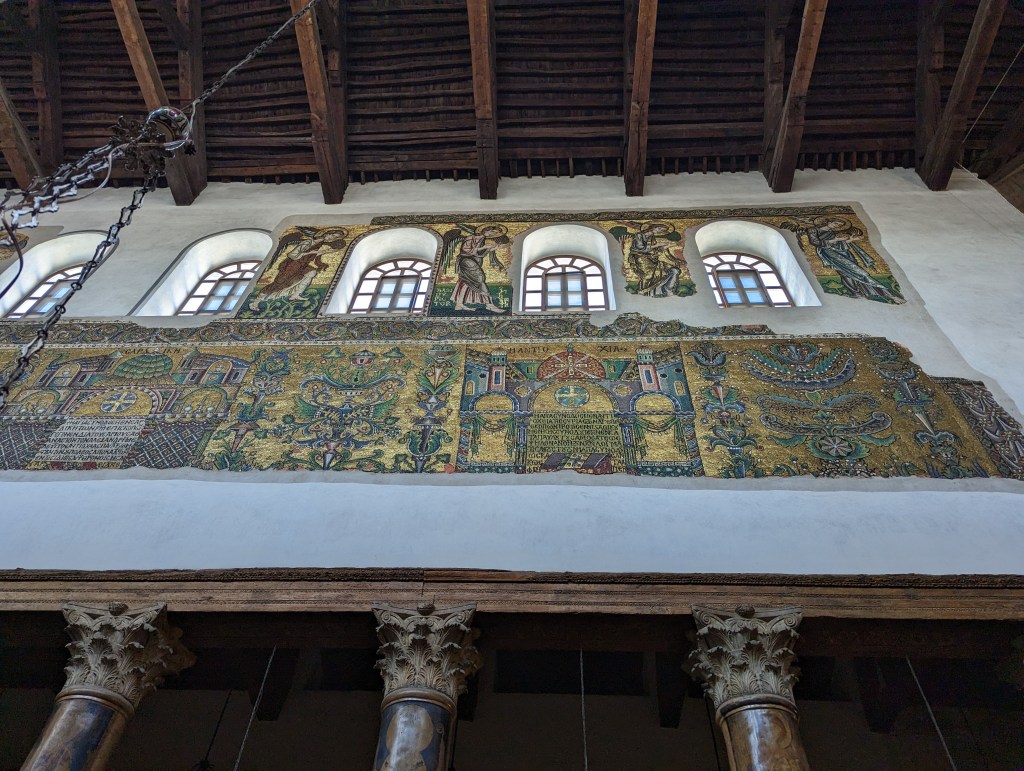
CHURCH OF THE NATIVITY: Commissioned by Constantine the Great (325-26) on the site of the birthplace of Jesus. The GROTTO is a subterranean rock cave below the main floor which is said to be the spot where Jesus was born. Unfortunately, we were unable to descend into the Grotto due to a Greek Orthodox service taking place.

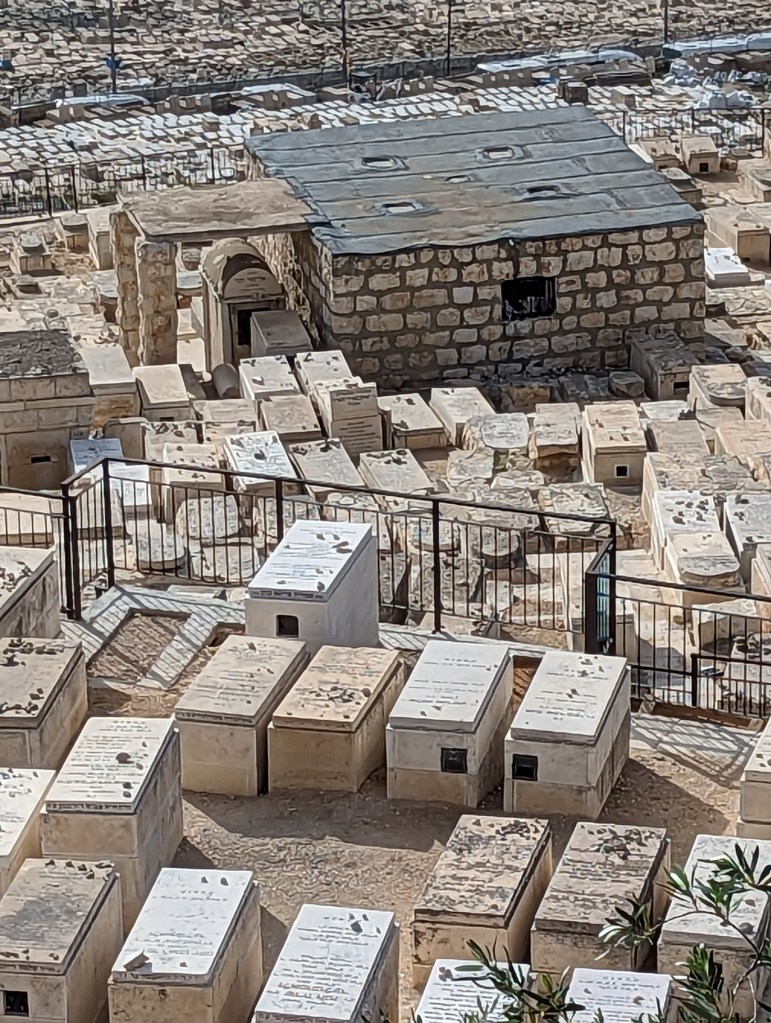
MOUNT OF OLIVES JEWISH CEMETERY: The most sacred and largest Jewish cemetery in the world. It’s been in use since King David made Jerusalem his capital 3,000 years ago. The cemetery holds about 150,000 graves:
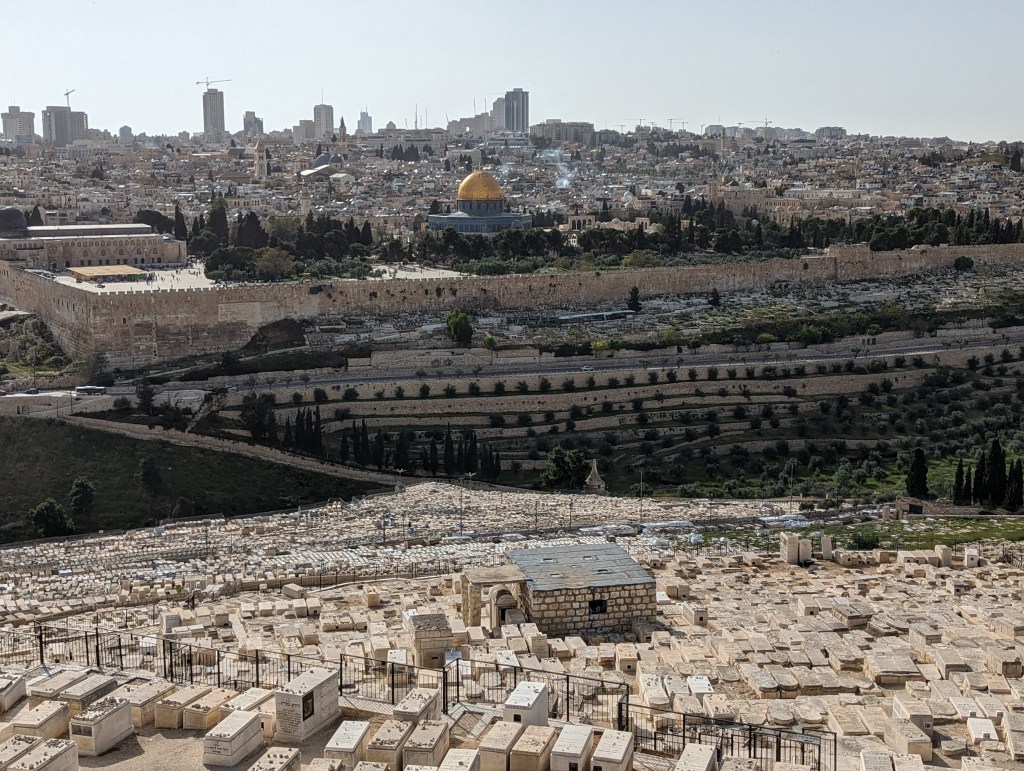
Everyone is buried with their feet toward the Temple Mount because they will walk there after the Messiah raises them from the dead. All who lay here will be resurrected without the need for atonement. Notice the rocks on the graves. There are a variety of explanations, but the shortest and simplest one is that placing stones on the grave is to honor the deceased by marking the fact that his grave has been visited.

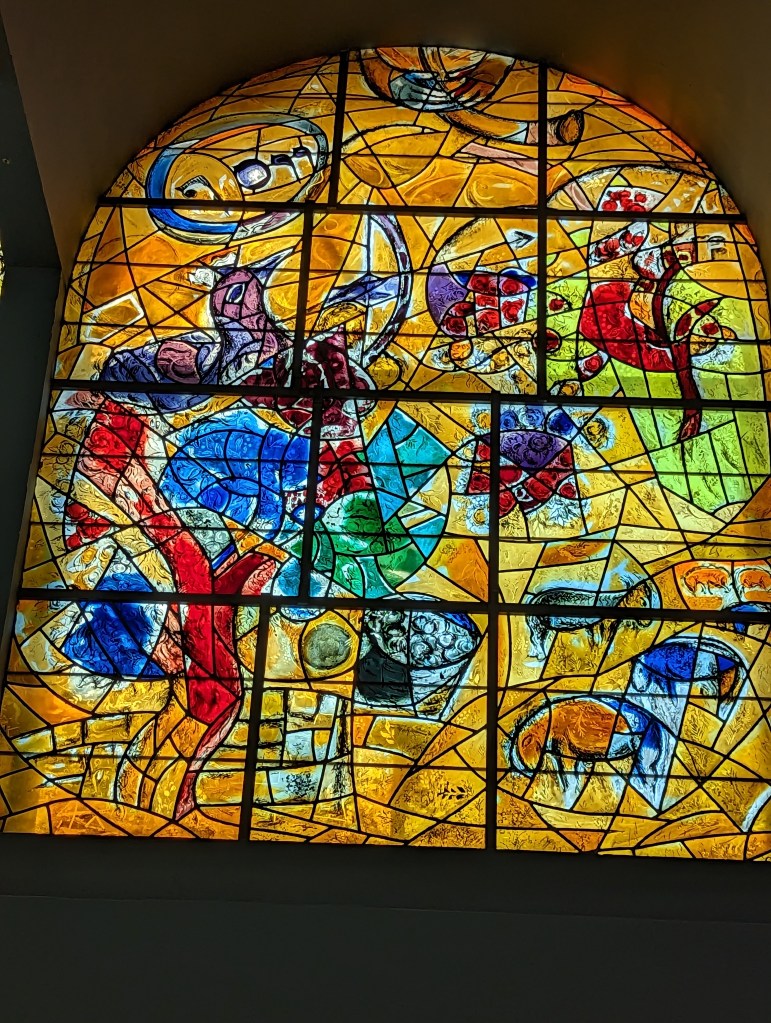
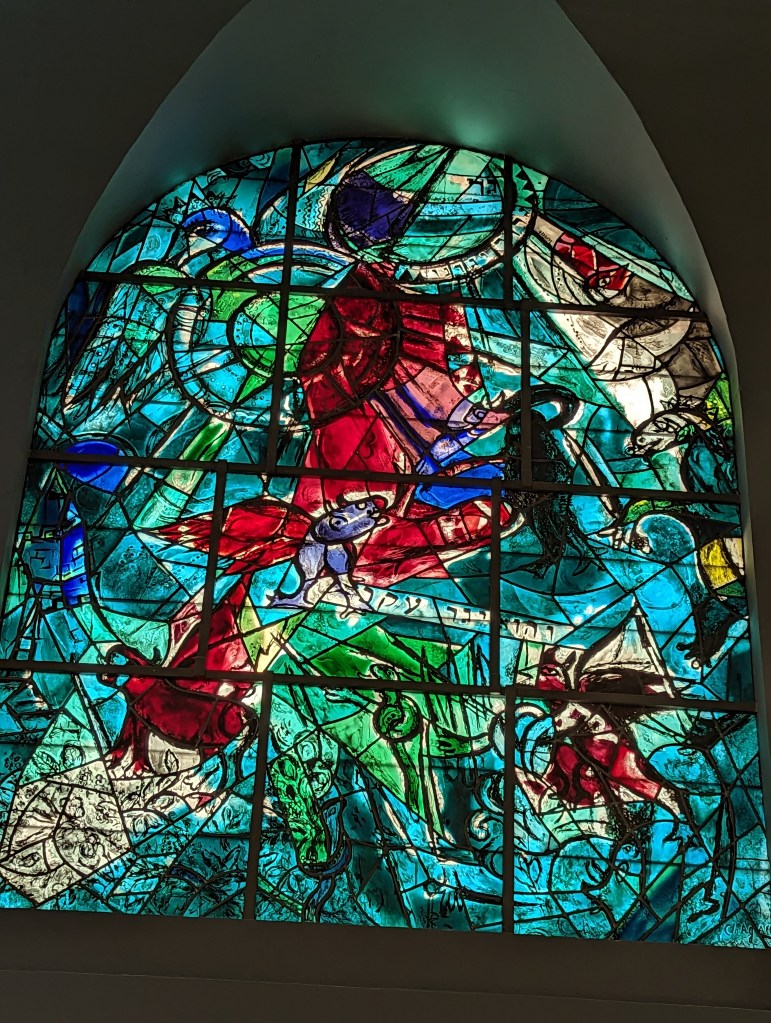
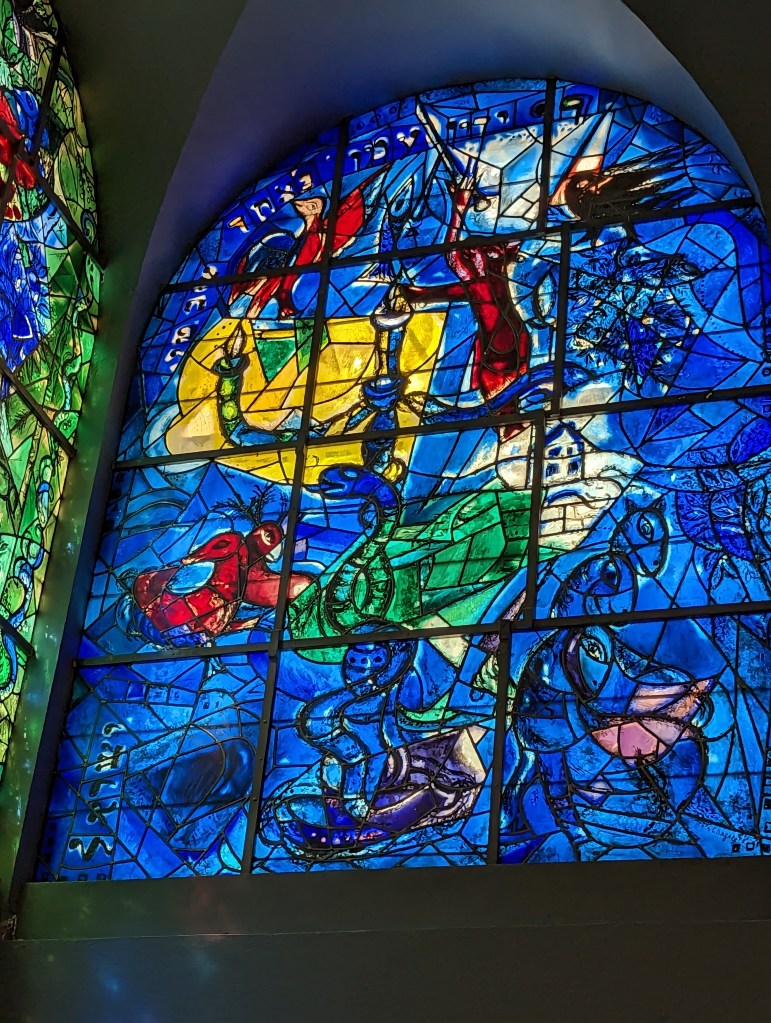
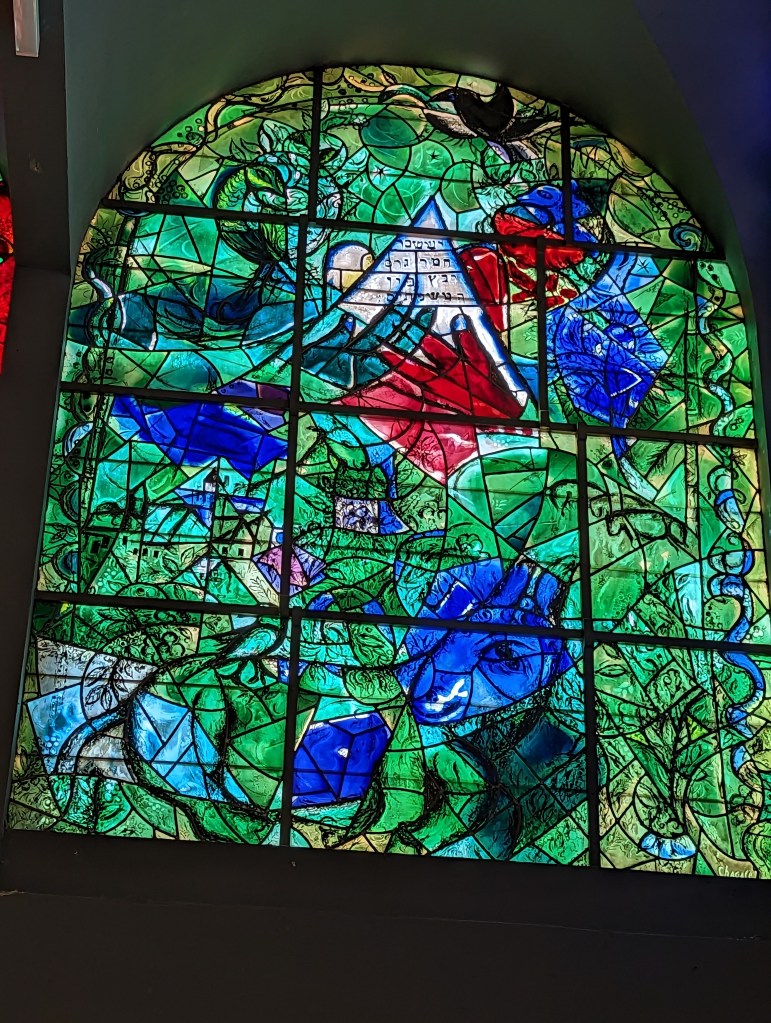
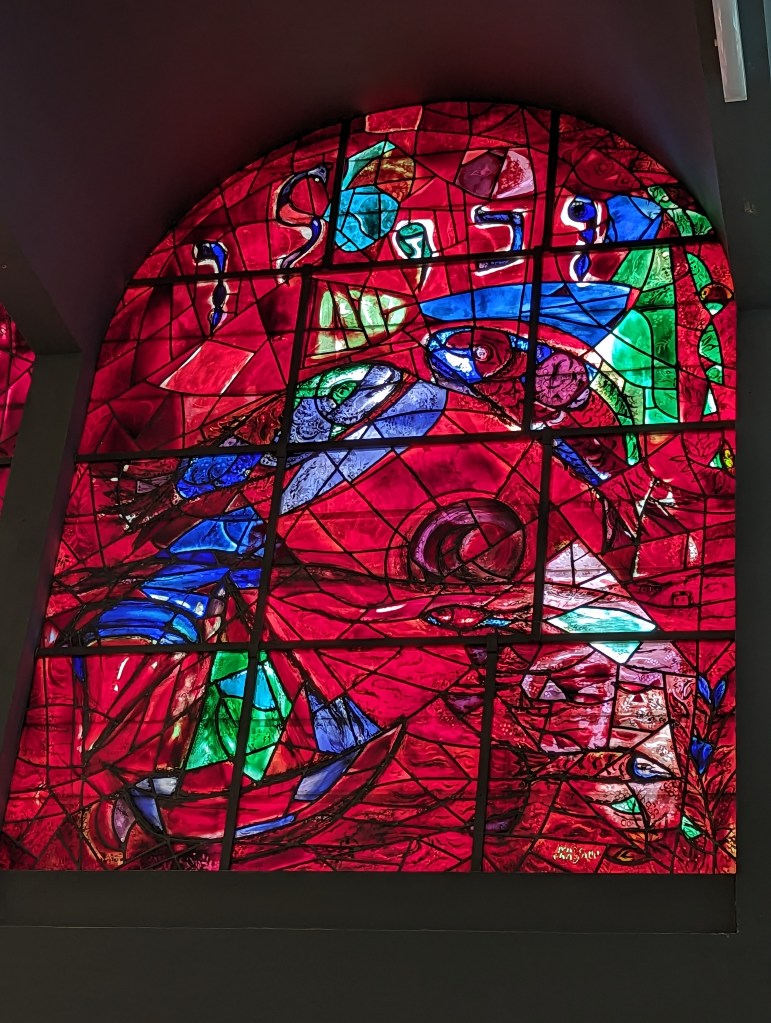
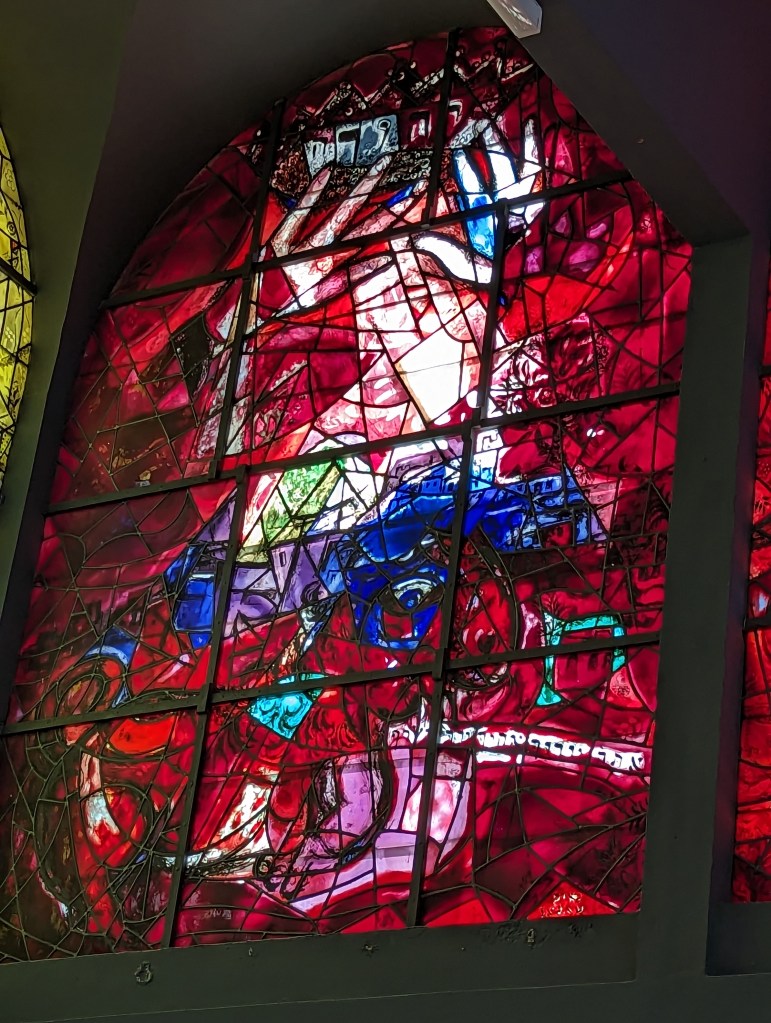
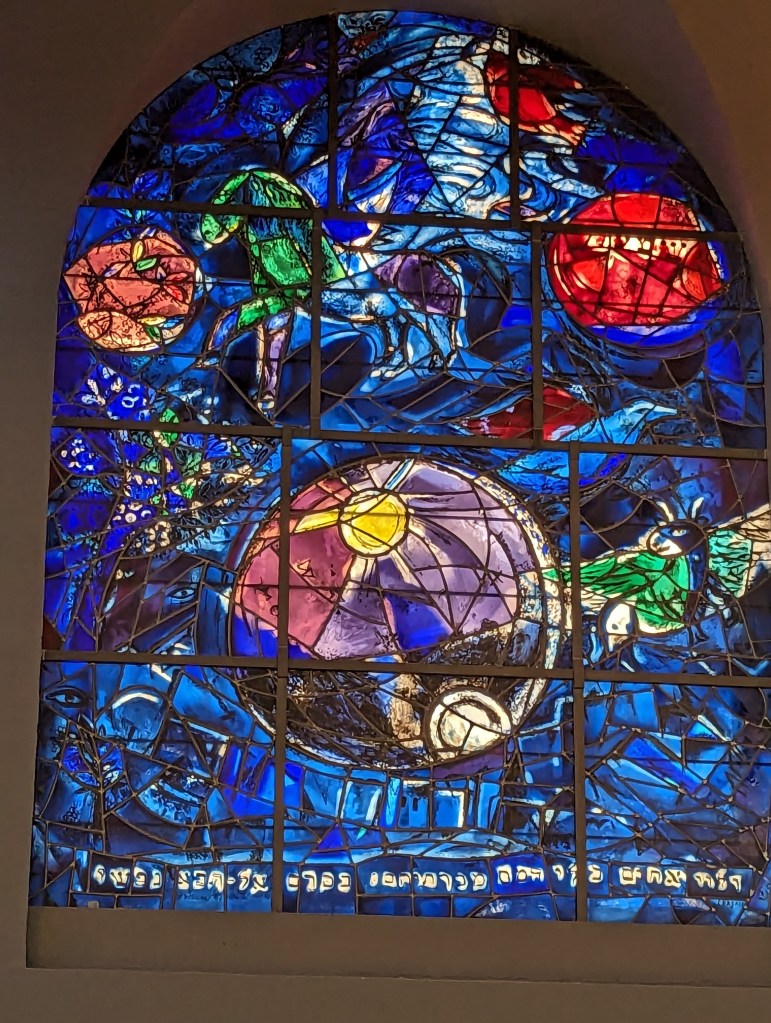
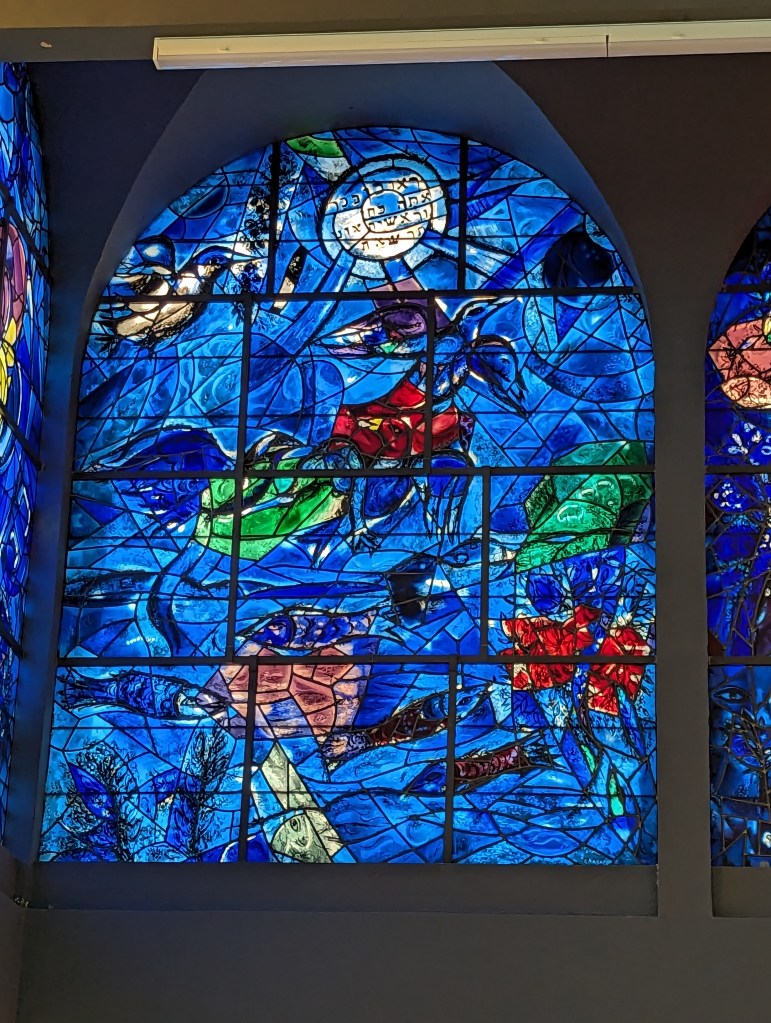
HADASSAH HOSPITAL and the CHAGALL WINDOWS: We visited the Hadassah Hospital’s synagogue where Marc Chagall’s 12 stained glass windows were installed. Chagall was a famous 20th century Russian-born Jewish artist. The windows were commissioned by Hadassah, the Women’s Zionist Organization, founded by Henrietta Szold in 1912. When he was asked to do the commission, his response was “I’ve been waiting my whole life to be asked to serve the Jewish People.” He worked for two years to research and complete the windows. When they were completed, they were first exhibited in the Museum of Modern Art in New York City, before they were installed and dedicated in his presence on February 6, 1962. Chagall presented the windows with these words:
“This is my modest gift to the Jewish people who have always dreamt of biblical love, friendship and of peace among all peoples. This is my gift to that people which lived here thousands of years ago among the other Semitic people.”
The windows depict the blessings that Jacob, on his deathbed, bestowed to each of his 12 sons (Gen. 49:1-27). The sons of Jacob became the founders of the Twelve Tribes of Israel. For details on the individual windows go to: https://www.hadassah.org.il/en/the_windows/




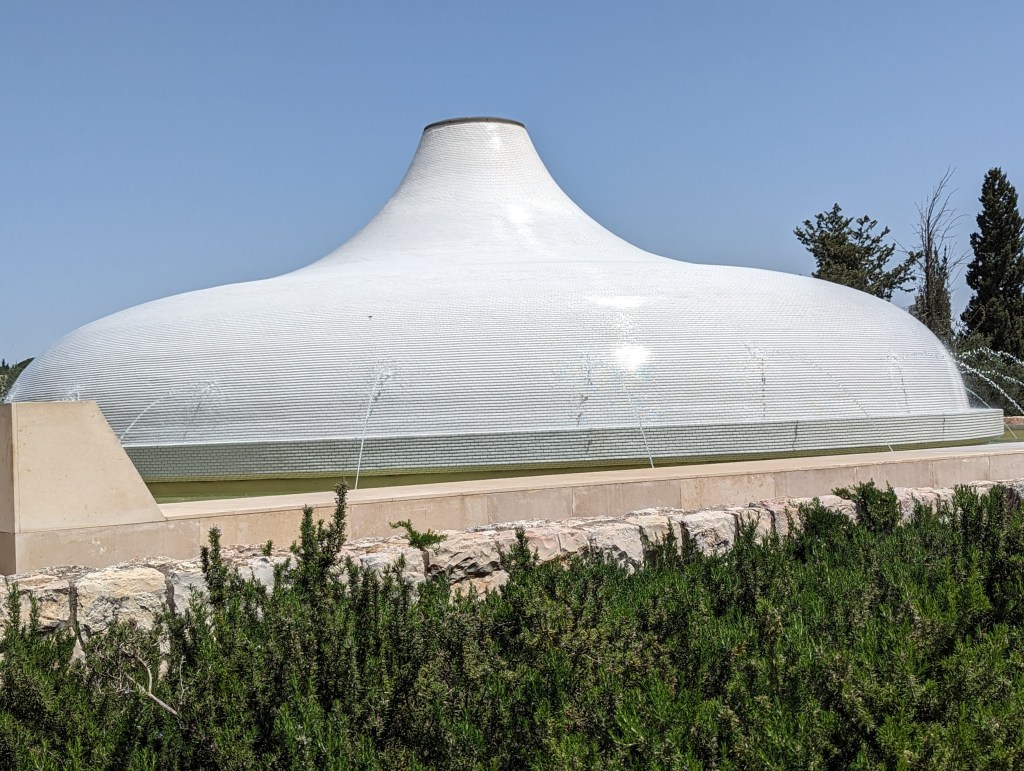
SHRINE OF THE BOOK (1965) at the Israel Museum: Houses the Dead Sea Scrolls discovered at Qumran Caves in the Judaean Desert in 1947. The shape of the Shrine reflects the lids of the jars in which the first scrolls were found. The scrolls are ancient Jewish religious manuscripts. Most of the texts are in Hebrew and written on parchment, some on papyrus, and one on copper.
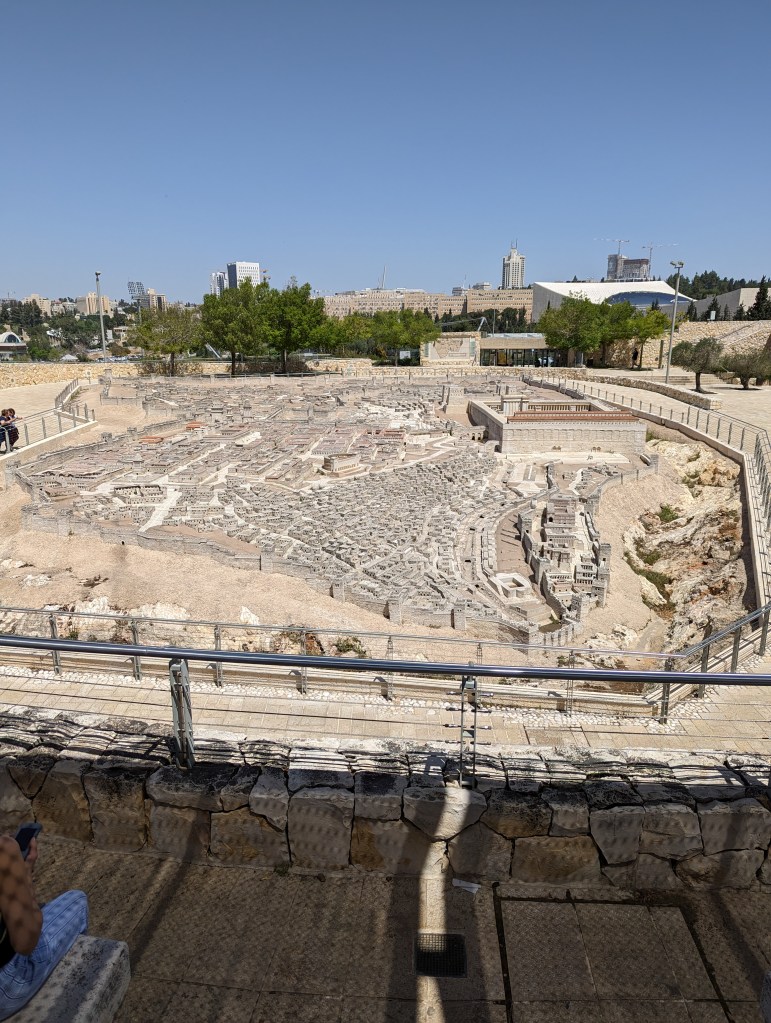
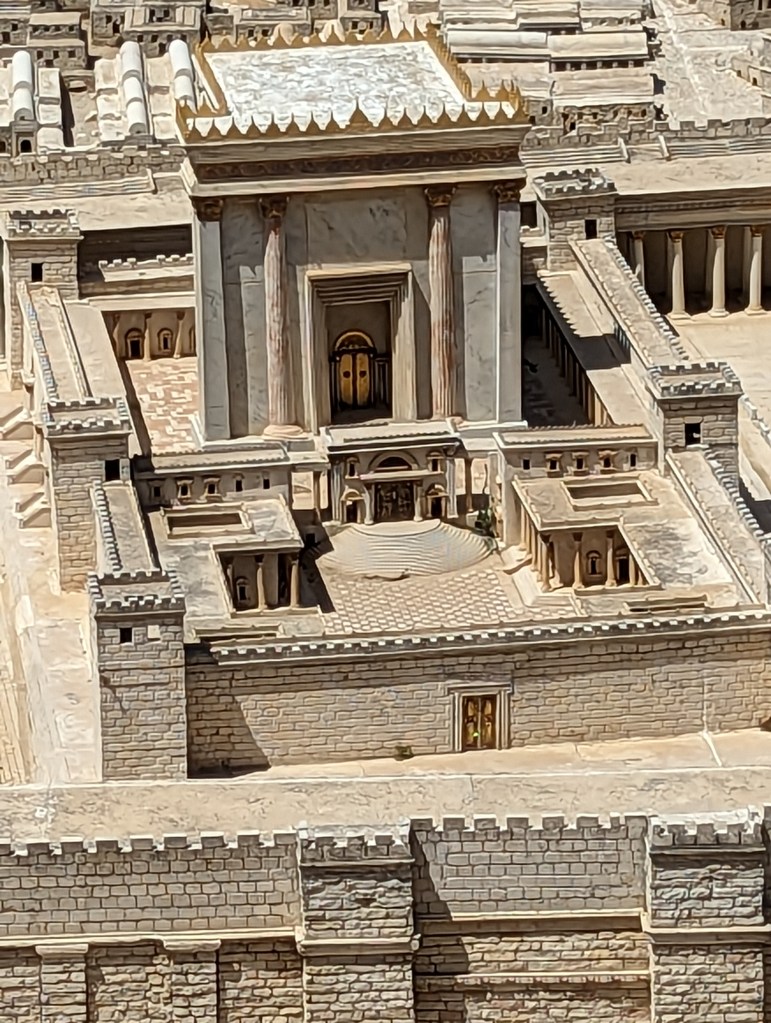
HOLY LAND MODEL OF JERUSALEM at the Israel Museum: Designed by historian and geographer Michael Avi-Yonah in 1966, it’s a model of Jerusalem at the height of its glory at the end of the Second Temple period (66 CE), during the reign of Herod the Great who was a Roman Jewish client king of Judea. The model includes a replica of Herod’s Temple:

Towards the end of our stay, I toured the YAD VASHEM HOLOCAUST HISTORY MUSEUM, which, as you can imagine, was very poignant and difficult to see, but well worth the visit. Unfortunately, no photography was allowed. If you want to watch a relatively short moving video about Yad Vashem, check out this CBS Sunday Morning episode: https://www.youtube.com/watch?v=kO7Egbr304w. If you want a more in-depth tour of Yad Vashem, this is a virtual tour which was available online when the museum was closed during the Pandemic: https://www.youtube.com/watch?v=1URY7gTmsjo&t=1s.

My main takeaway from our tour of Jerusalem was being immersed in the city’s ancient history. Walking where Jesus walked, where he prayed in the Garden of Gethsemane, where he ate his last meal with his disciples before he was betrayed and arrested. And learning about why Jews, Muslims, and Christians have recognized Jerusalem as a holy place for over 3,000 years.


 Deb's Blog
Leave a reply to Dolores Wisbrock Cancel reply