
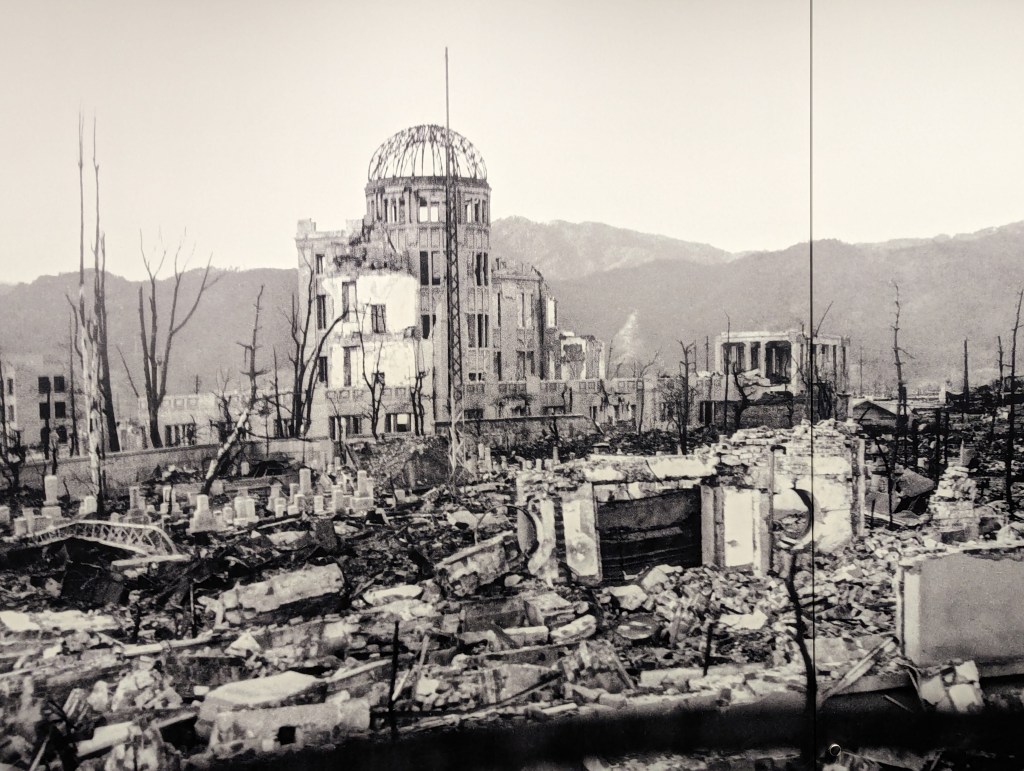
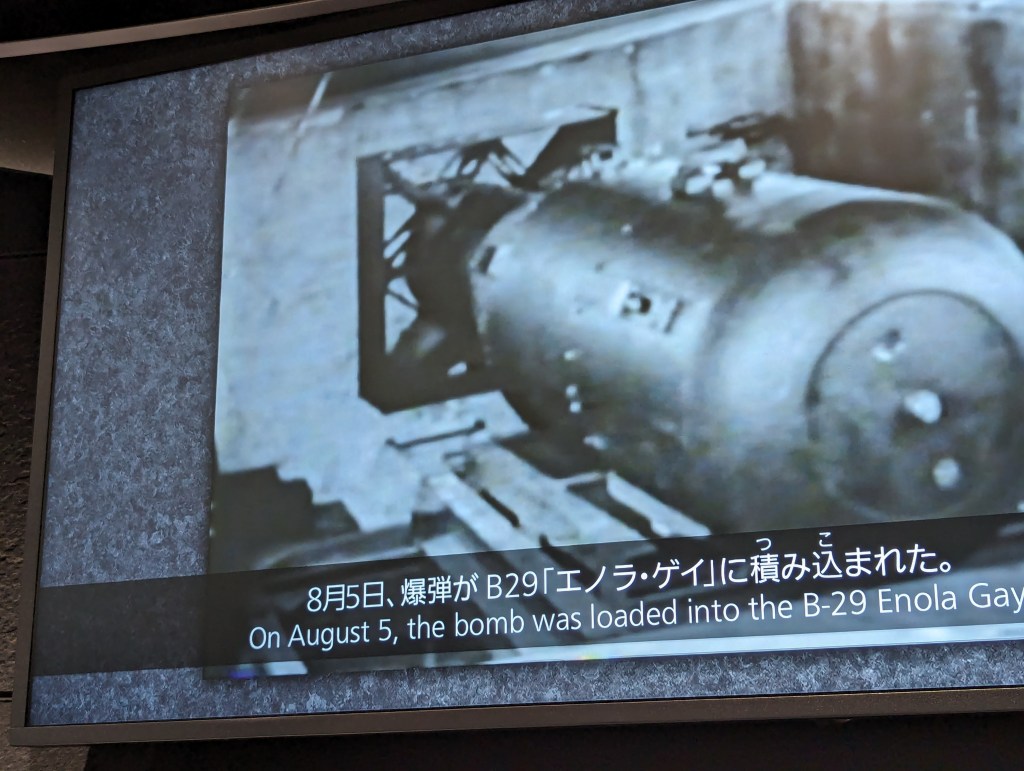
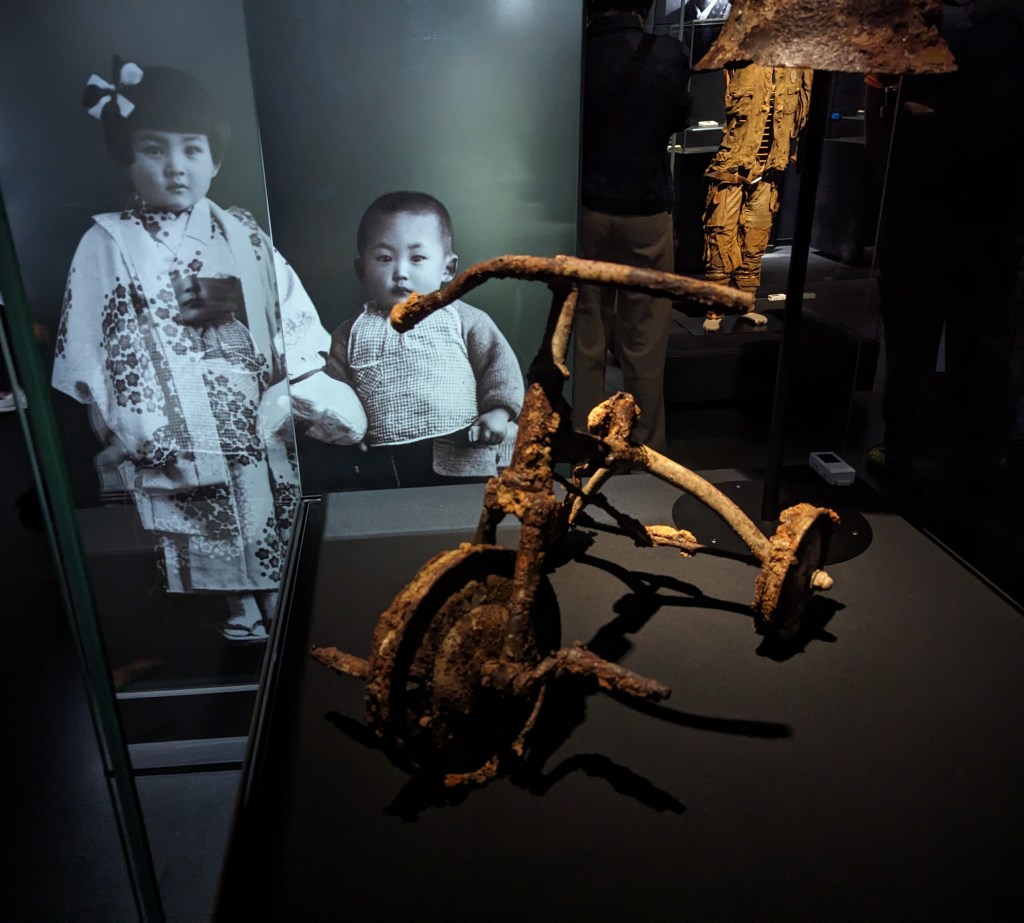
I thought about skipping the excursion to the site of the atom bomb, but in the end I felt I had to bear witness to the devastation that took place on August 6, 1945. Touring the Hiroshima Peace Museum was sad and painful, and honestly I got to the point when I had to turn away from the horrifying photos of the injured and dead. But I’m glad I saw what I saw. I guess I could go on about the why and how the atom bomb was created and dropped on Nagasaki and Hiroshima. But ultimately I came away with one very visceral reaction: War is hell!!
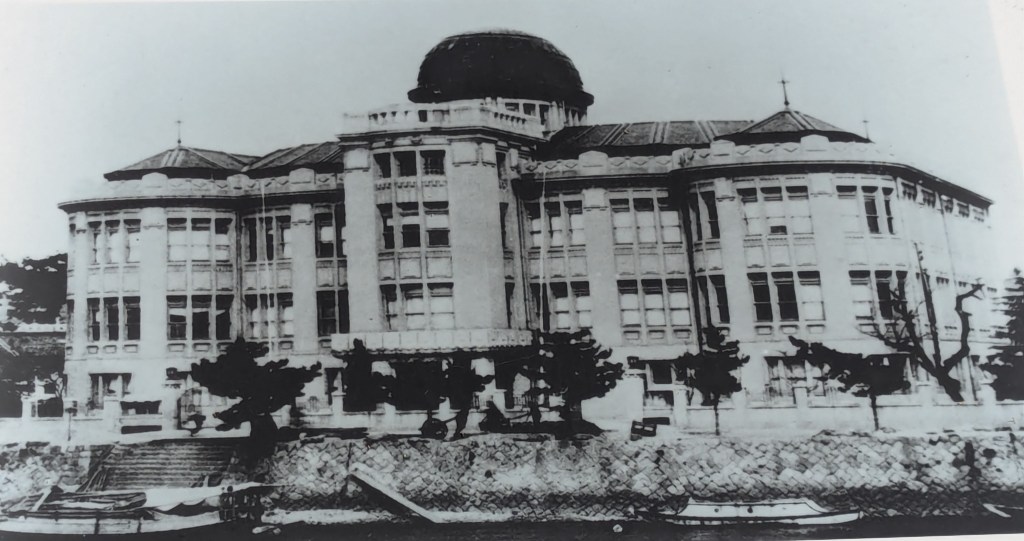
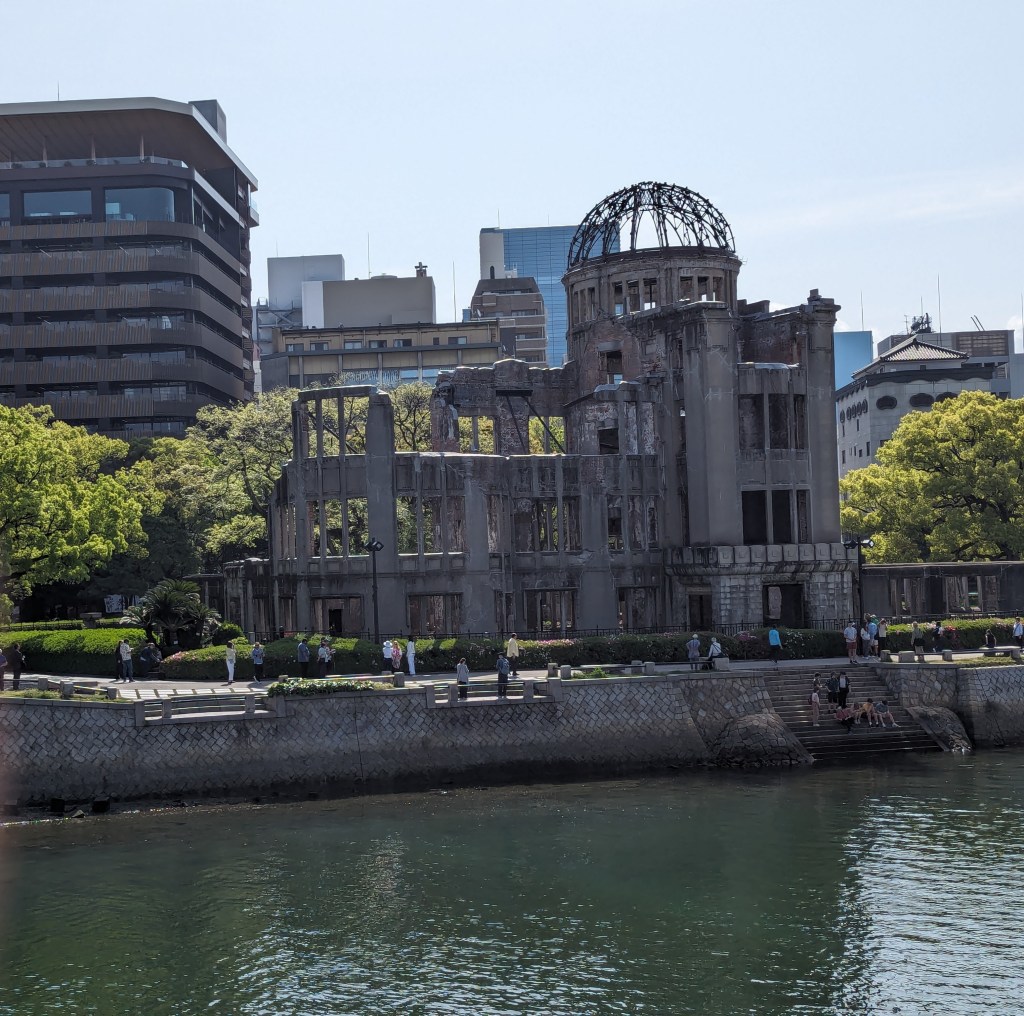
Atom Bomb Dome
This was the only structure that remained standing in the area where the atomic bomb hit. It sits next to the Aioi Bridge which was the bomb’s target because it was close to the city center.
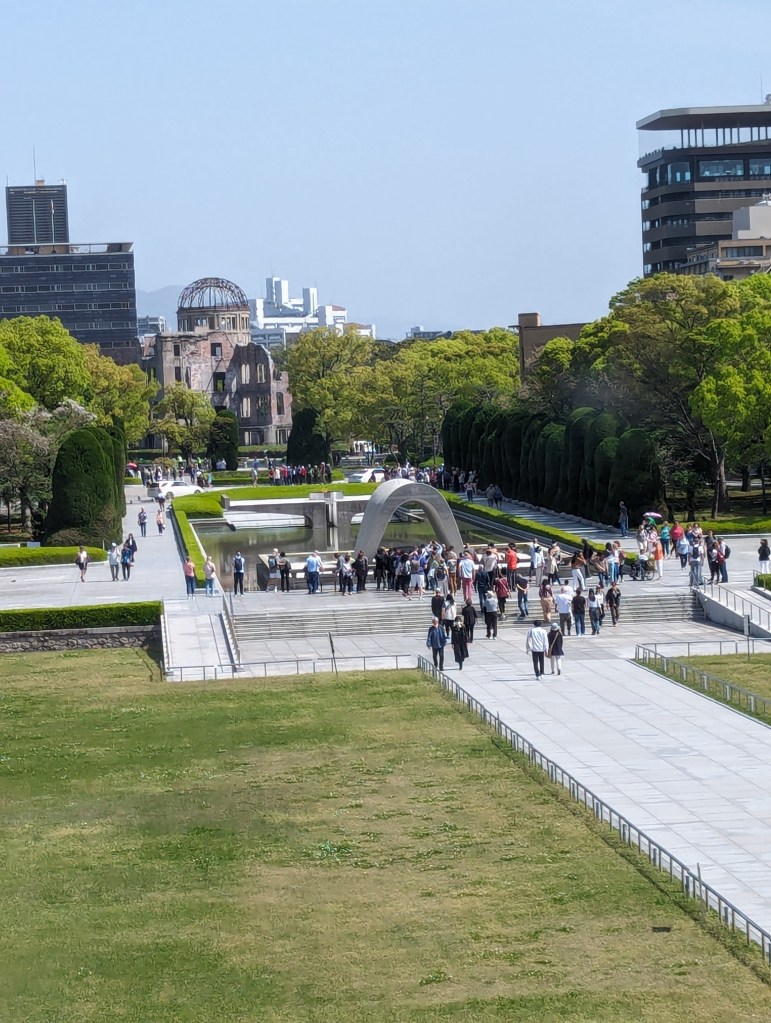
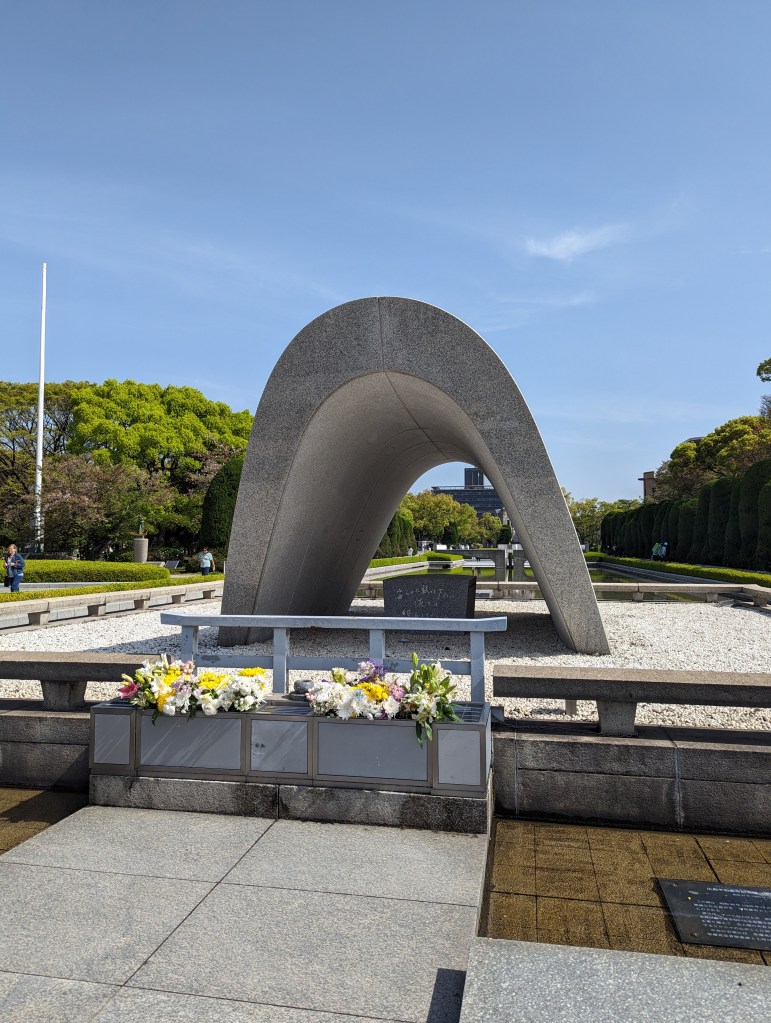
Hiroshima Memorial Park
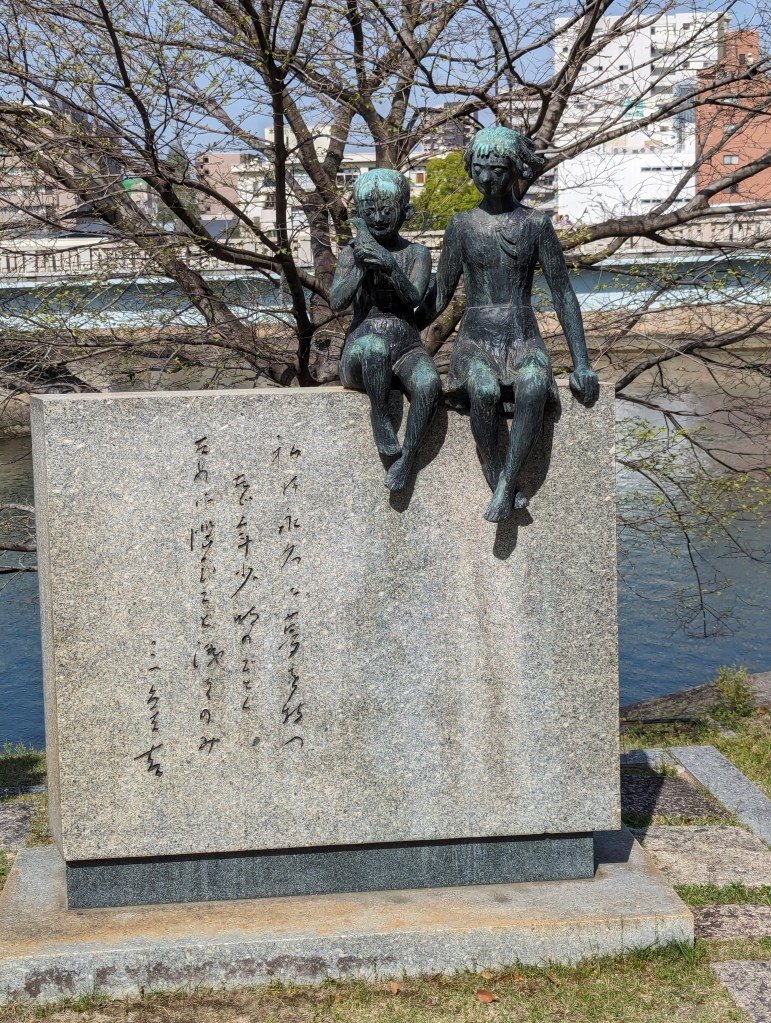
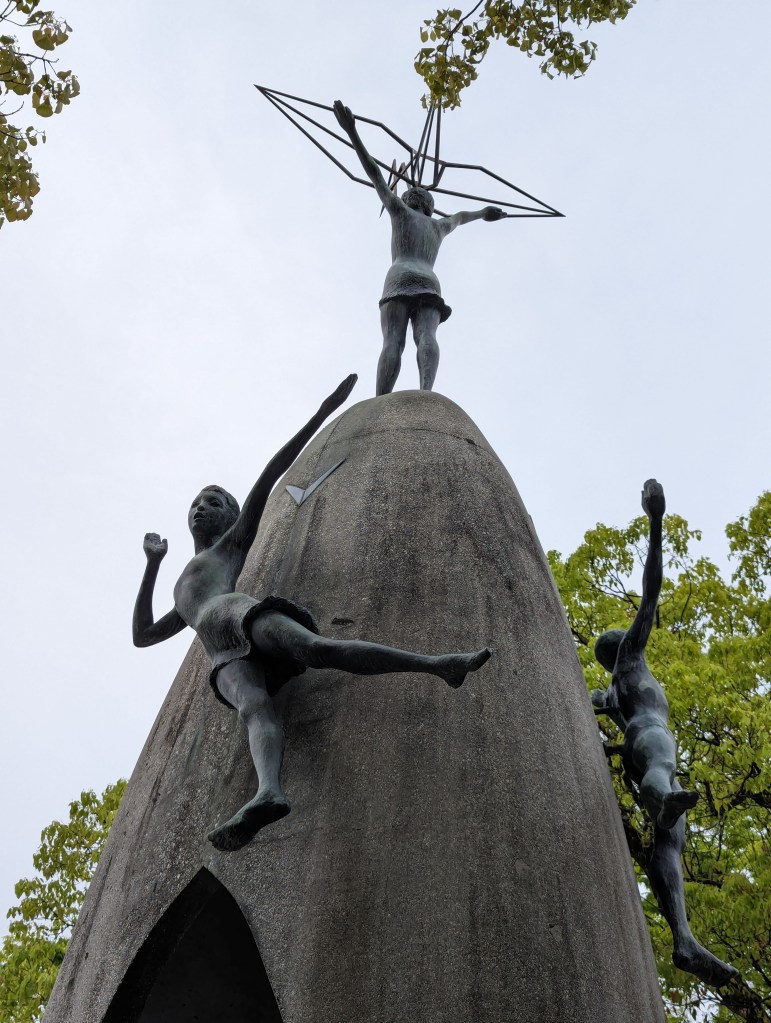
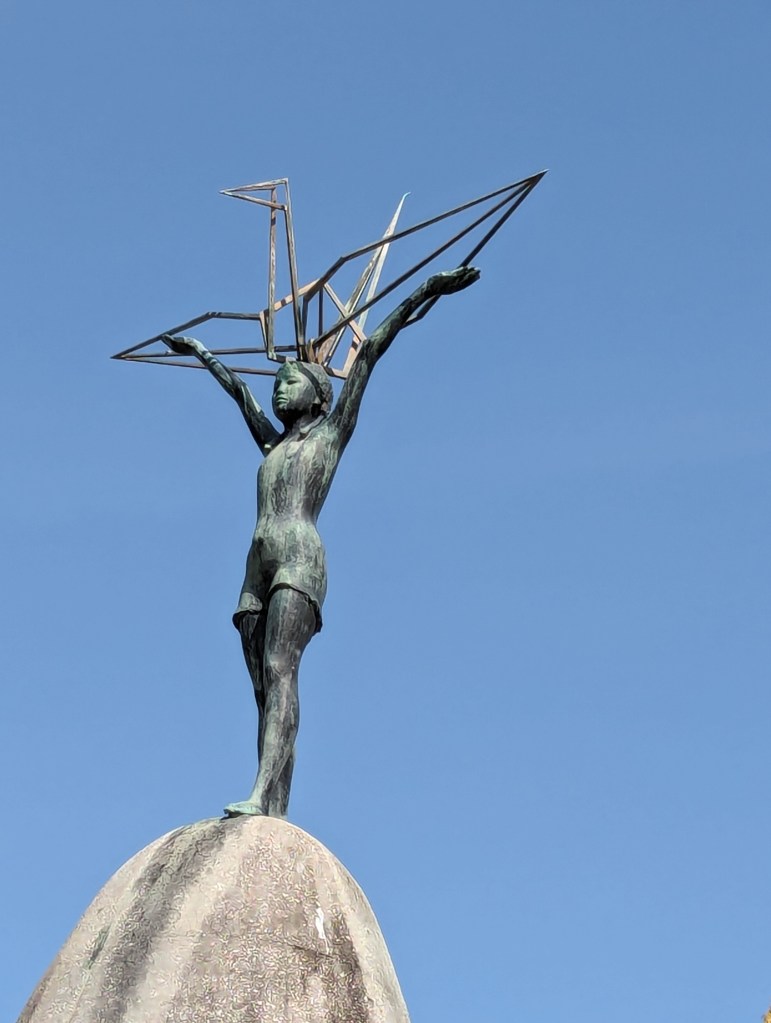
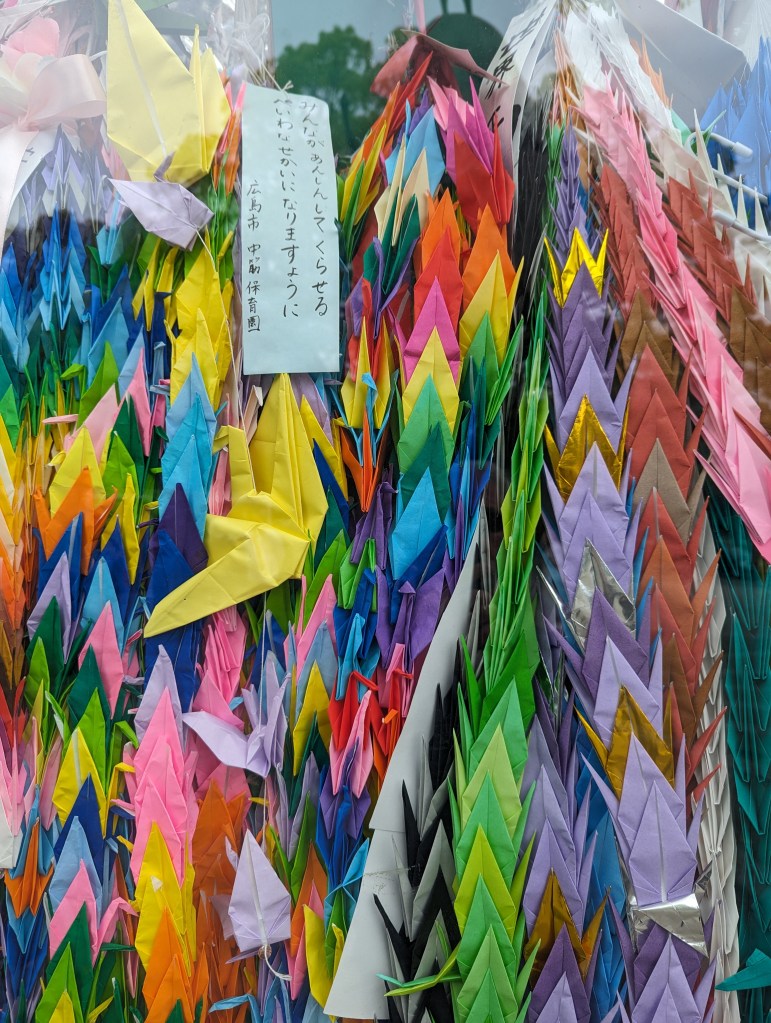
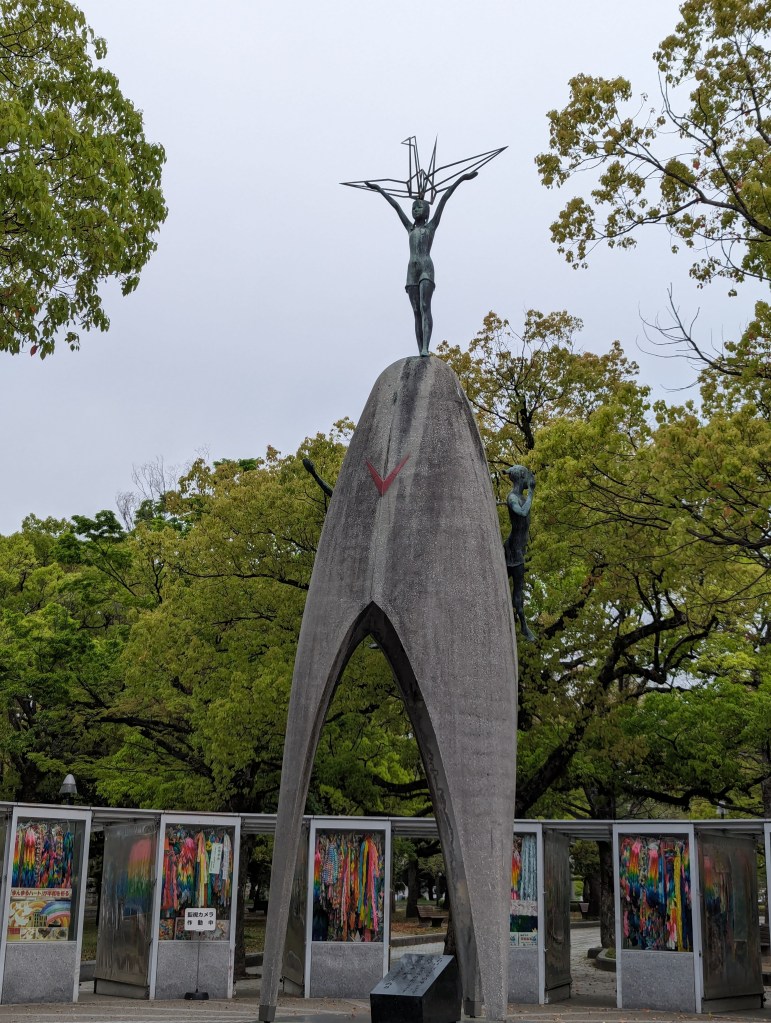
The Children’s Peace Monument (1958) commemorates Sadako Sasaki and the thousands of child victims of the Hiroshima bomb. Sadako, age 2, survived the bombing, but 10 years later died of leukemia due to radiation poisoning from the uranium in the bomb. After she was admitted to the hospital, she learned of the Japanese legend that says if one creates a thousand origami cranes, they are granted one wish. Sadako had two wishes: to be well, and to have a world without nuclear weapons. So she began making origami cranes while she was in the hospital. According to her brother, Sadako finished folding the thousand cranes, plus 300 more. After her death in 1955, Sadako became an international symbol for peace, and countless colorful origami cranes made by Japanese children continue to commemorate her and her wish for world peace. The Children’s Peace Monument was built using money from a fundraising campaign by Japanese school children, including Sadako’s classmates. At the foot of the statue, a plague reads “This is our cry. This is our prayer. Peace in the world.”
Hiroshima Peace Memorial Museum
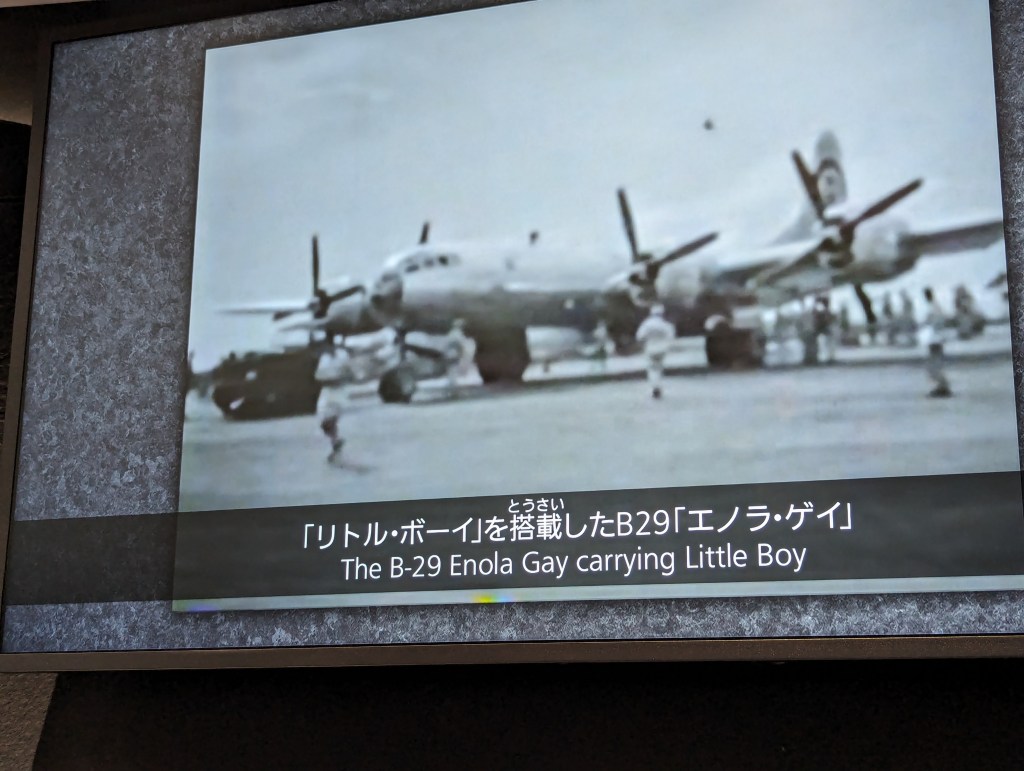
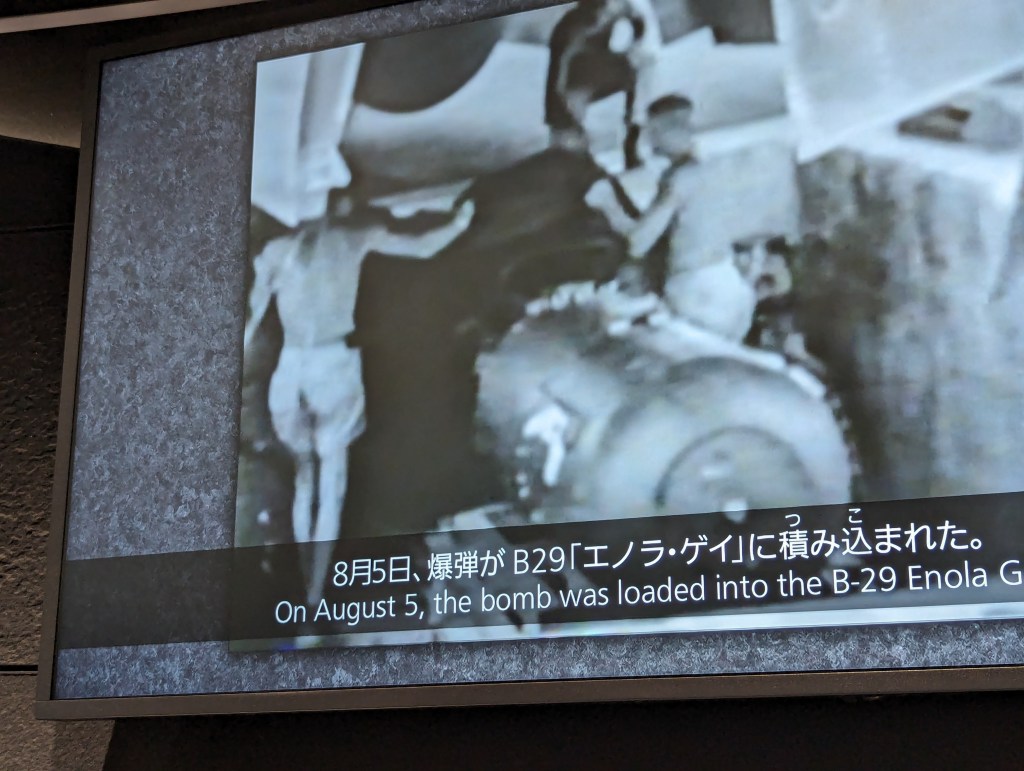
I took very few photos inside the Museum. Partly because I just wanted to absorb the impact of what I was seeing. But mostly because I felt it was disrespectful to take photos of all those men, women and children who were obviously suffering from their excruciating injuries, or those who lay dead.
Hiroshima Castle
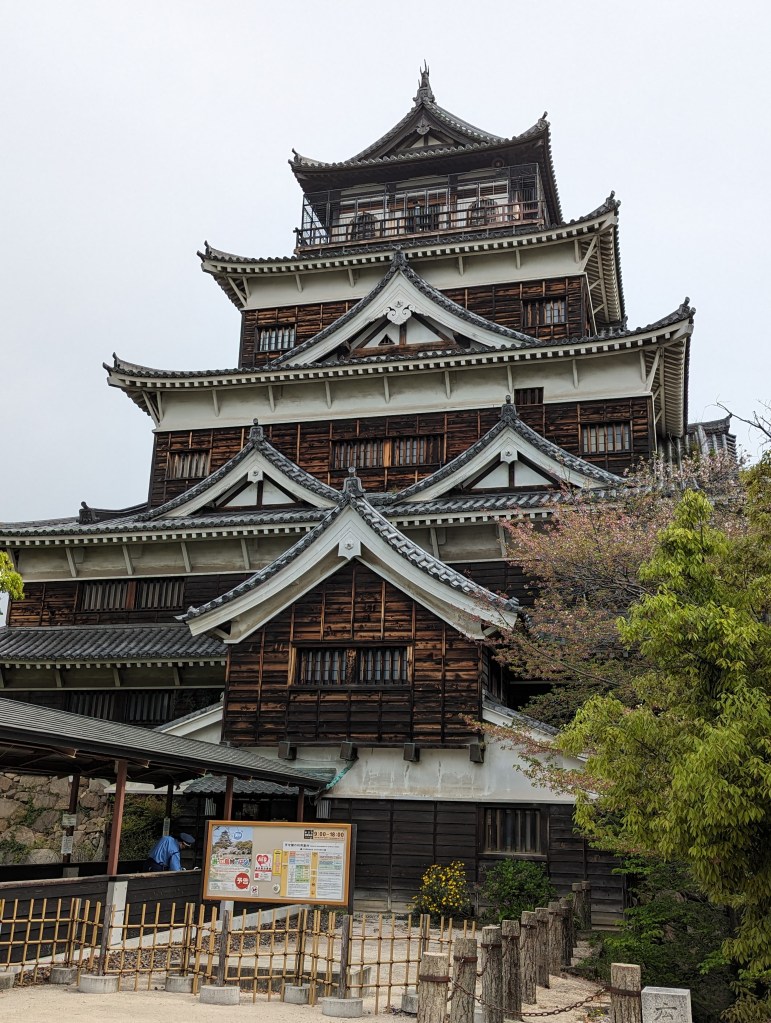
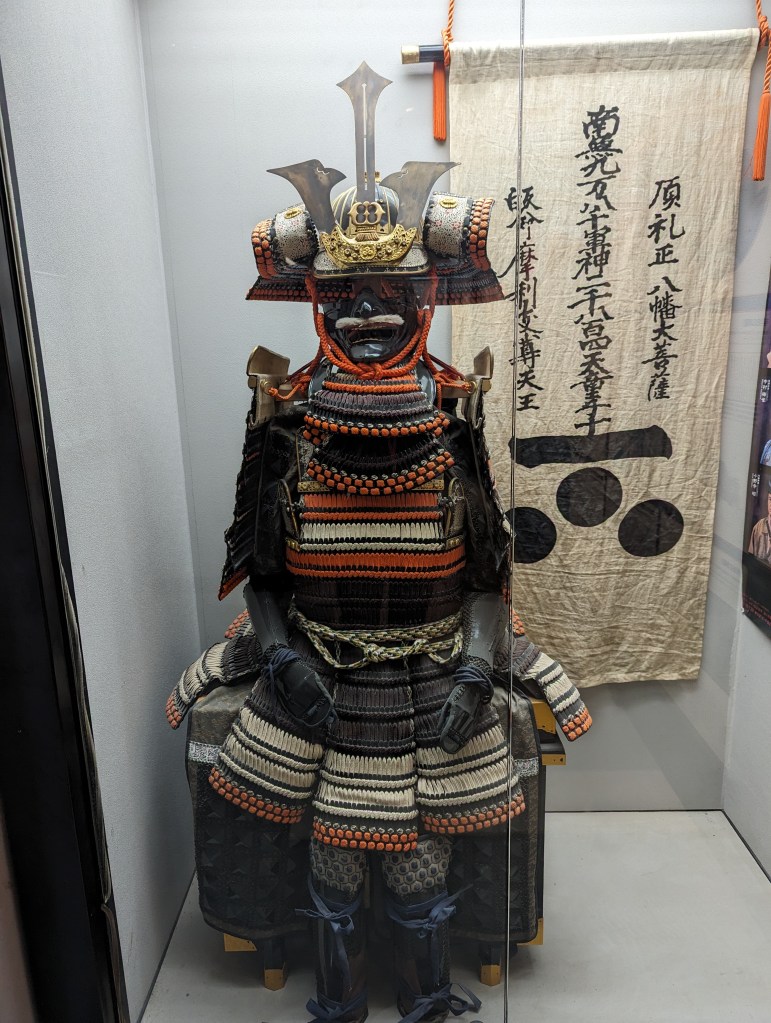
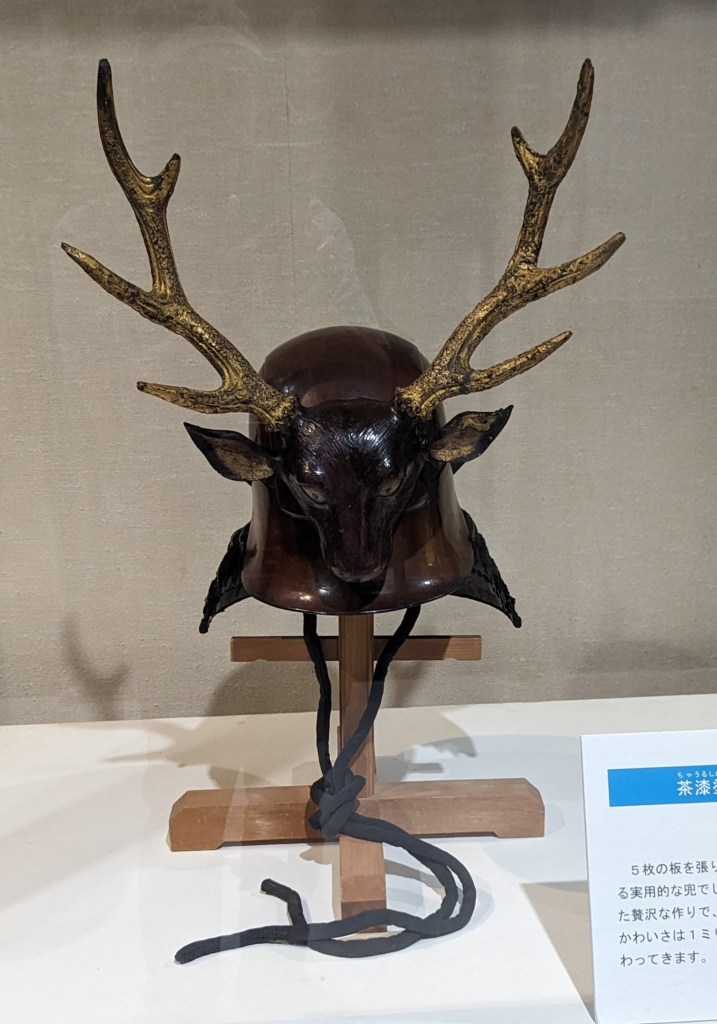
Hiroshima Castle was built in 1591 for the residence of Mori Terumoto, a “daimyo”—a powerful member of the elite samurai class. The castle was largely destroyed by the atomic bomb, and was rebuilt in 1958. It sits on a hilltop and is five stories tall, surrounded by a moat. There are about 450 cherry trees on the castle grounds, which unfortunately were past their bloom.
Shukkei-en Garden
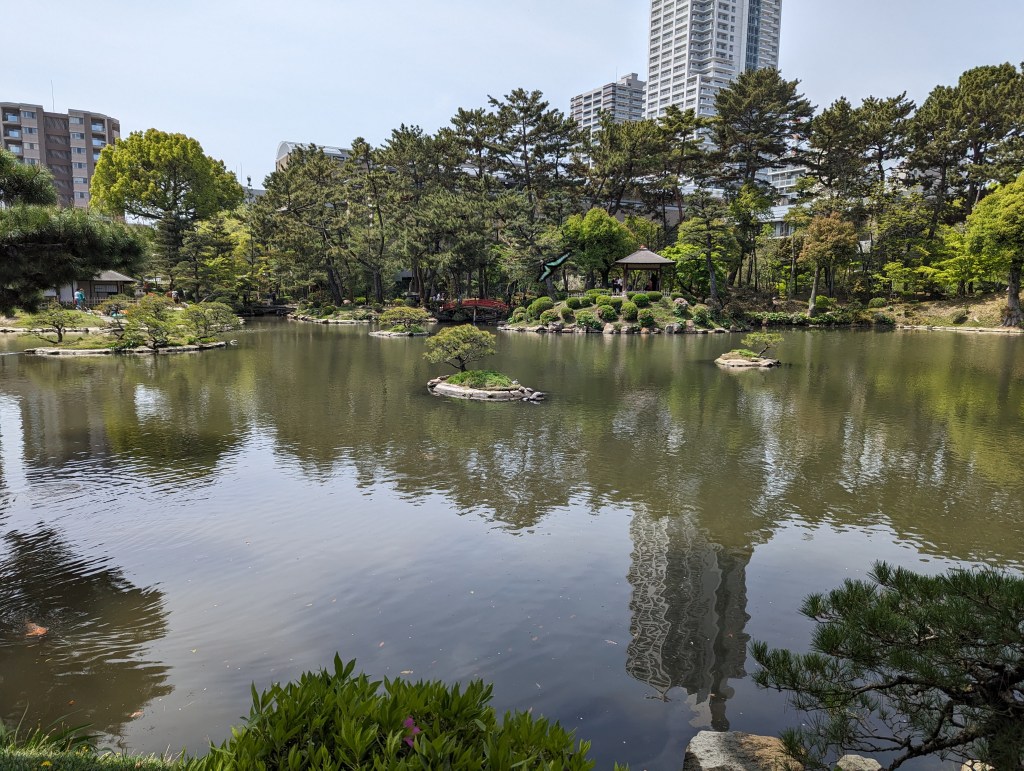
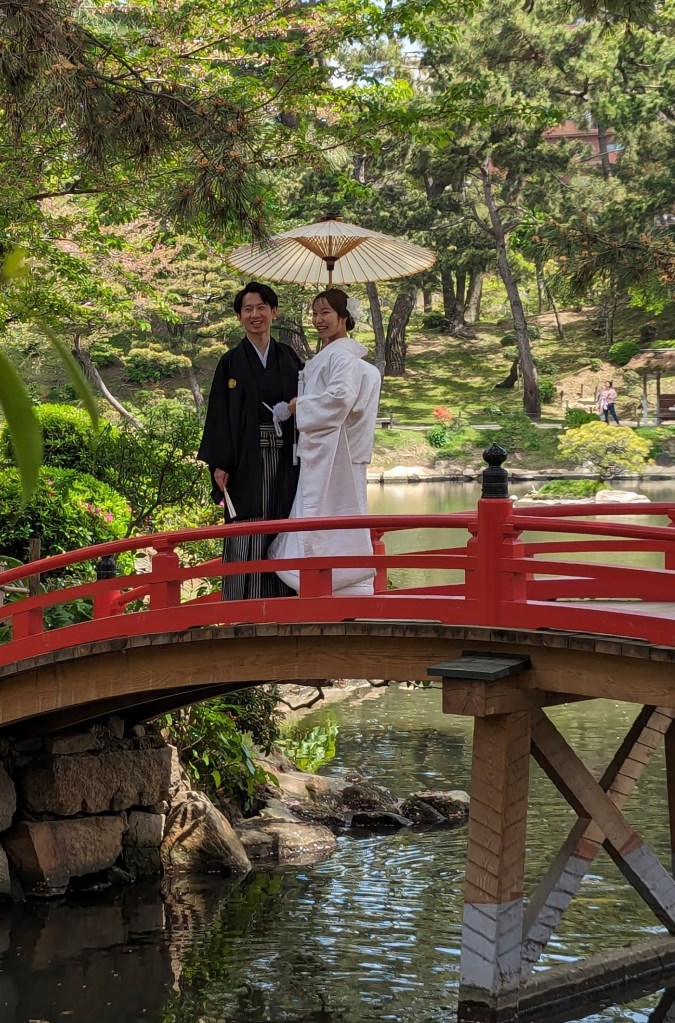
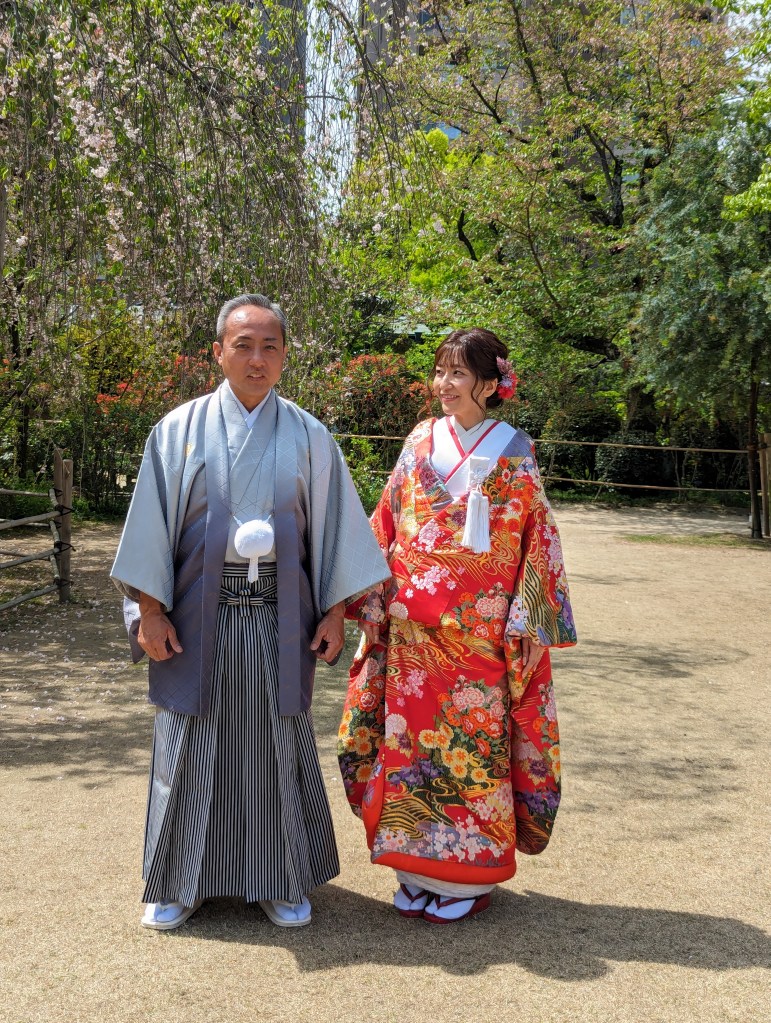
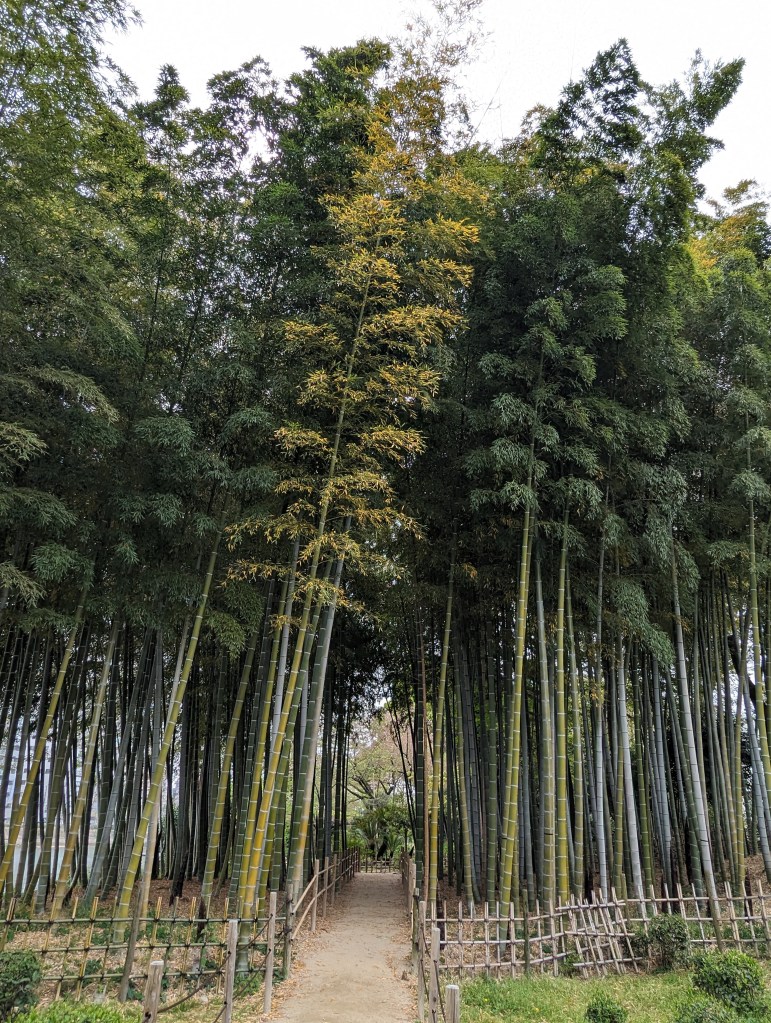
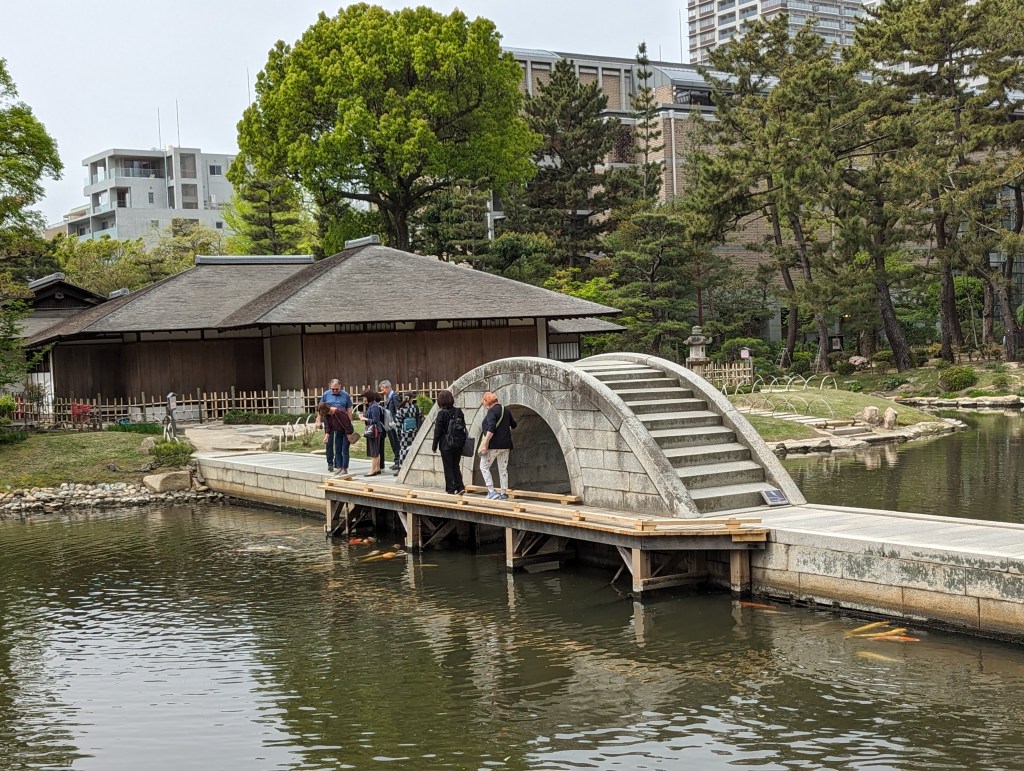
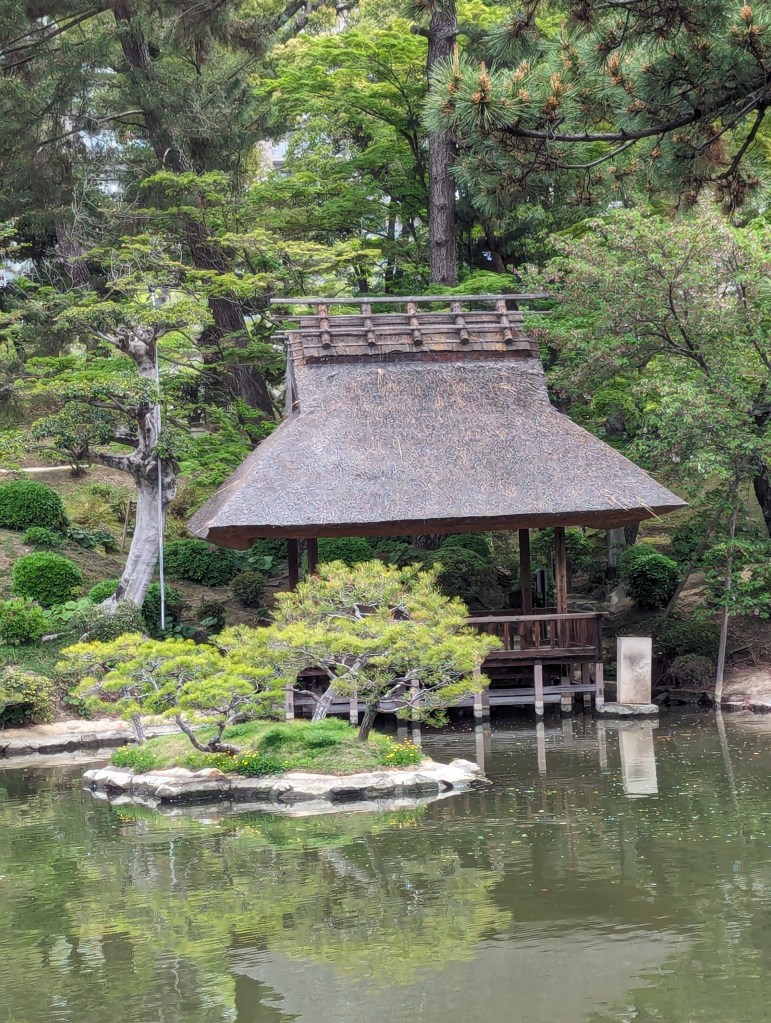
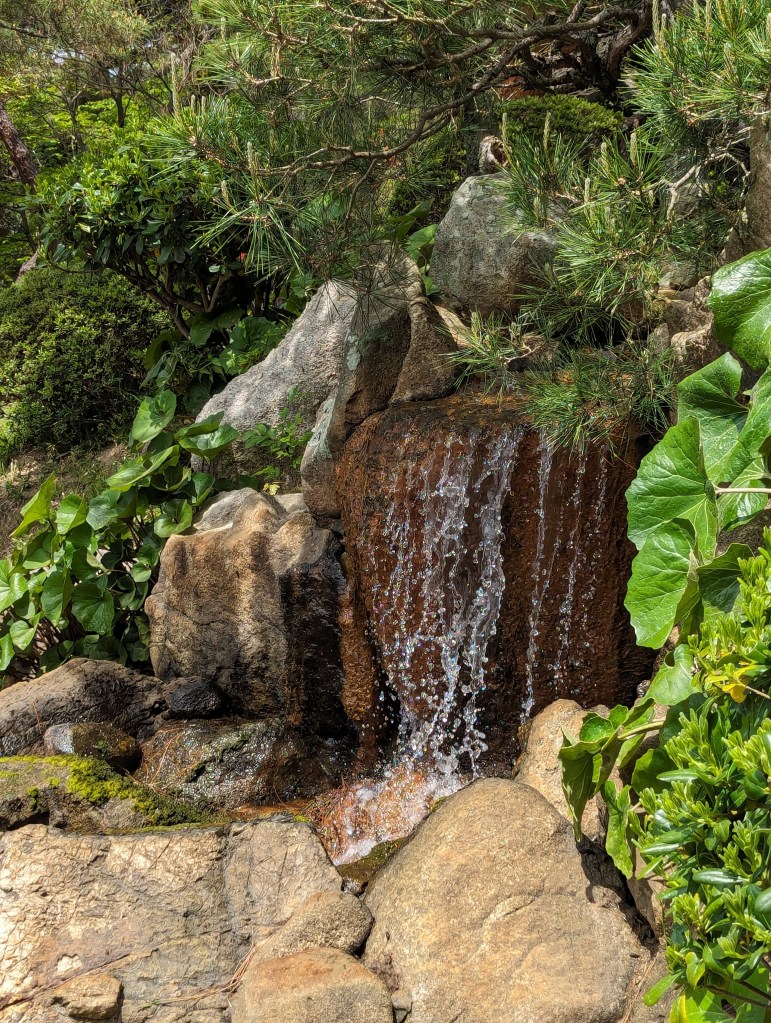
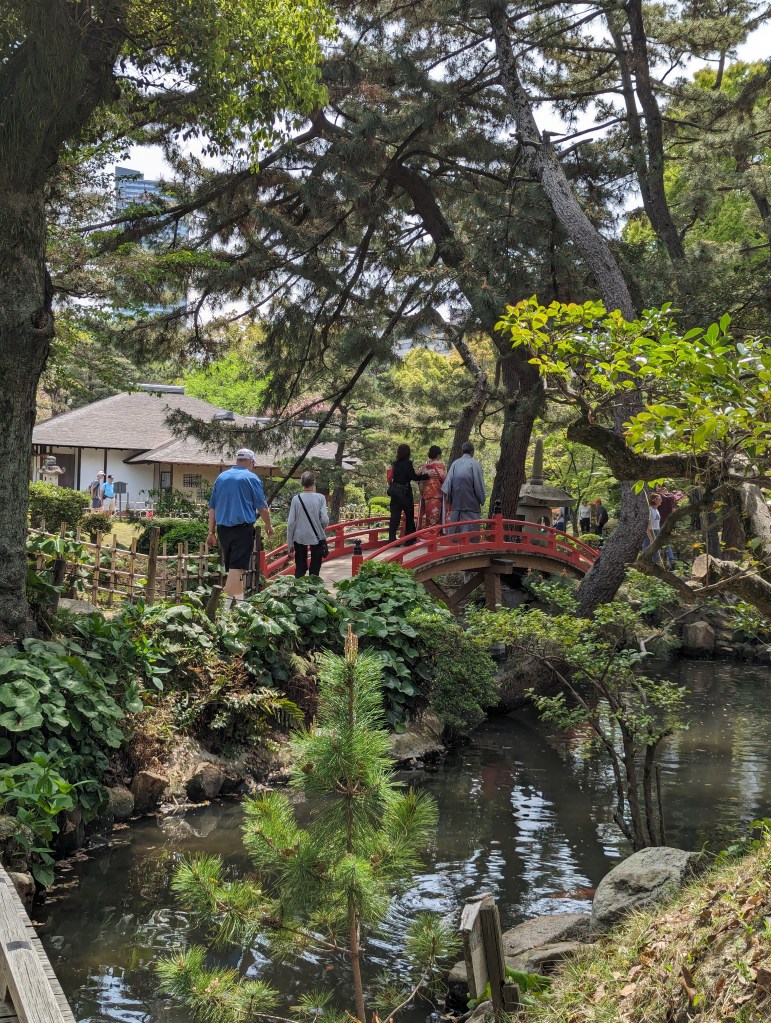
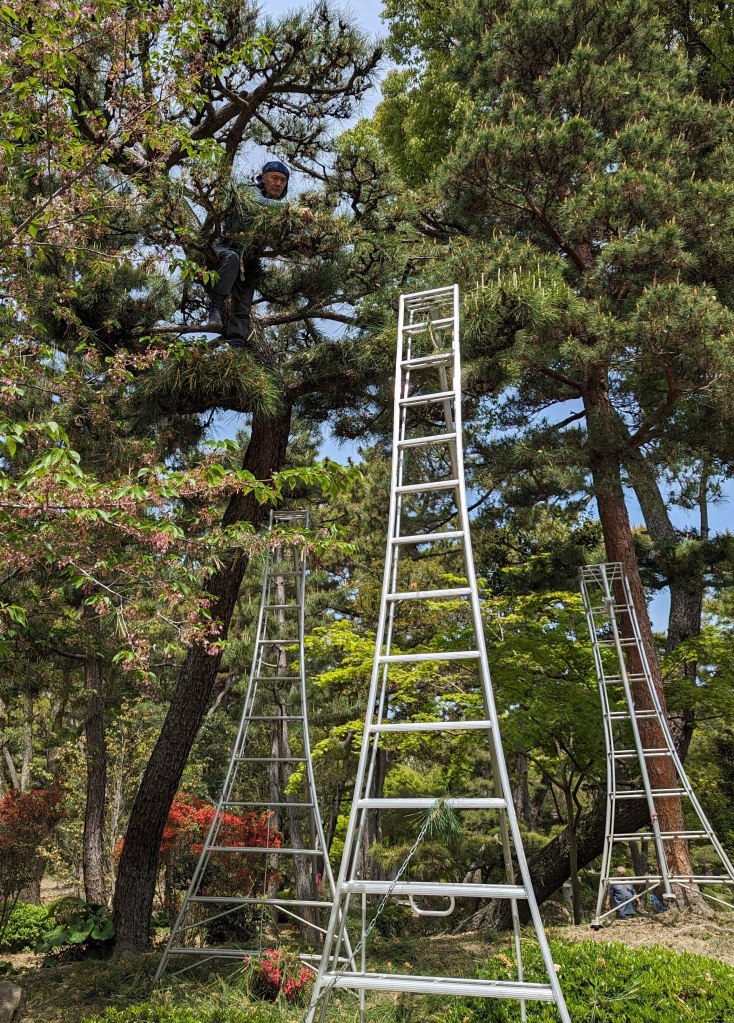
This beautiful, tranquil garden dates back to 1620 when it belonged to the Daimyo of Hiroshima, Asano Nagaakira. It sits in the heart of Hiroshima, surrounded by office buildings and skyscrapers. The garden is a popular place for wedding couples to have their professional photos taken. We were lucky to see two different couples—young and older—being photographed.
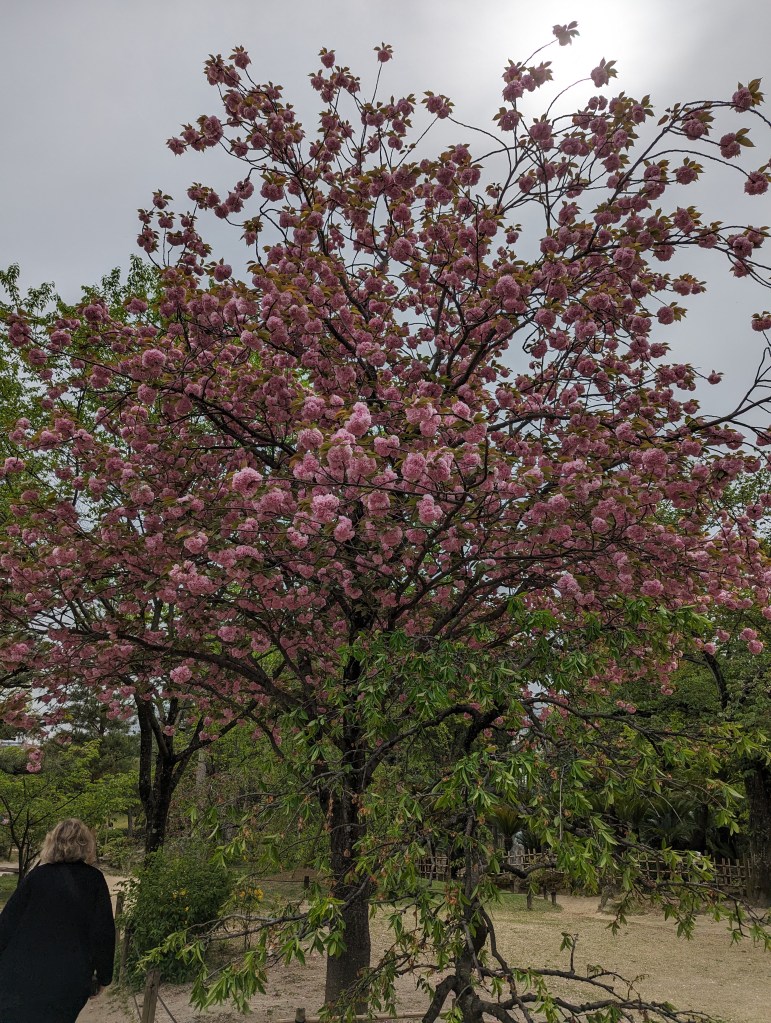
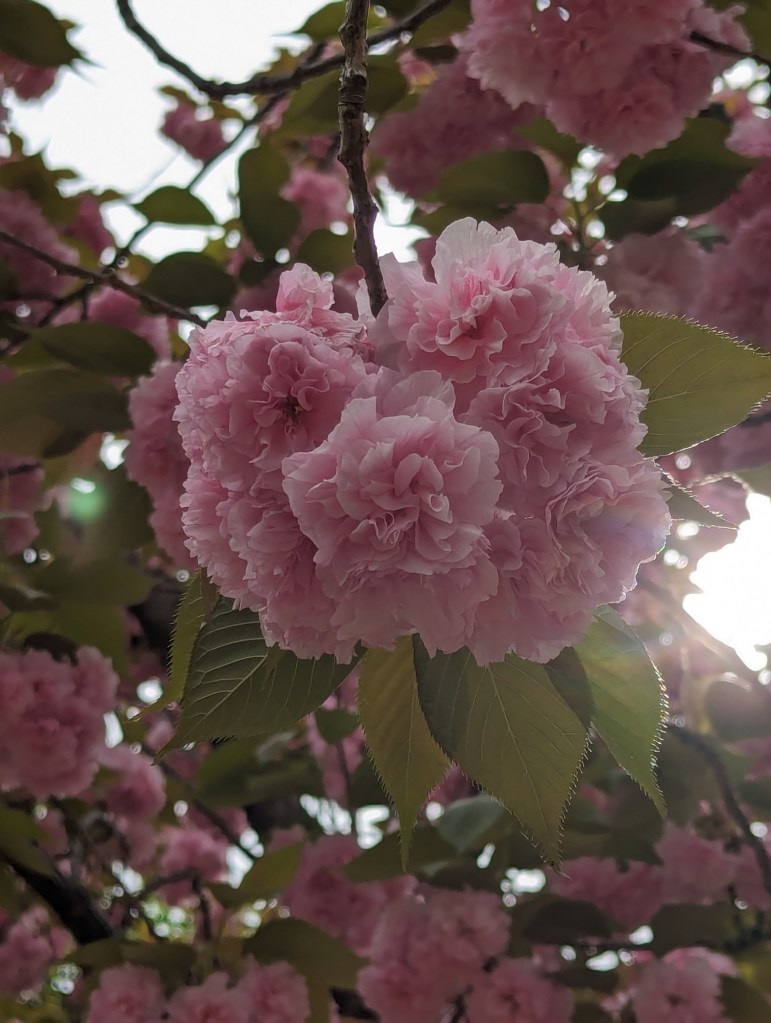
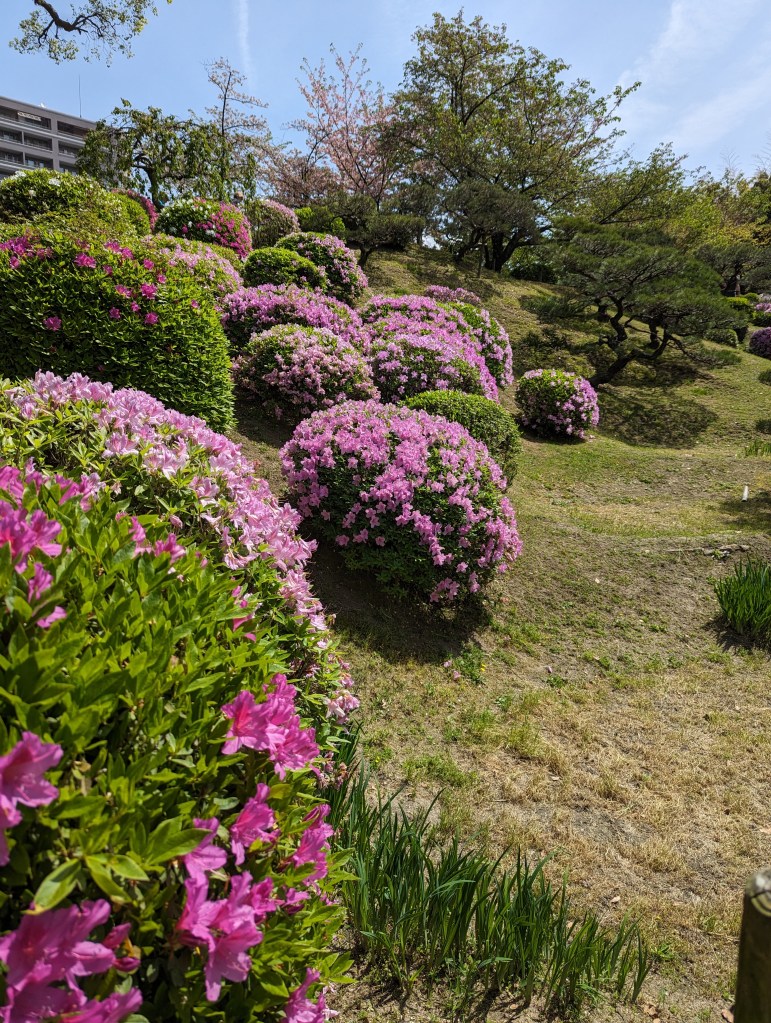
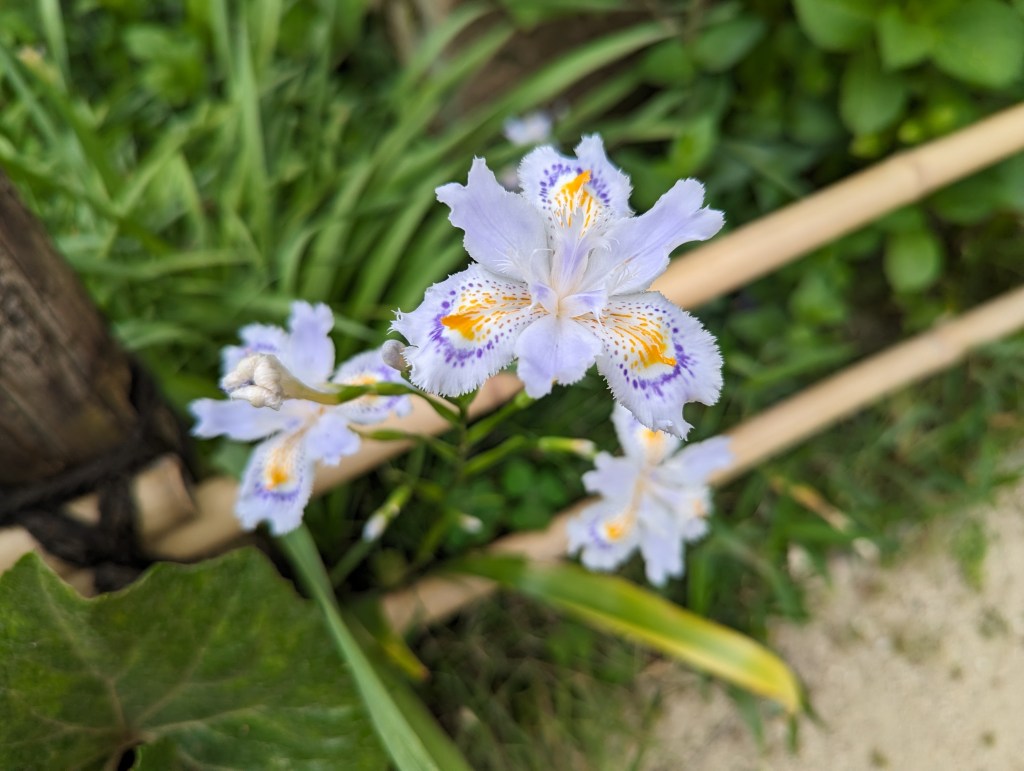
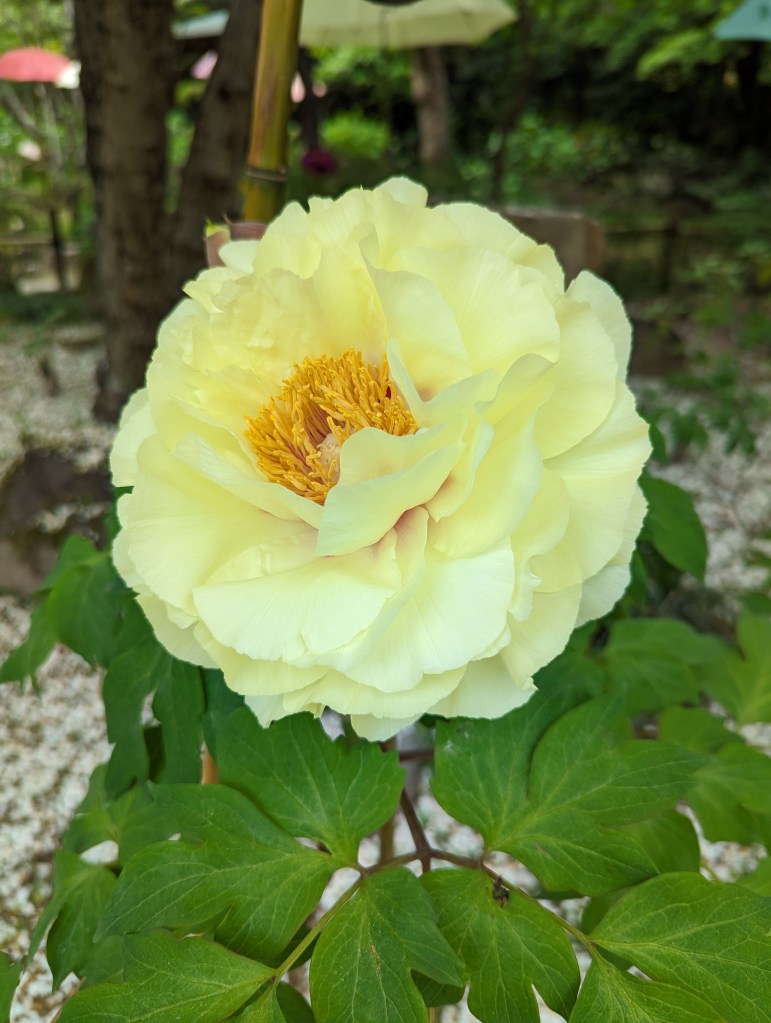
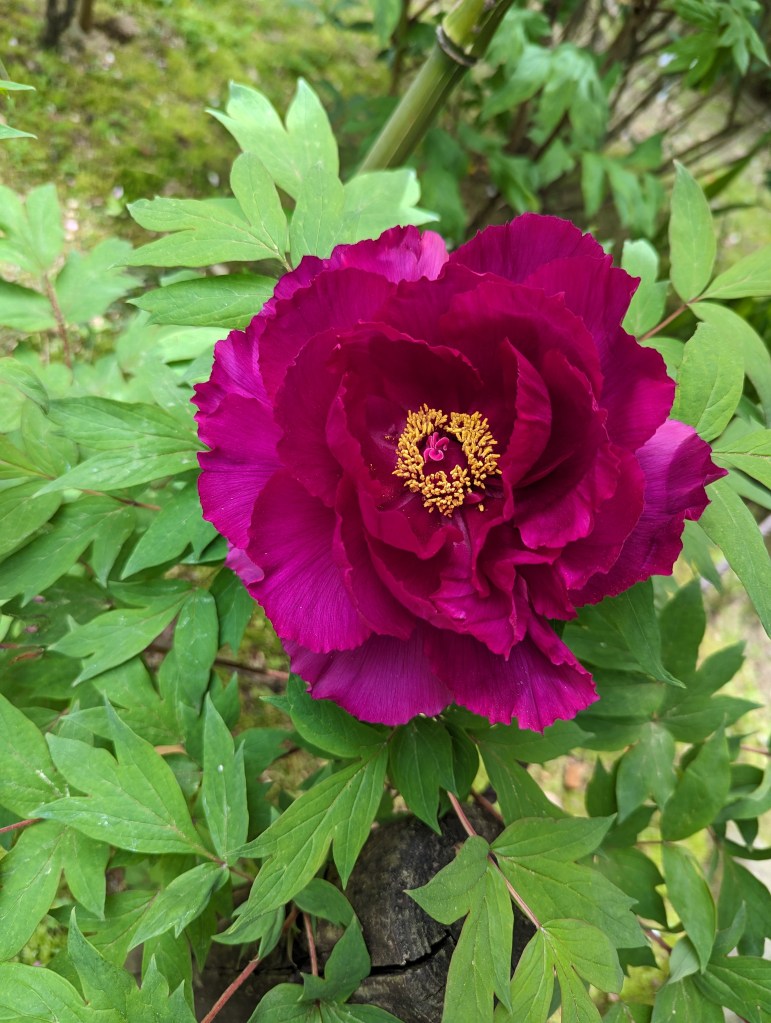
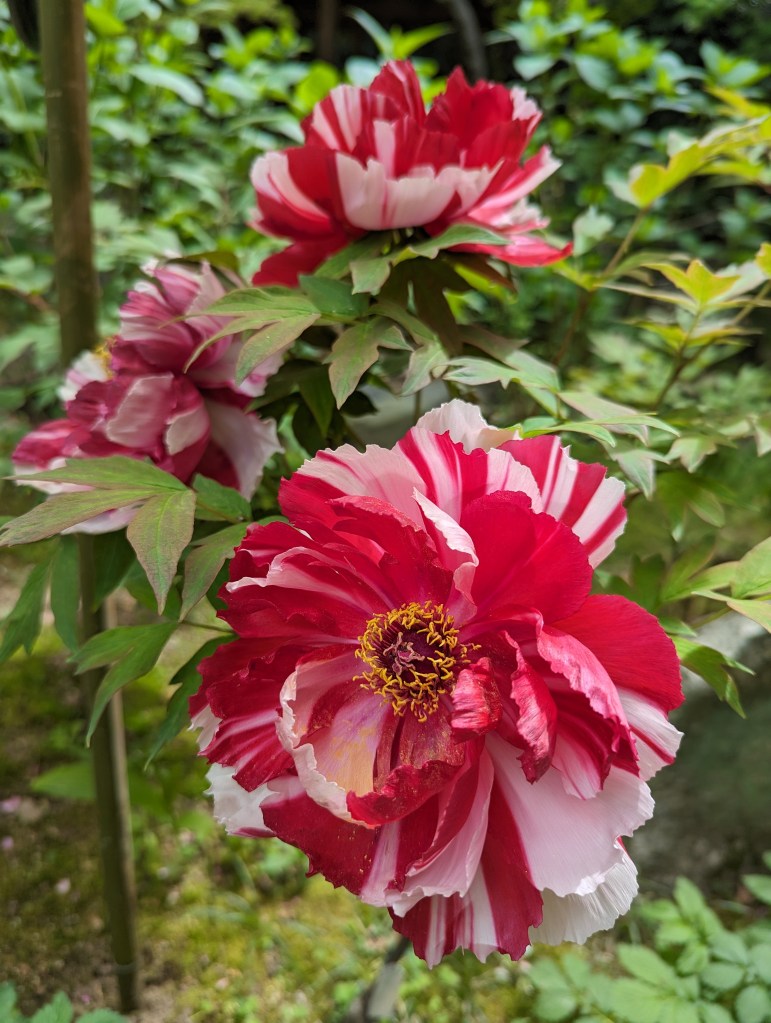
Beautiful spring blooms: peonies, cherry tree, iris, and azaleas:
Miyajima “Shrine Island”
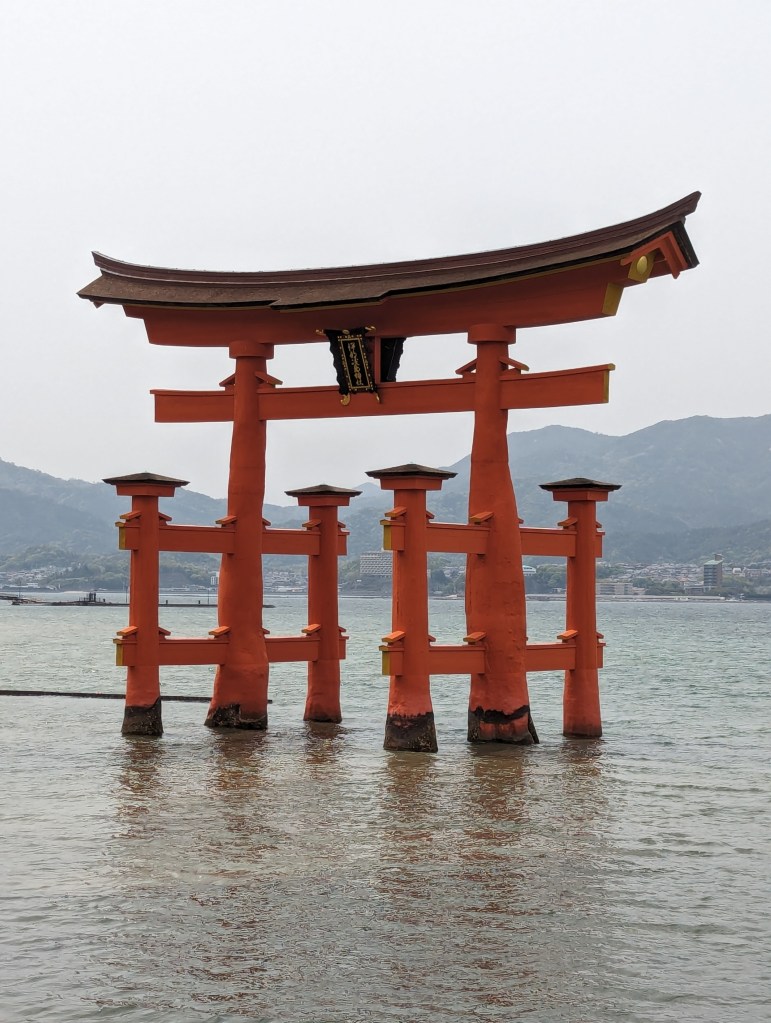
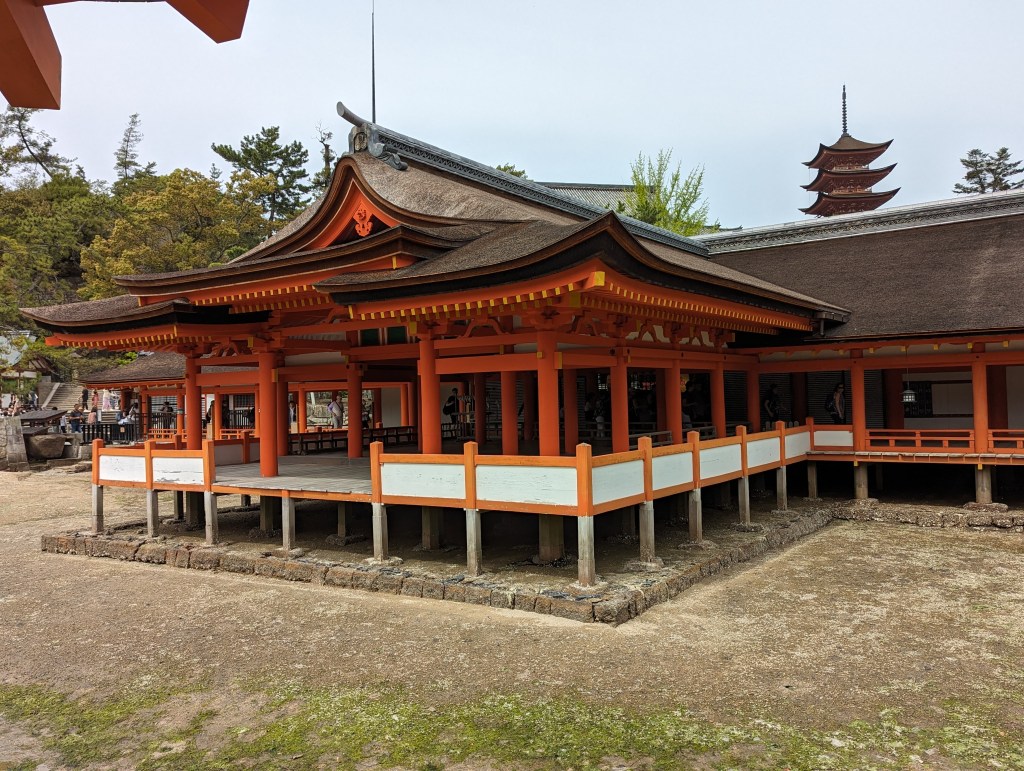
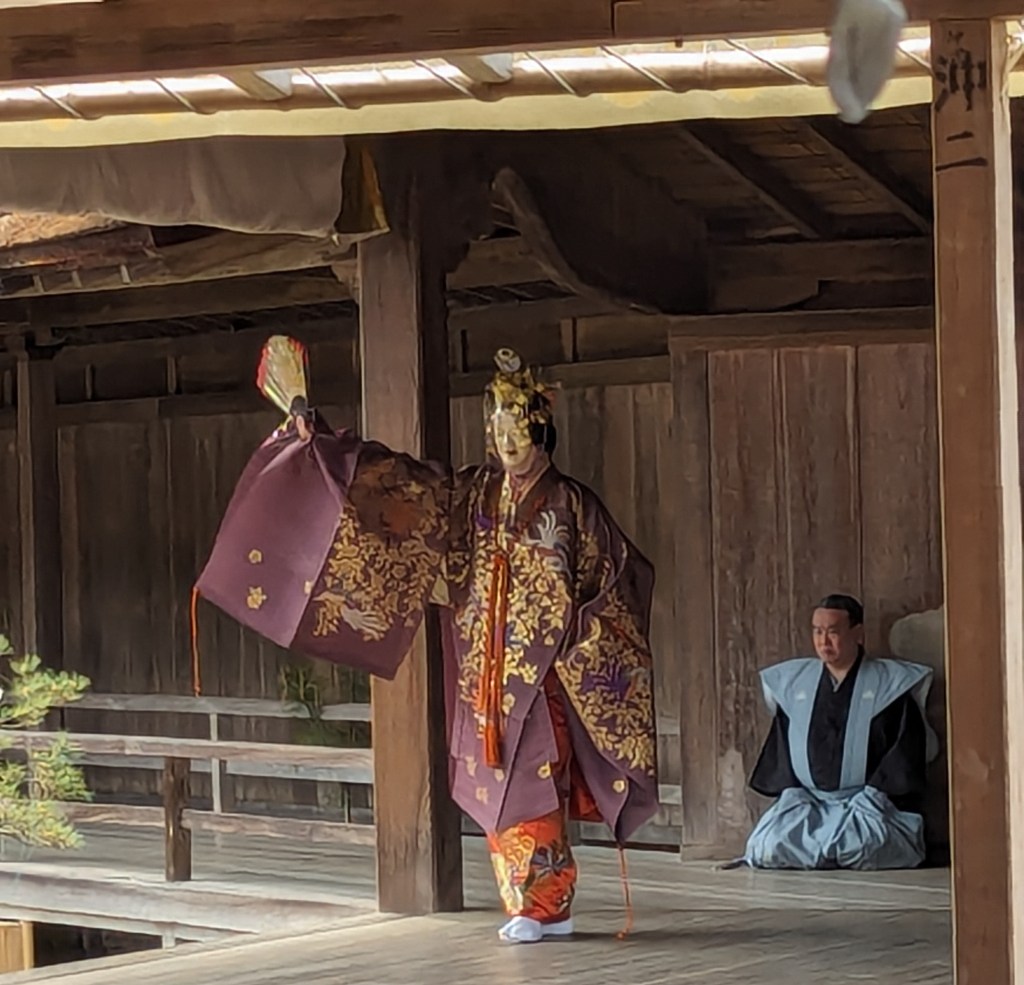
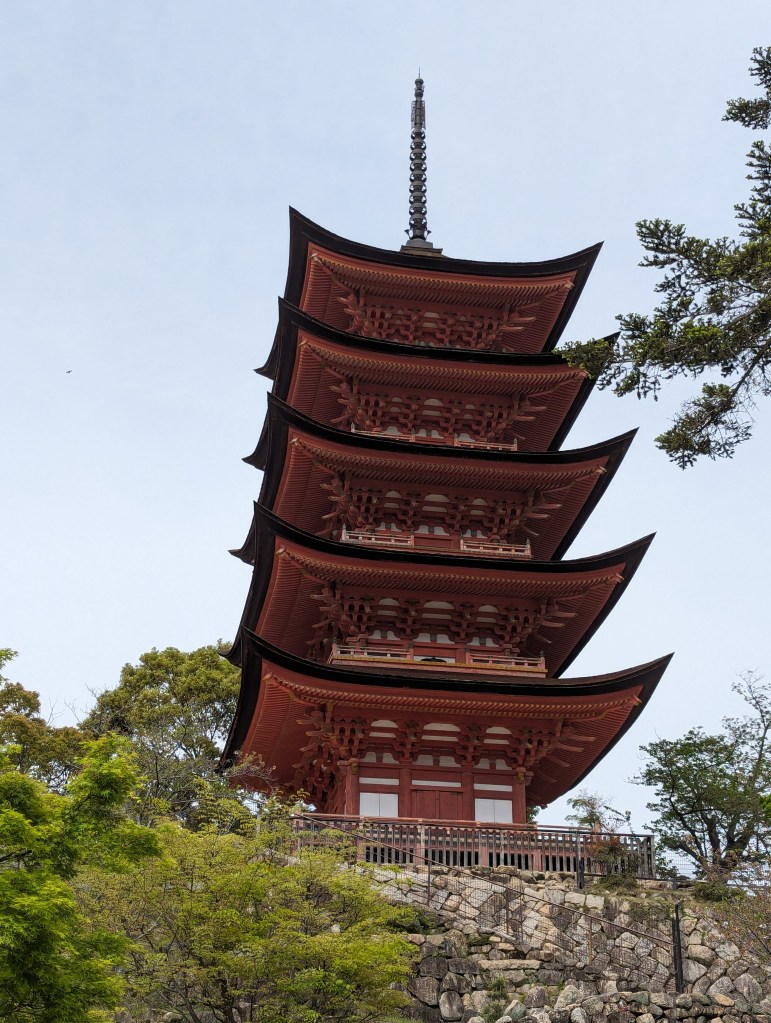
Miyajima Island is a small island less than an hour outside the city of Hiroshima. It is most famous for its giant torii gate and its Itsukushima Shrine, which is a UNESCO World Heritage Site. I wish I’d had more time to explore the island, but the short time I spent there was so enjoyable and memorable.
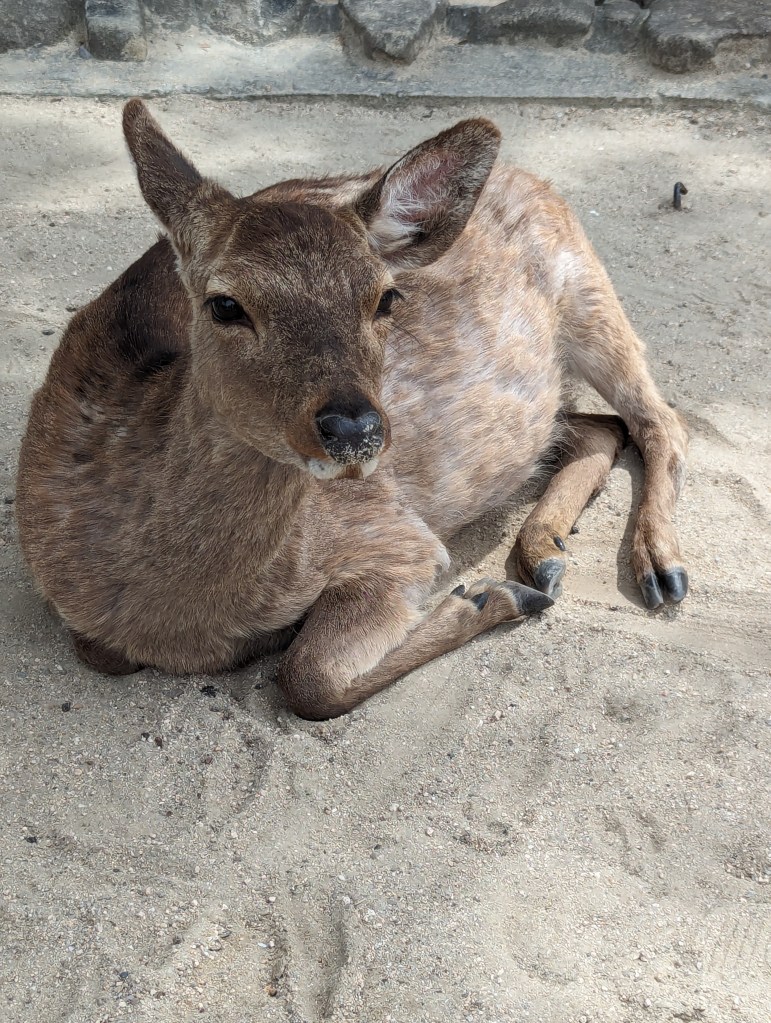
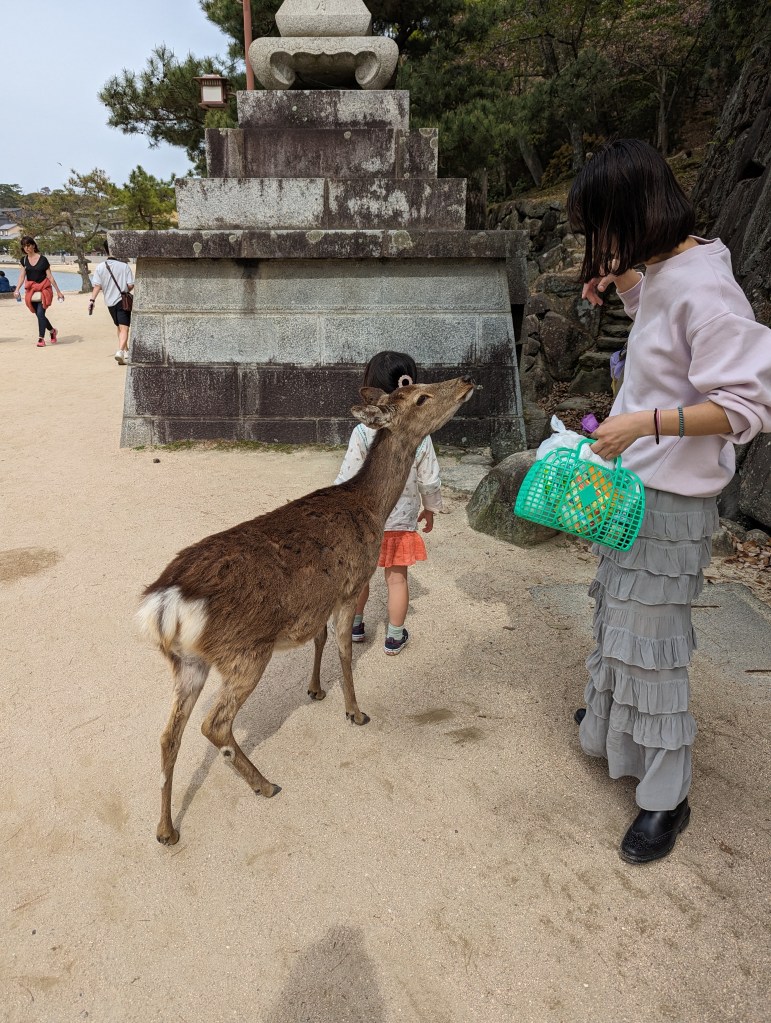
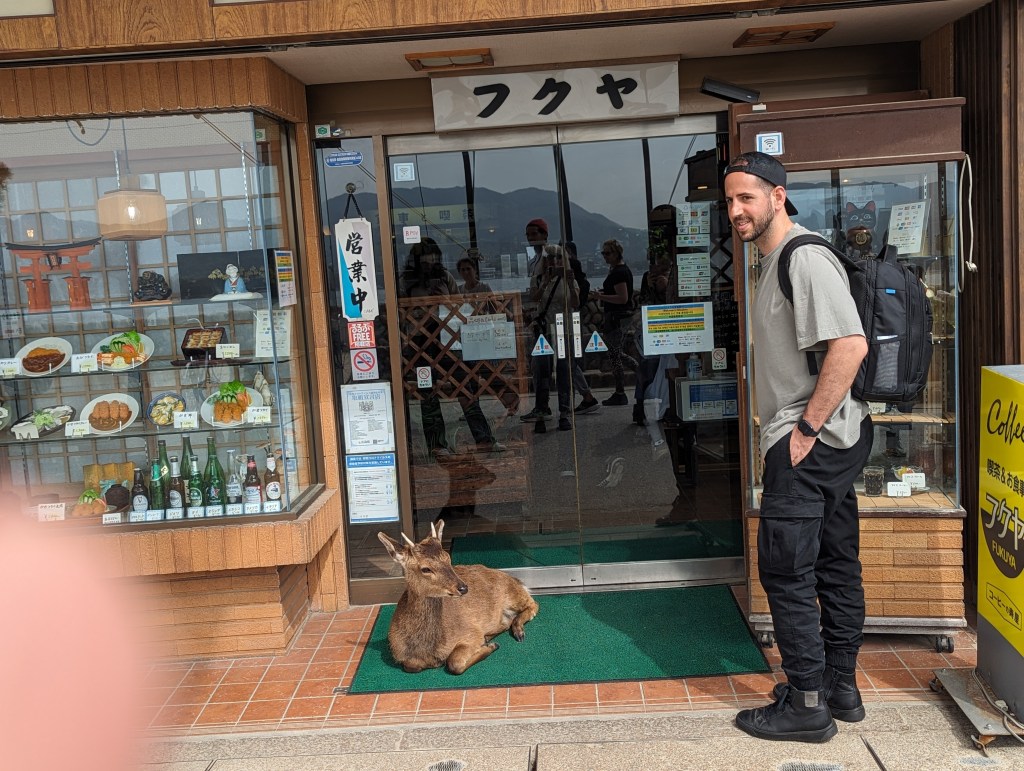
In ancient times, the deer on Miyajima were worshipped as messengers of the Gods, and locals offered food to them in small temples. Now, visitors are not allowed to touch or feed the deer. They roam freely around the island.
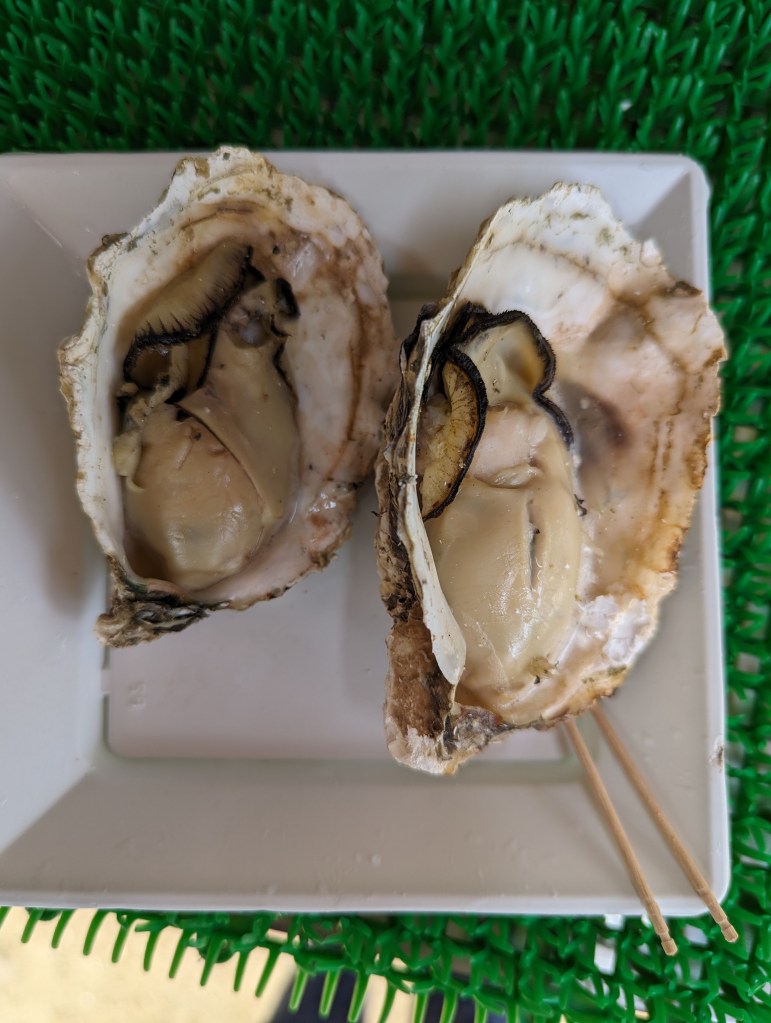
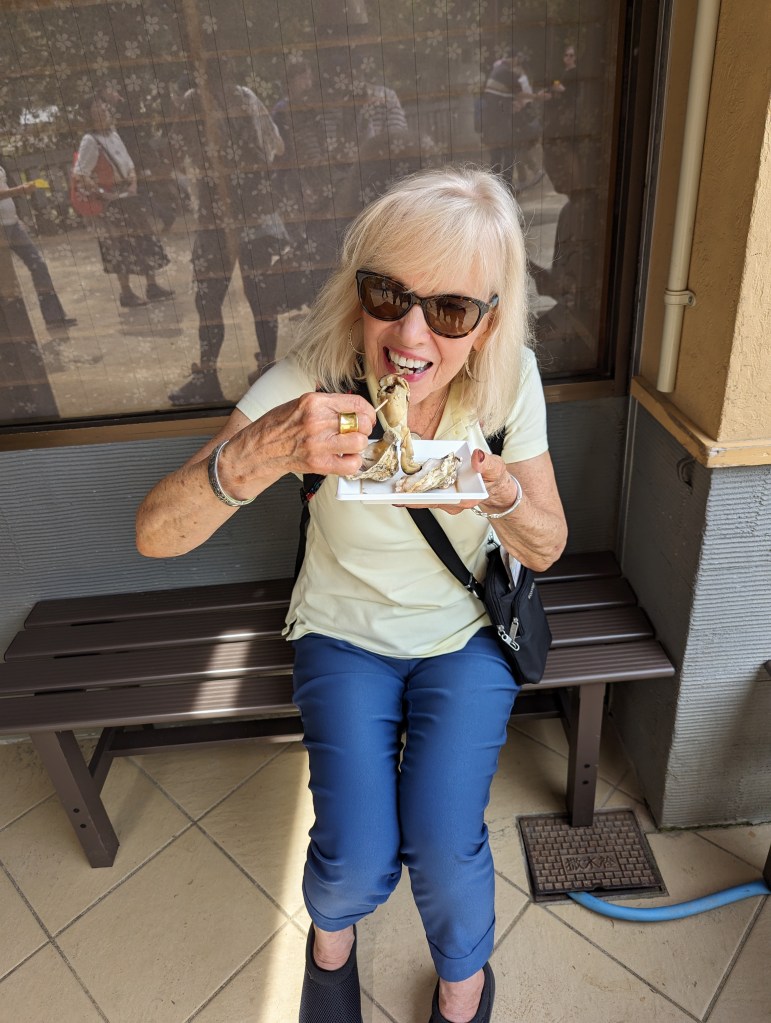
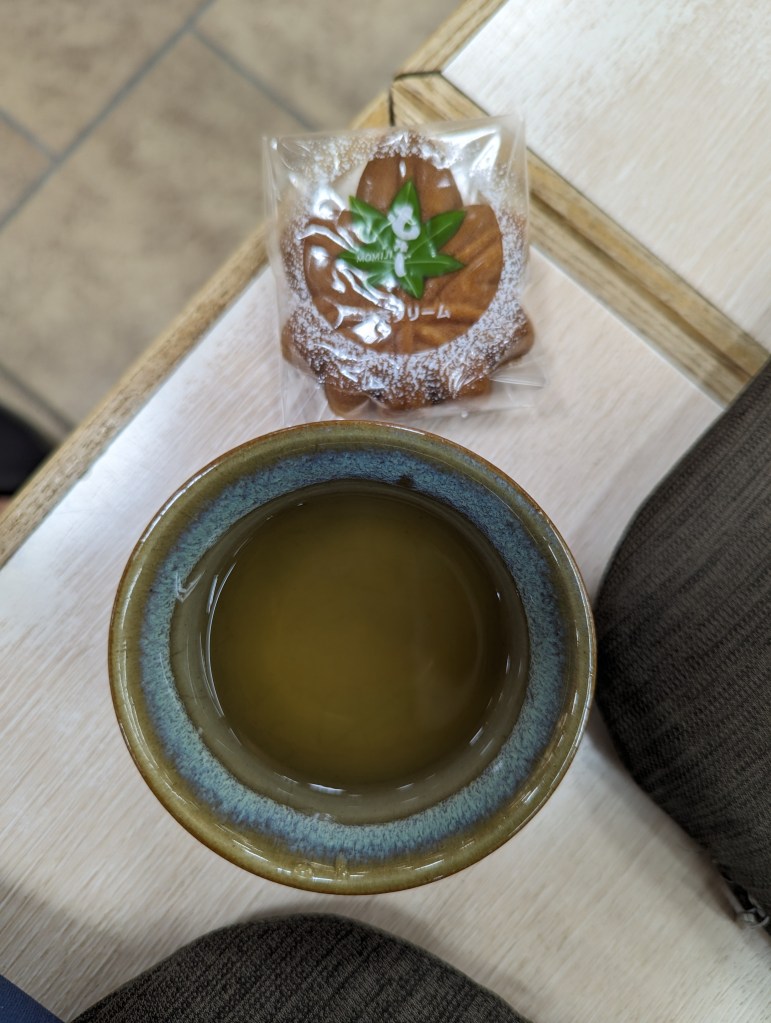
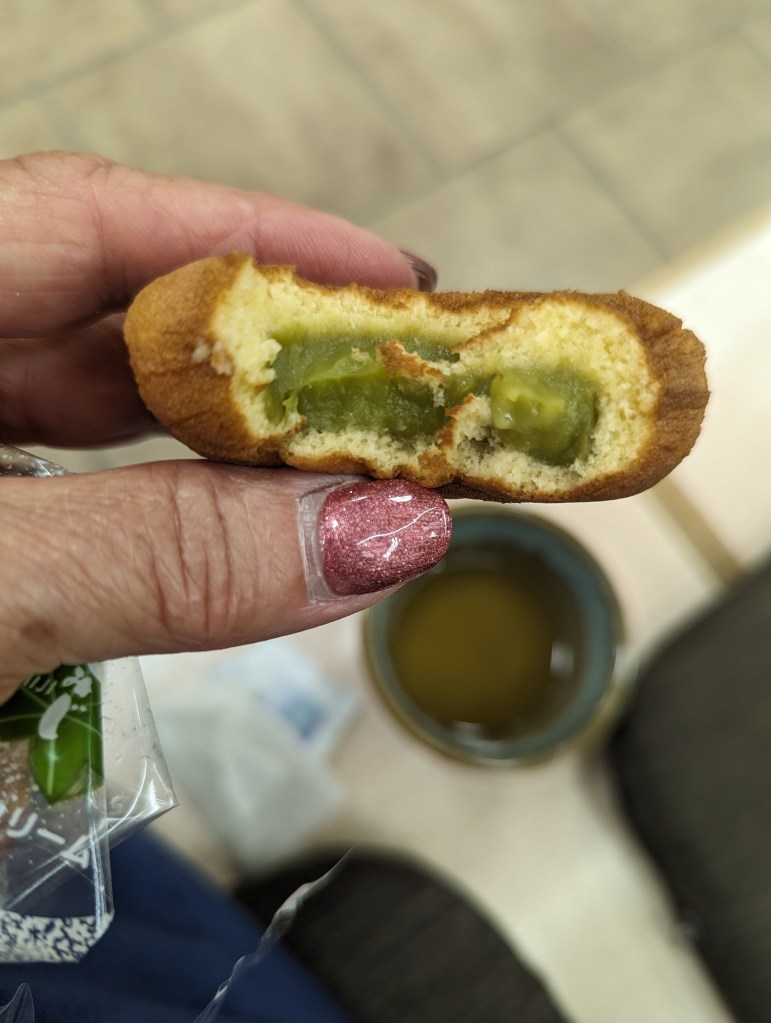
Momiji manju is a steamed buckwheat and rice cake pastry shaped like a maple leaf. Its origin dates back to the early 20th century. It’s typically stuffed with red bean paste, but also chocolate, matcha, and cream cheese. The one I ate was stuffed with matcha. Quite tasty. I paid for the manju, but the green tea was complimentary. The maple leaf shape refers to the numerous Japanese maple trees growing on the island. In Japanese culture, the maple leaf symbolizes peace, longevity, and prosperity.
Postscript
In case you’re wondering, Joe and I went on different excursions. We both love taking photos/videos, so it’s always interesting to compare his and mine, to see what captures each of our interest. These blog posts are always a combination of his and my photos/videos. I asked Joe what was the highlight of his time in Hiroshima. He felt the Peace Memorial Park and Museum was his favorite part. Of course, the Park and Museum were extraordinarily powerful sites for me as well, but for pure enjoyment, I’d have to pick Miyajima Island. Next stop, Kyoto!

 Deb's Blog
Leave a comment