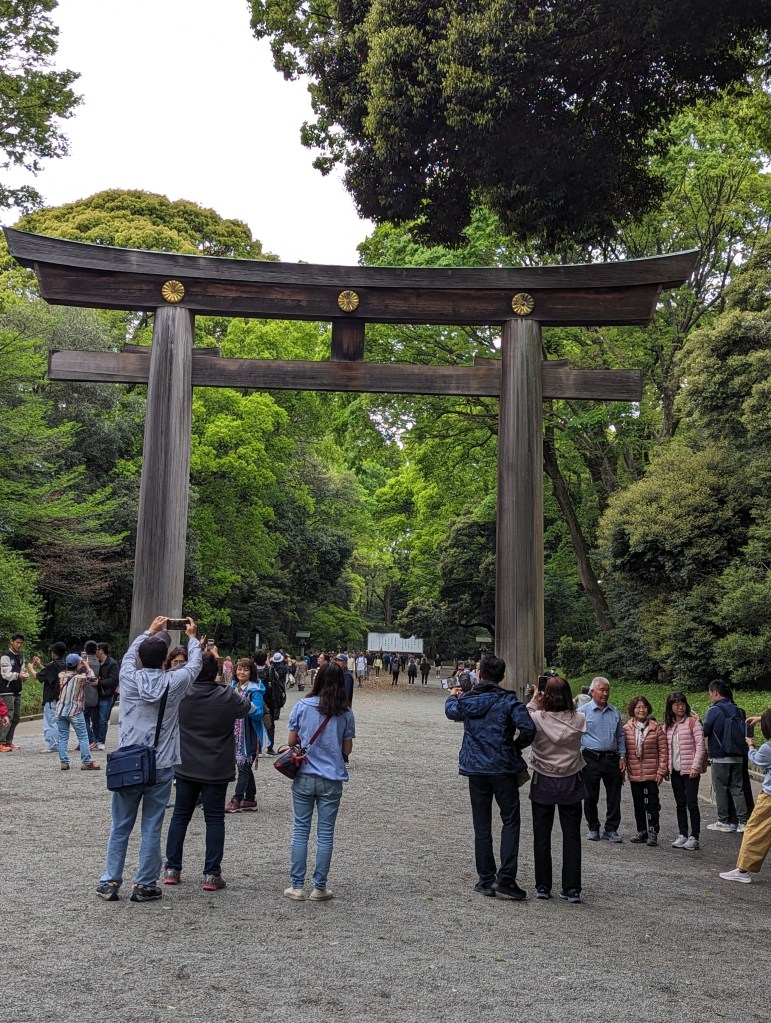
The Meiji Shrine (1920) was dedicated to Emperor Meiji, the 122nd emperor and Empress Shoken. It is surrounded by a man-made forest, planted with 170,000 trees, donated from all over the country.
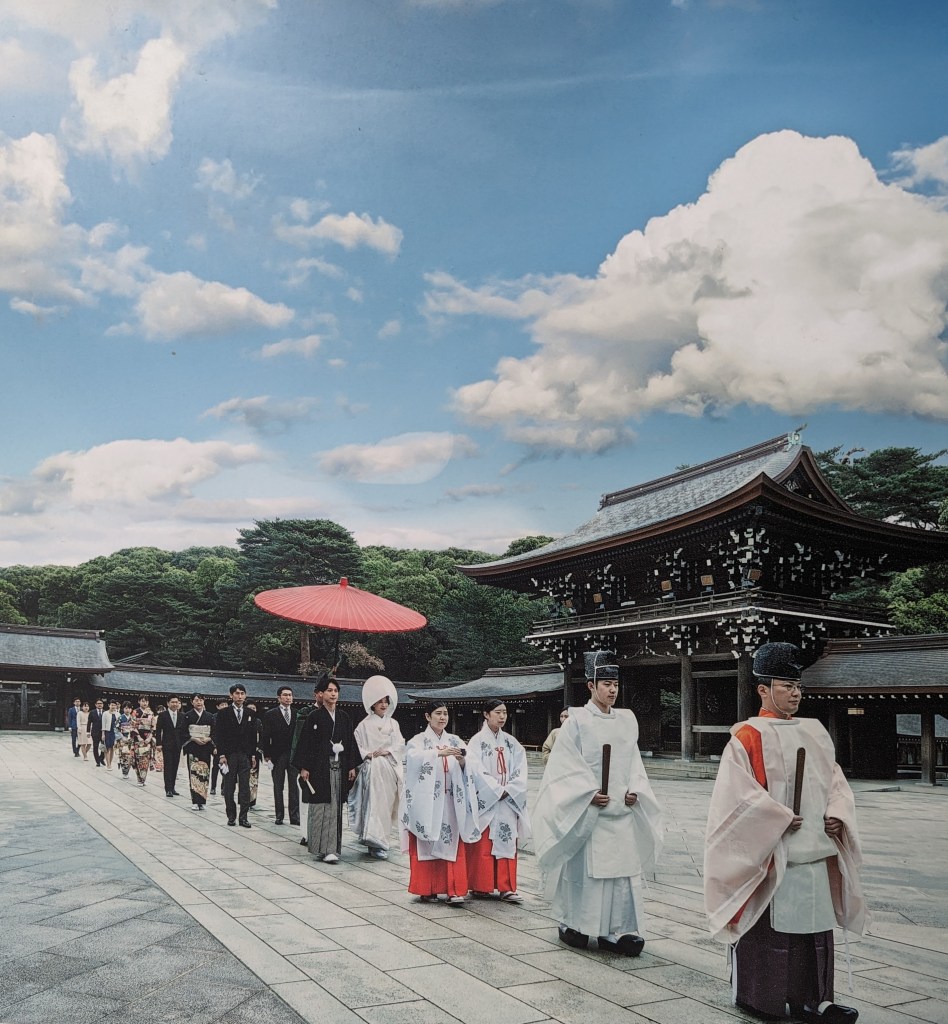
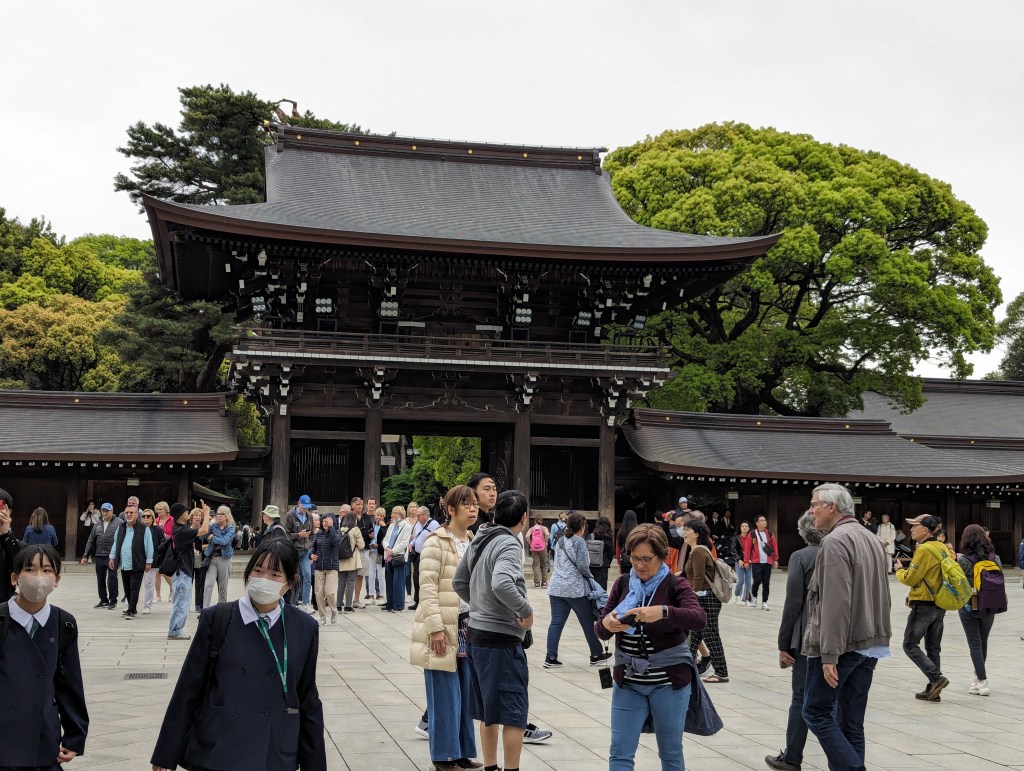
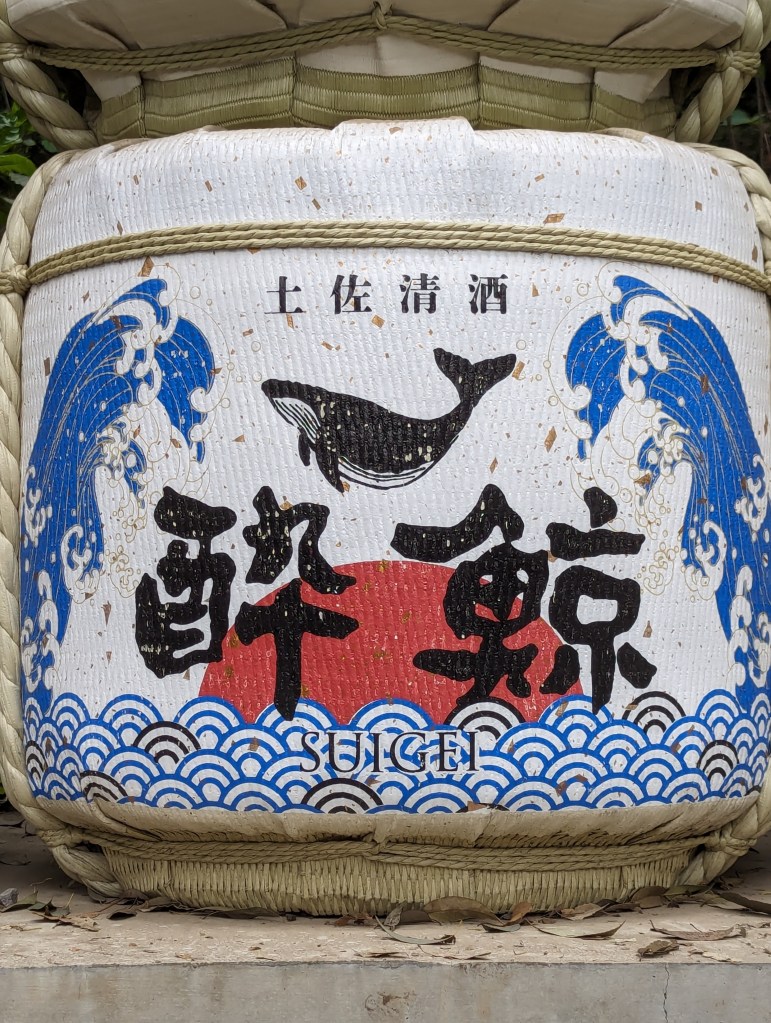
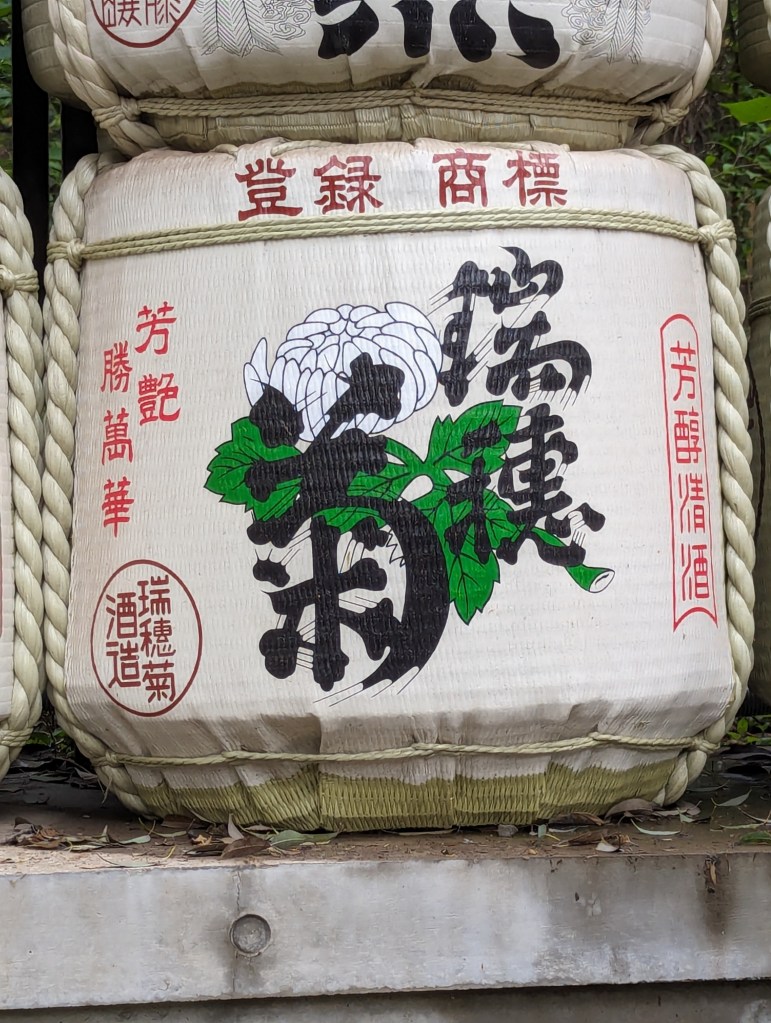
Wooden torii gate at the main entrance; made from a 1500-year-old cedar tree from TaiwanA place to wash away the impurities before entering the prayer hallA popular site for traditional weddings The main building of the shrineOver 200 (empty) sake barrels, donated by brewers from all over the country, to ask the gods for prosperity
HAPPO EN HOTEL AND EDO GARDEN:
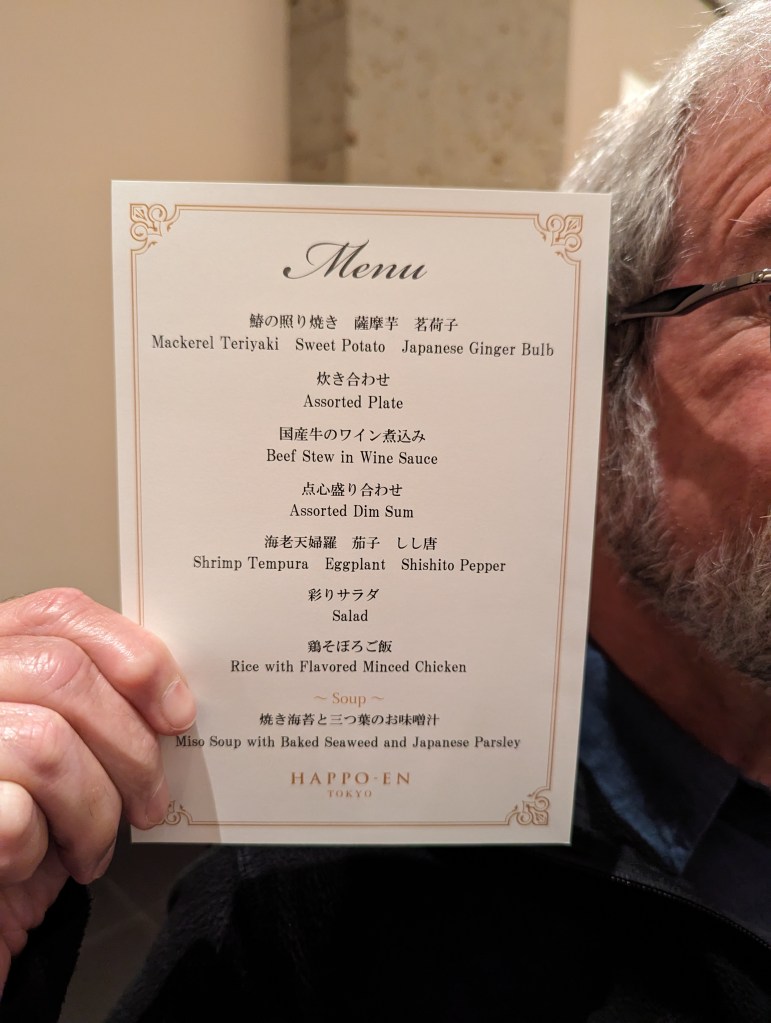
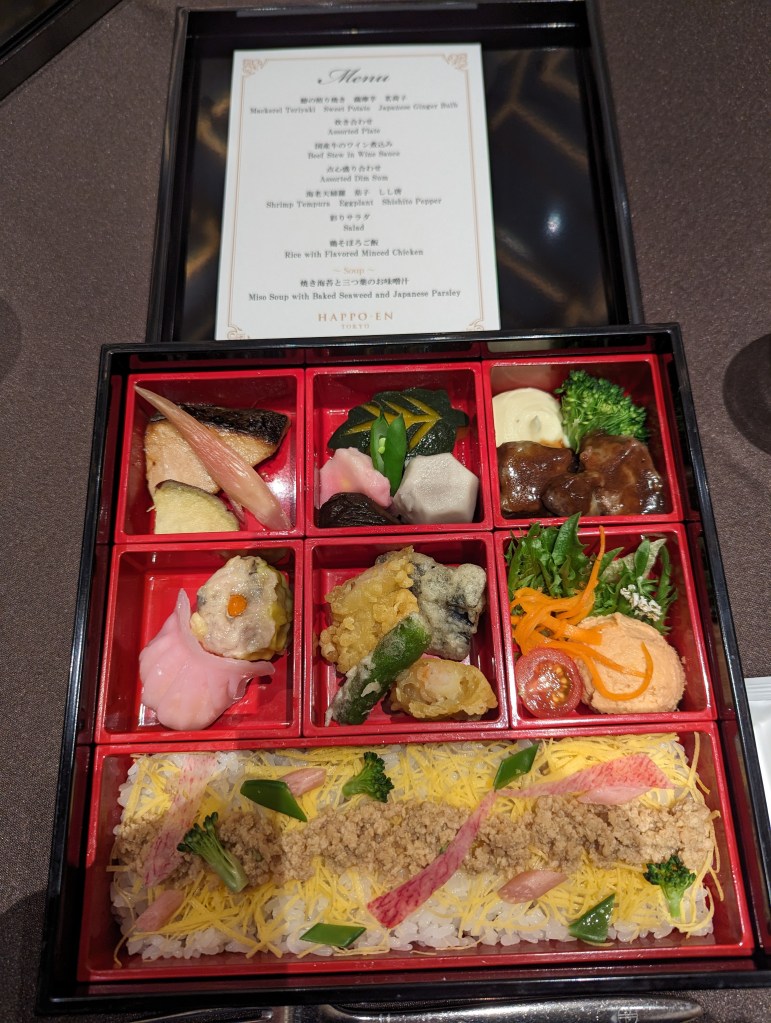
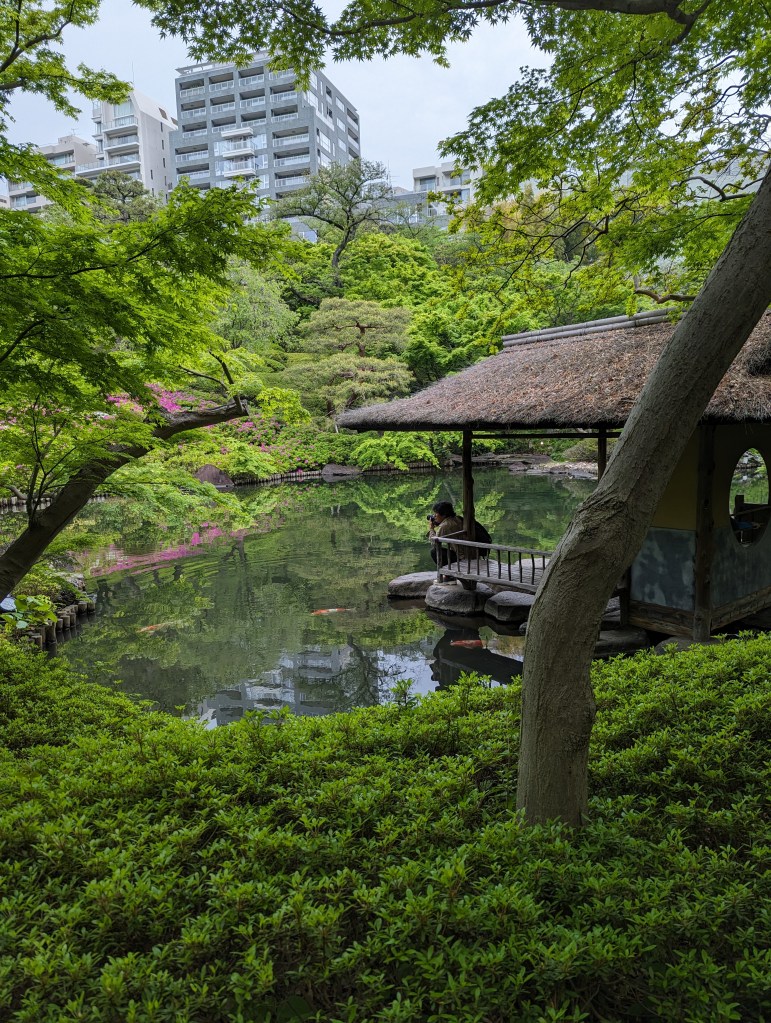
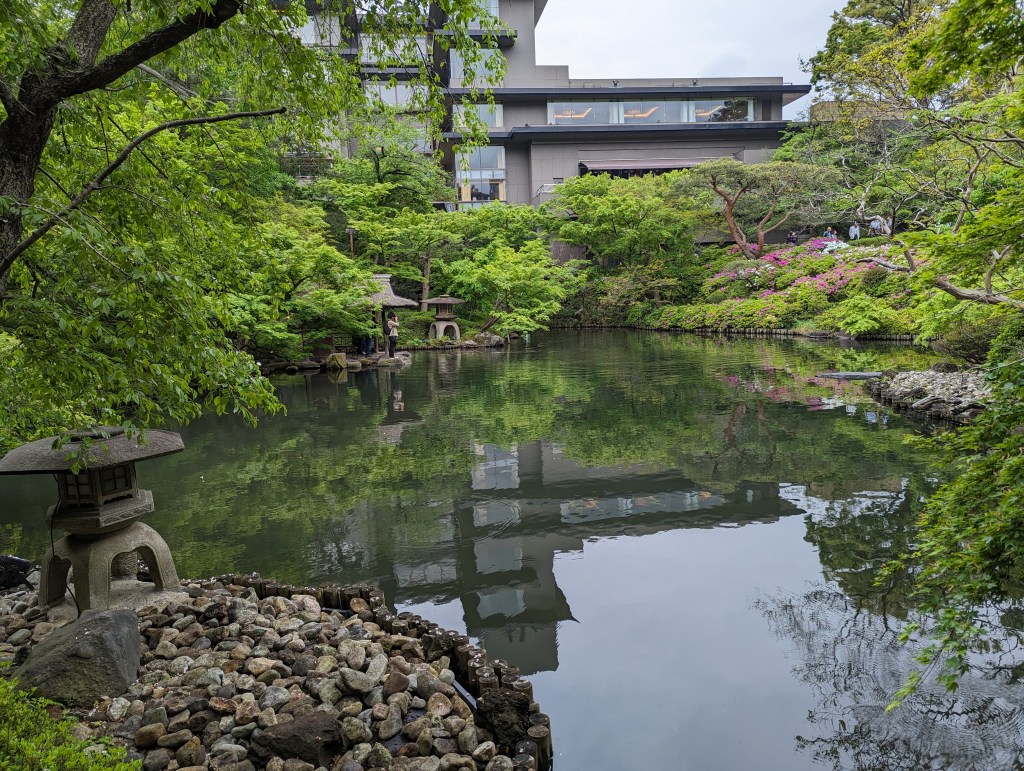
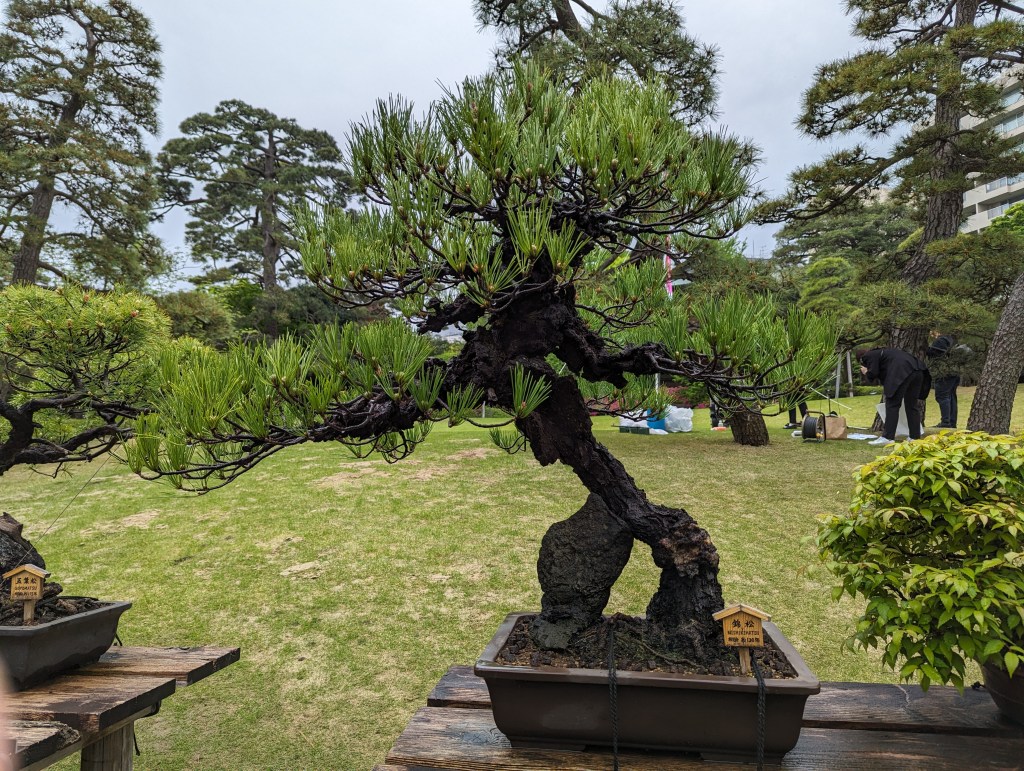
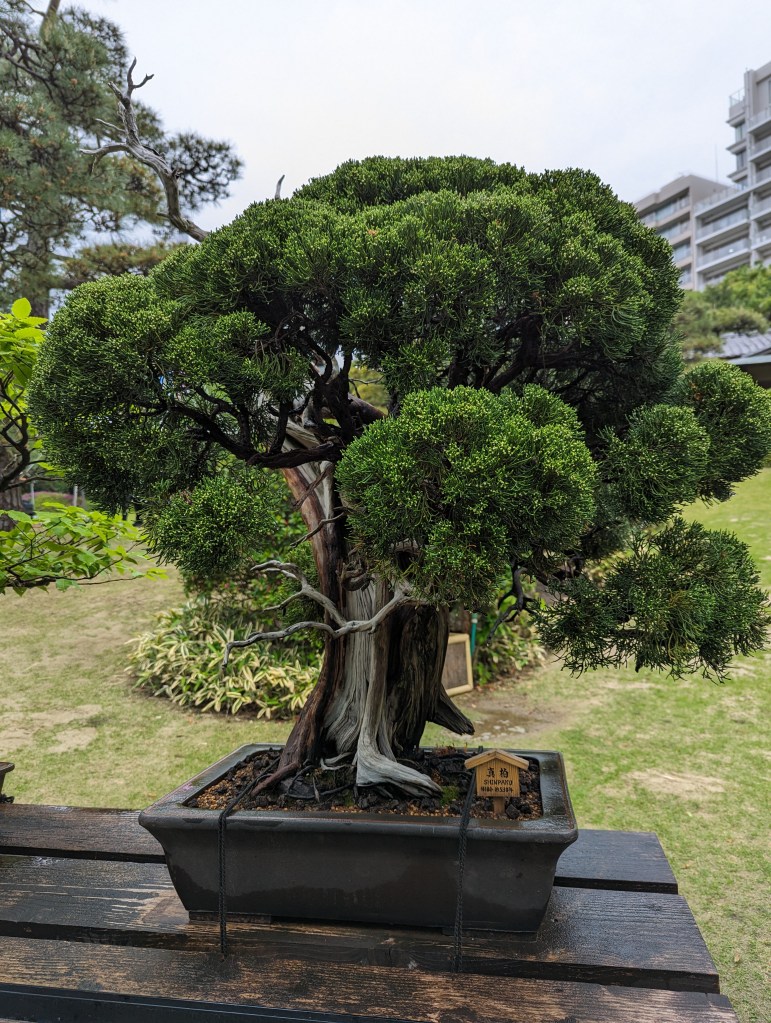
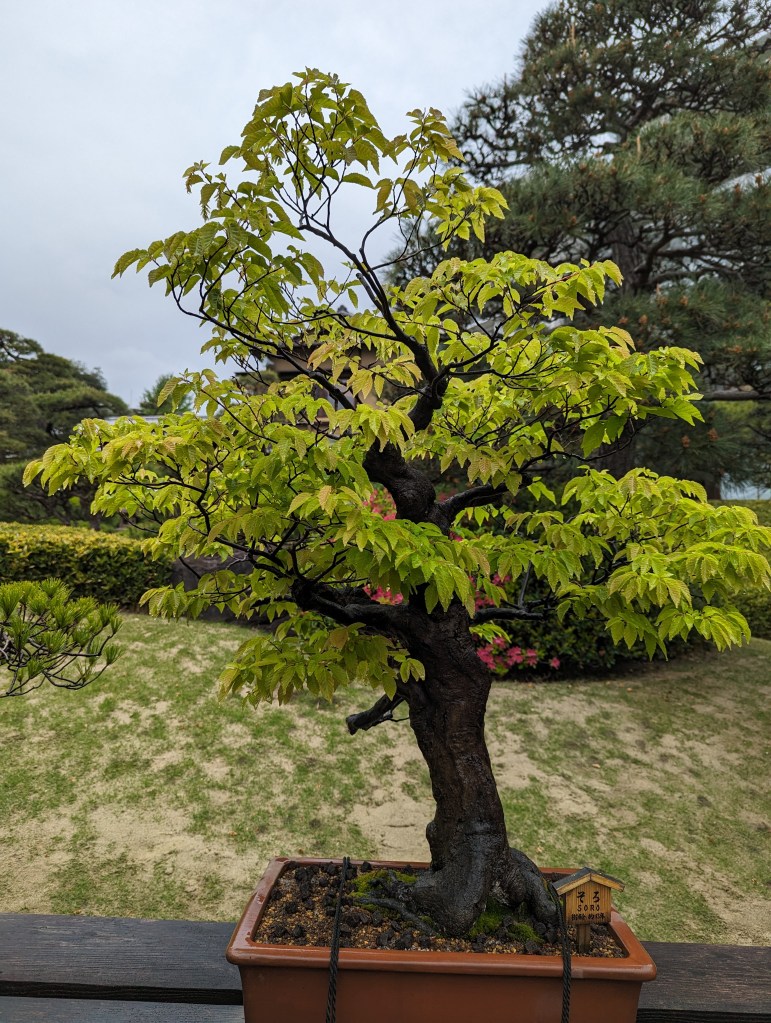
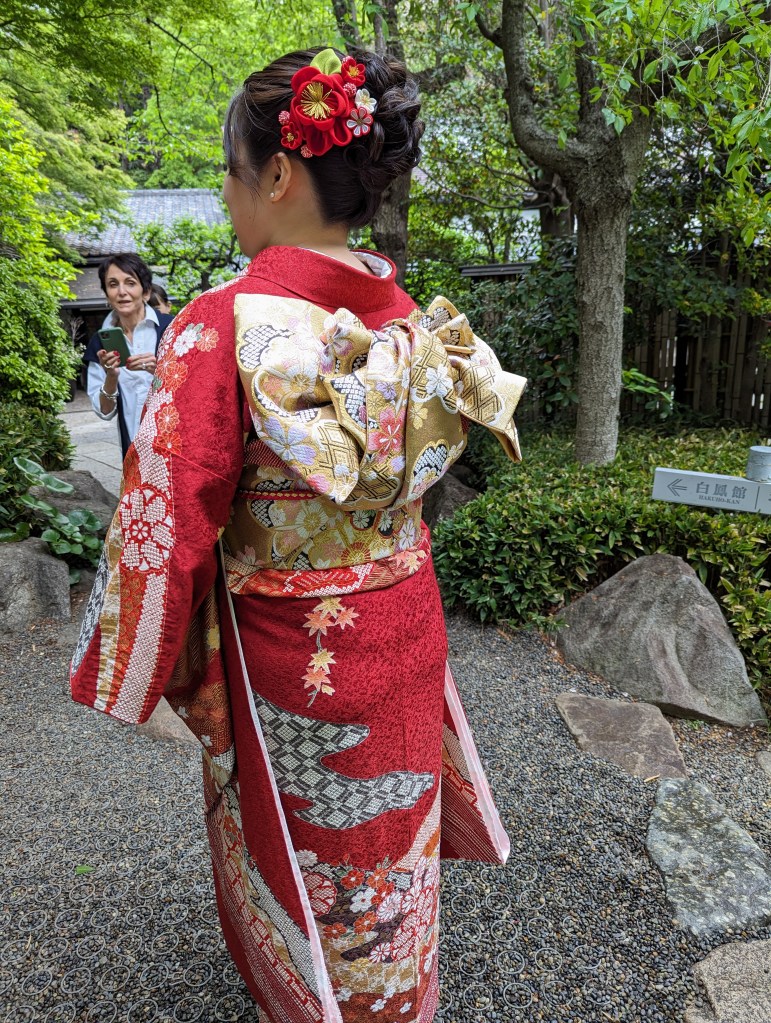
This luxury hotel is a popular wedding venue, and is on the site of a beautiful garden which belonged to the samurai Okubo Tadataka (1560-1639). We ate a traditional Japanese lunch served in an exquisite bento box. Then we strolled around the garden admiring the ancient bonsai, the koi pond, and the manicured shrubbery and trees.
The dim sum (middle left), the shrimp tempura (center), and the beef stew (upper right) were my favorites.
IMPERIAL PALACE:
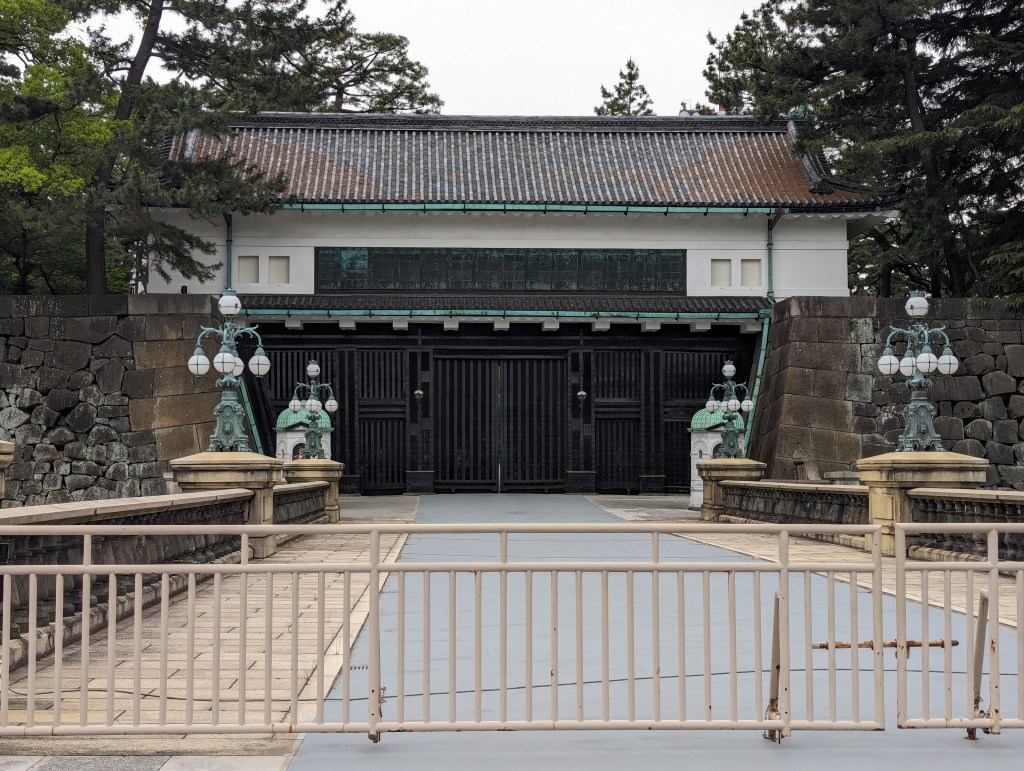
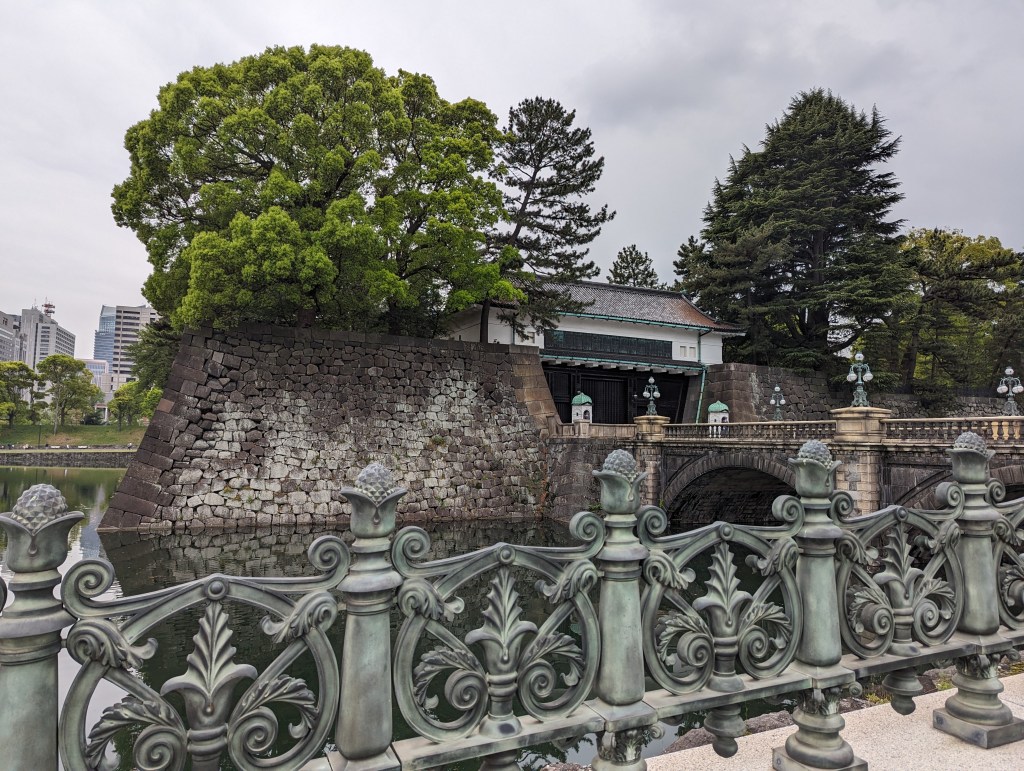
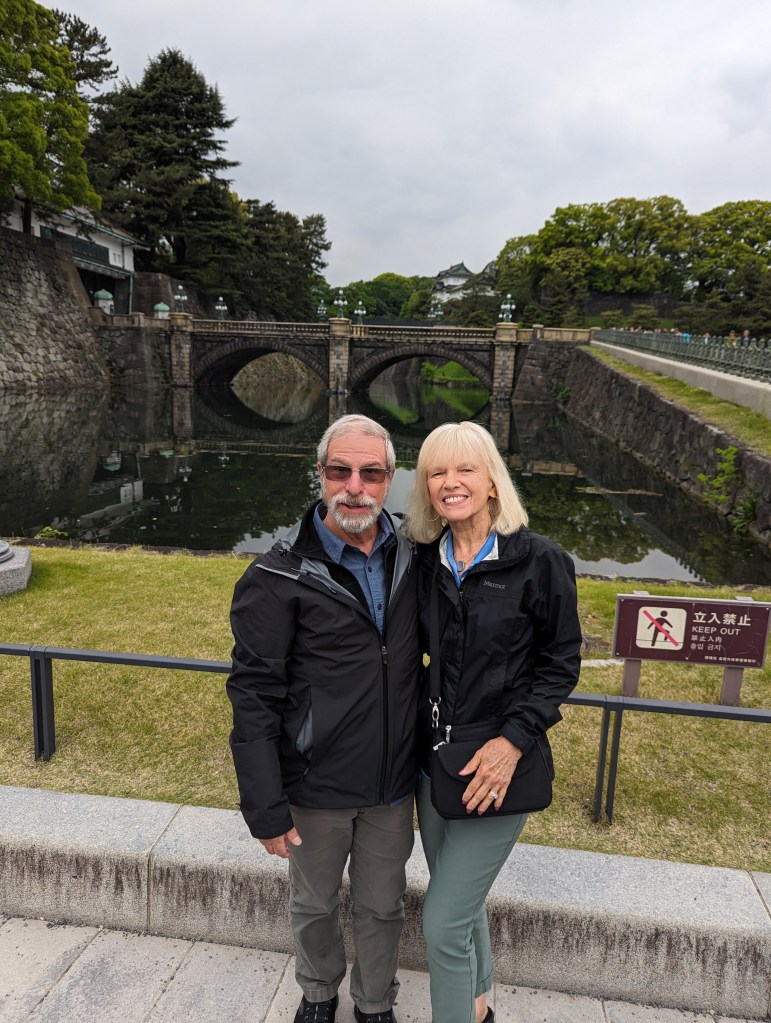
The Imperial Palace is the main residence of the Emperor of Japan. It is surrounded by a park-like area and contains several buildings—the living quarters, the main palace where ceremonies take place, some residences of the Imperial Family, museums and administrative offices. The Palace is closed to the public, except for two occasions. The first occasion is on January 2nd, which is called “People’s visit to the Palace for New Year Greetings,” and the other occasion is on December 23rd, which is the Emperor’s Official Birthday.
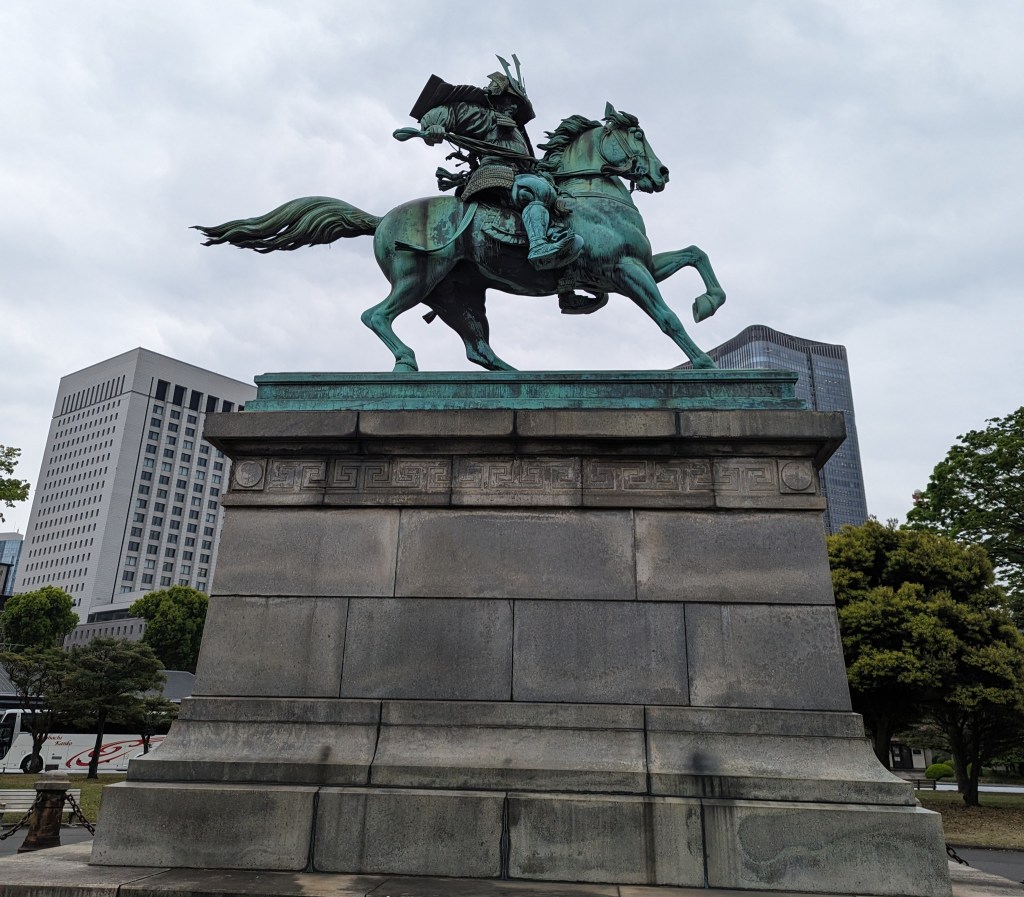
Imperial Palace Main GateNijubashi Bridge or “Stone Bridge of the Main Gate”Kusunoki Masashige, famous military commander loyal to the Emperor and fought for him in the Genko War 1330
Sensō-ji Buddhist Temple:
The Sensō-ji Temple is Tokyo’s oldest temple (645 AD), and is the most widely visited religious site in the world with over 30 million visitors annually. It is dedicated to Kannon, the bodhisattva of compassion. It was destroyed in an air raid in 1945, and rebuilt in the 1950s.
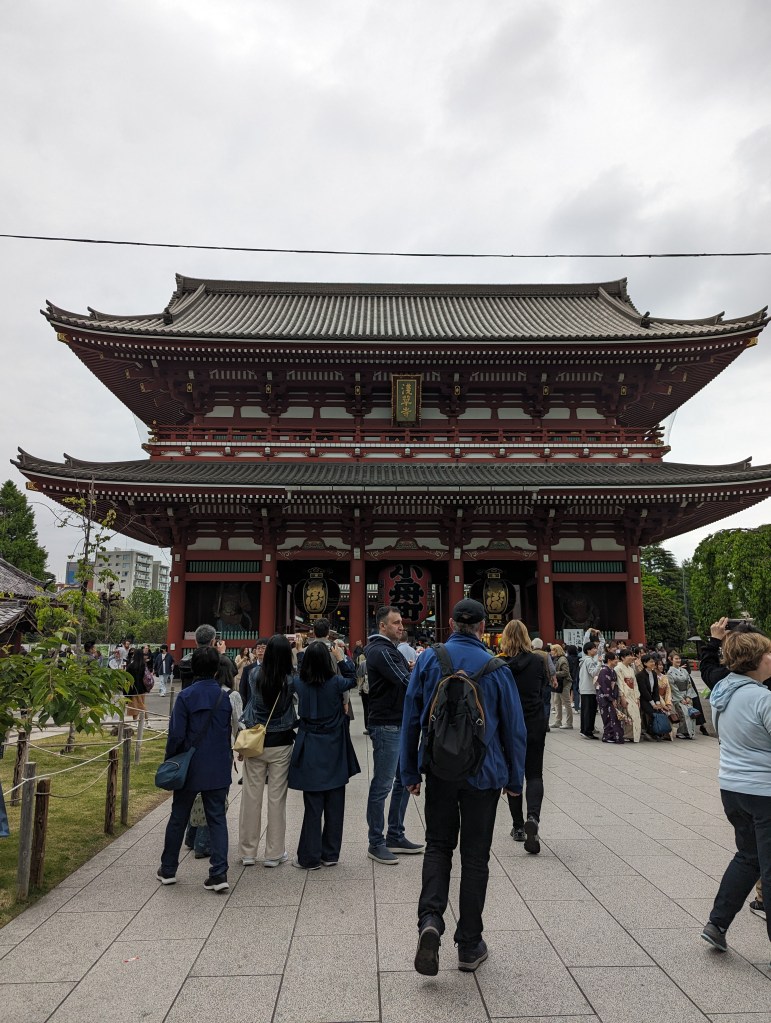
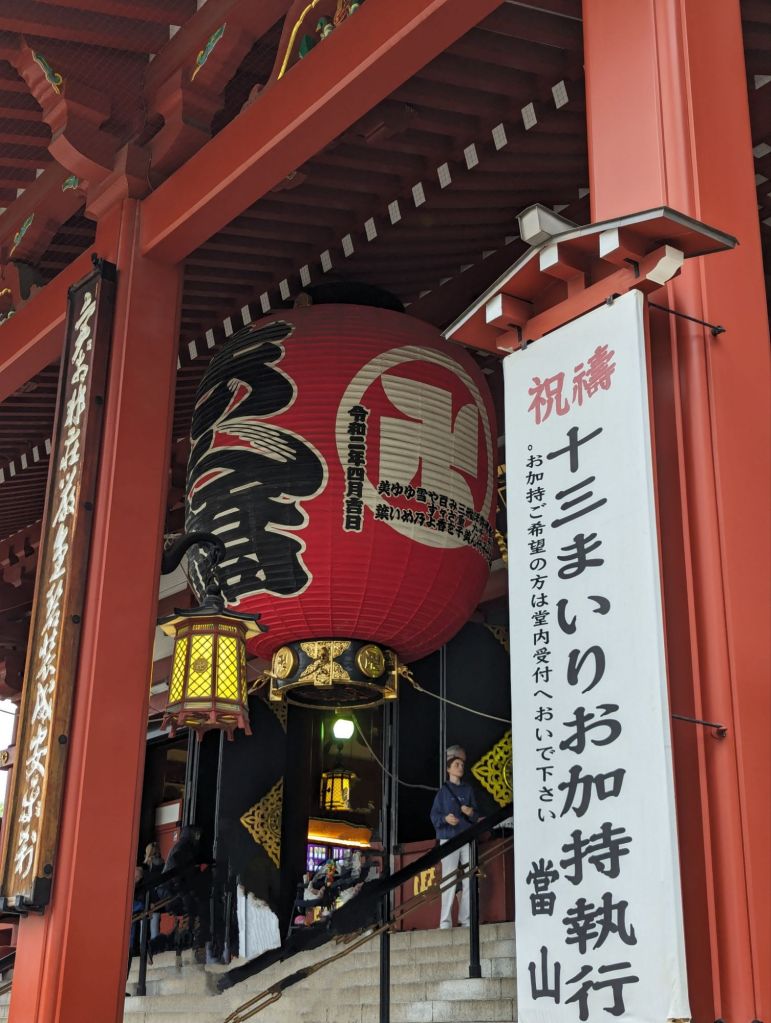
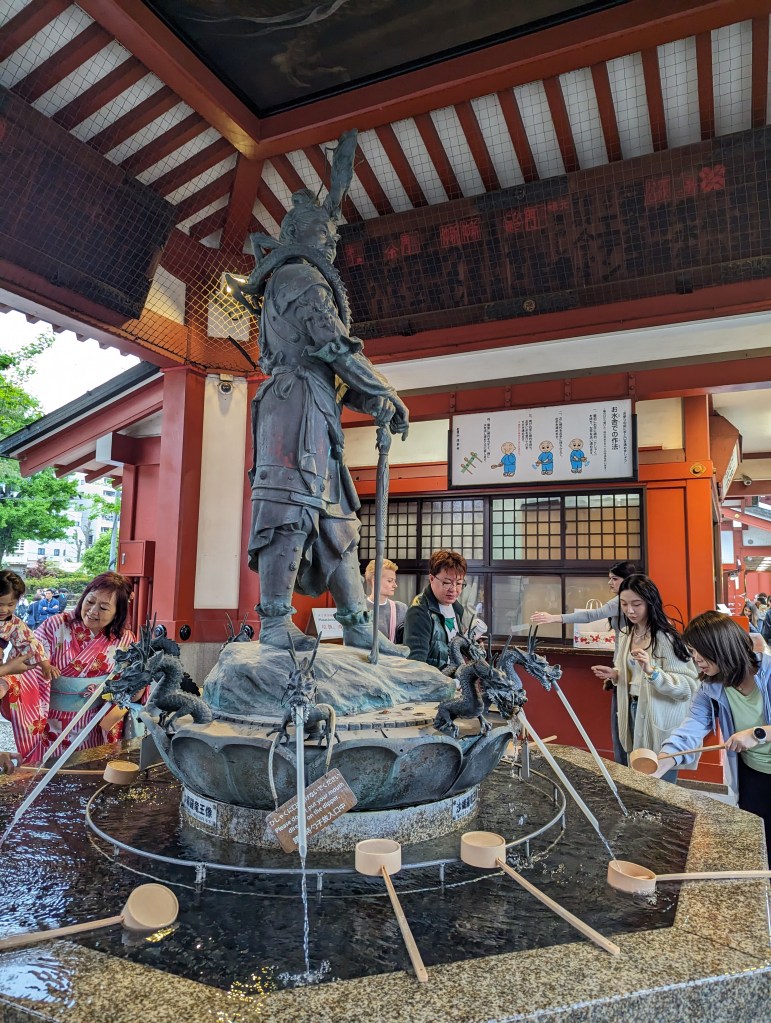
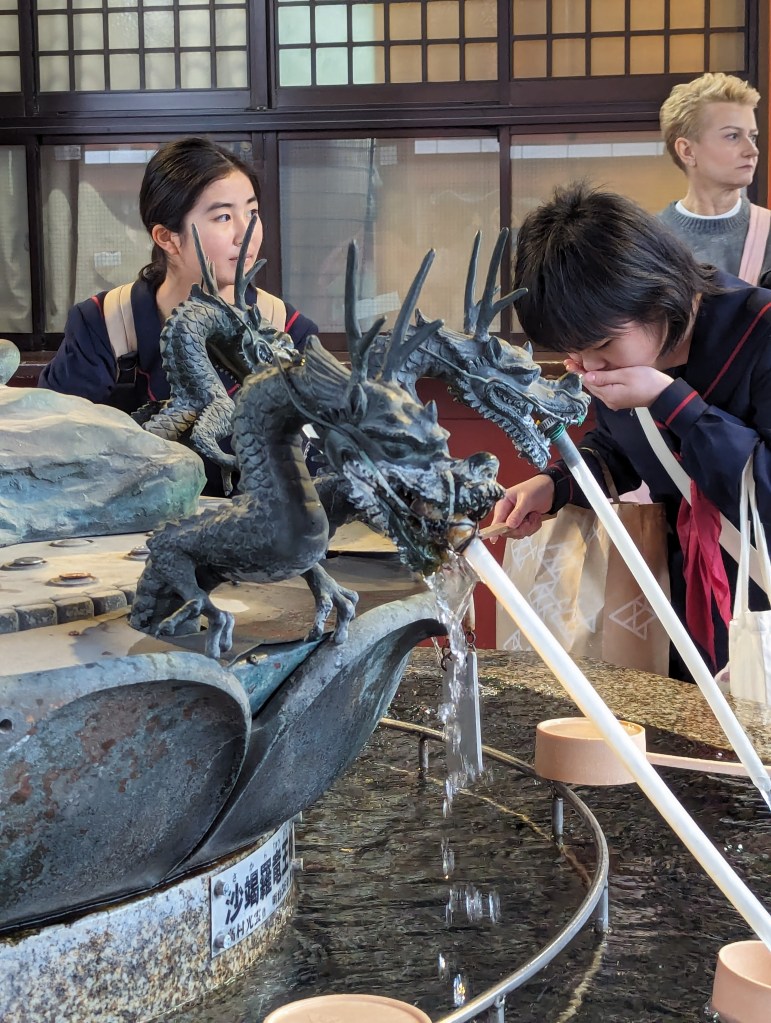
Hozo-man Gate or “Treasure House Gate” and the Five-Storied PagodaMain Prayer Hall (Hondo) EntranceHigh Altar in the TempleDragon Fountain (tsukubai) where people wash hands and rinse mouth to purify themselves before visiting the Temple
Bronze incense burner (Jokoro) filled with sand and ash where people insert incense sticks they’ve purchased. Visitors can wave the smoke—“breath of the gods”—over the part of their body that needs improvement or healing. Here, Joe waves the smoke over his head, either to gain brain power or grow hair.
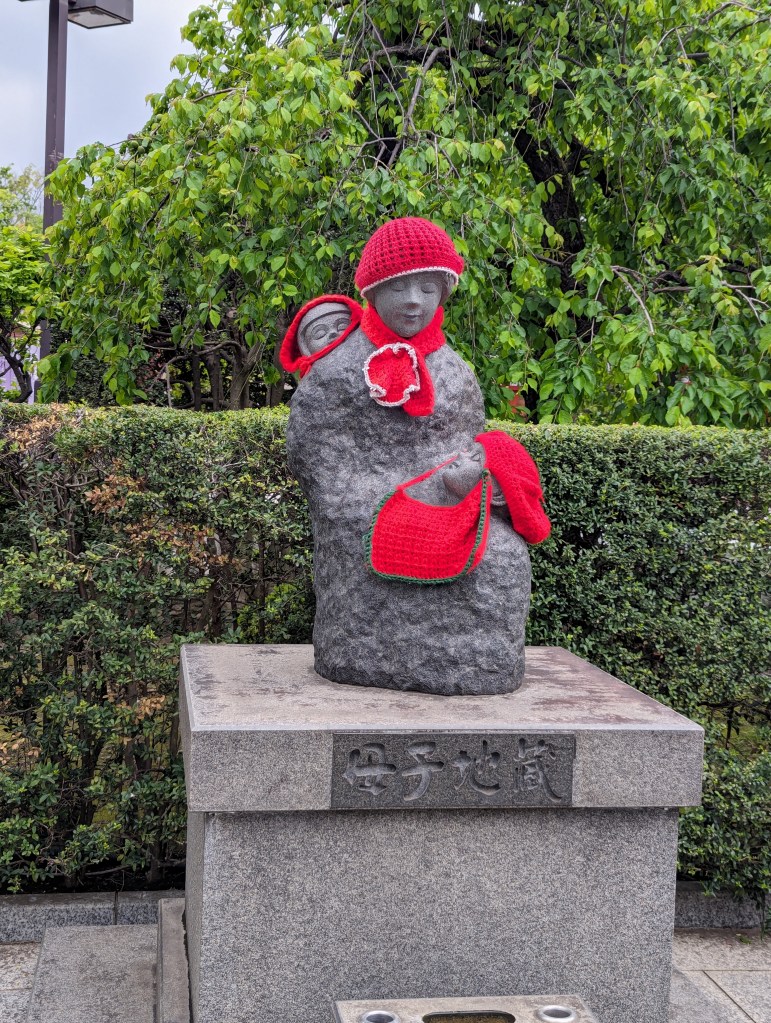
Looking from the Main Prayer Hall toward the Hozo-man GateJIZO STATUE: Jizo is a deity loved by Japanese people. These statues are places in Buddhist temples, at the side of the road in the countryside, and at the corner of some streets in the cities. The role of Jizo is to protect children. It also protects the souls of children who died before their parents. Japanese believe the color red defends against evil. Babies are dressed in red to protect them from illness and danger. Worshippers offer bibs and hoods to wish for a baby’s protection from illness and danger, while others who have lost their baby pray for the spirits to go to heaven without suffering.
Heading from the Prayer Hall, past the incense burner and through Hozo-man Gate, you enter NAKAMISE-DORI STREET, which is the oldest shopping street in Tokyo, dating to the 17th century. It’s lined with shops—most owned by the same families for several generations—and top-class street food vendors. The 90 stalls sell everything from Japanese forged steel knives or even samurai swords to kimonos and silk fans to sweets made of sweet potato paste or green tea matcha ice cream.
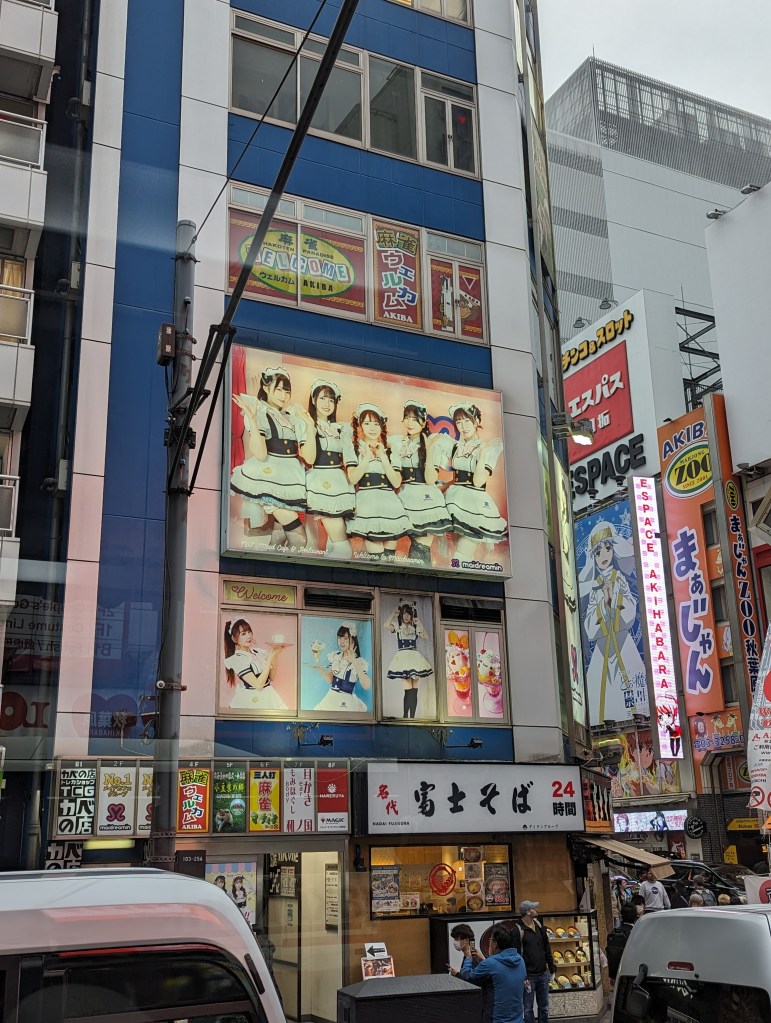
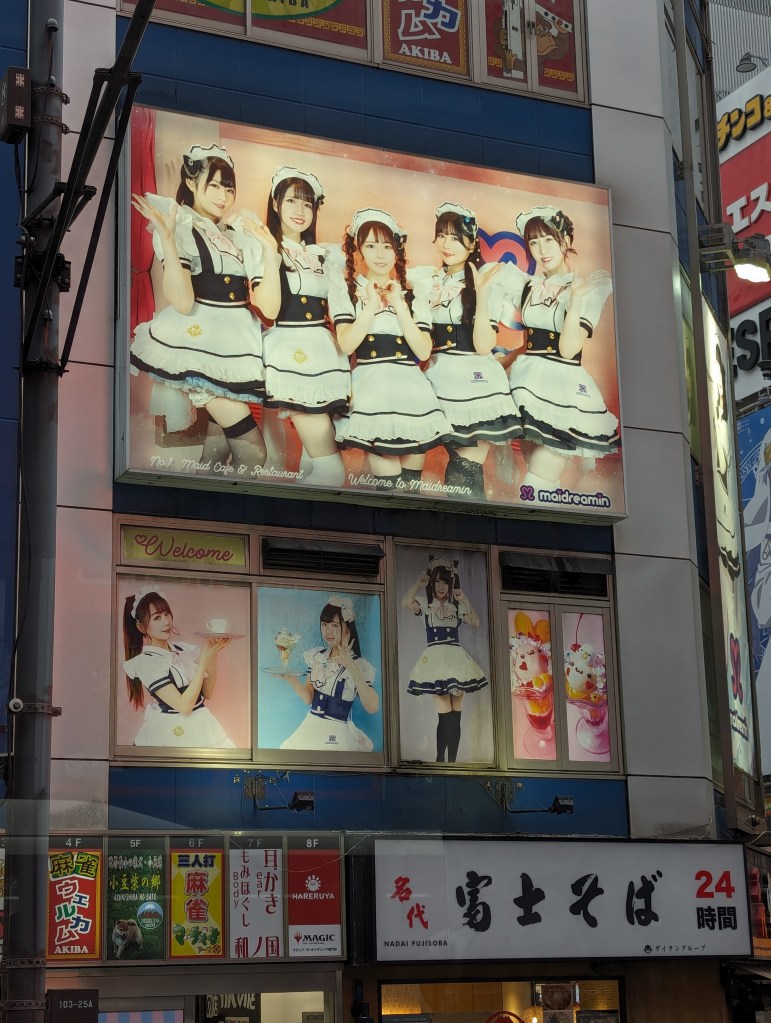
On the way to our hotel, we passed the JAPAN MAID CAFE in the Akihabara district of Tokyo, aka Electric Town, known for its electronics shops, gaming arcades, and anime. At the Maid Cafe, young girls dressed as maids greet customers as “Master” and “Princess,” and serve kawaii (cute) food, such as using ketchup to draw cute animals such as rabbits, cats or dogs on omurice (omelette rice). Besides serving food and drinks, maids also perform song and dance. It is absolutely forbidden to give maids your contact info, ask personal questions, or touch them or their clothing. And taking photos of the maids is also not allowed.
One response to “Tokyo tour with local guide (April 23, 2024)”















 Deb's Blog
Leave a comment