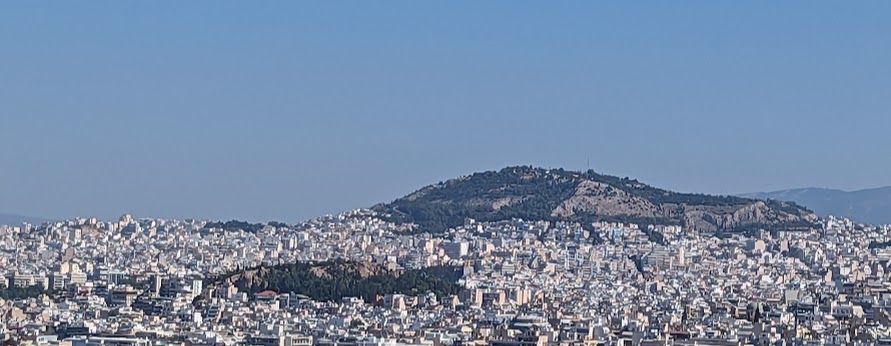
Climbing to the Acropolis was a once-in-a-lifetime experience for me. When I was in grad school as an art history major, one of my favorite classes was Greek Art and Architecture, taught by Professor Jeffrey Hurwit, one of this country’s leading scholars of ancient Greek art . I loved the ancient Greek pottery even more than the temples and statues of the gods. But I longed to stand on the Acropolis overlooking Athens where, in the words of UNESCO, Democracy, Philosophy, Theatre, and Freedom of Expression and Speech were born. Even though we had to slowly make our way with the crowds to the top, it was still awesome. I was also in awe of a 90-year-old woman in our tour group who was told that the elevator wasn’t working, and yet she was determined to get to the top using her walker. I hope I’ll be just as plucky if I’m lucky enough to reach 90.

The Acropolis covers 7-1/2 acres and rises nearly 500 feet above the IIissos Valley. All that remains of the monuments on the Acropolis today are: the Parthenon, the Propylaeum, the Erechtheion and the Temple of Athena Nike. In 1975, the Greek government began a full-scale restoration of the remaining monuments which continues to this day.
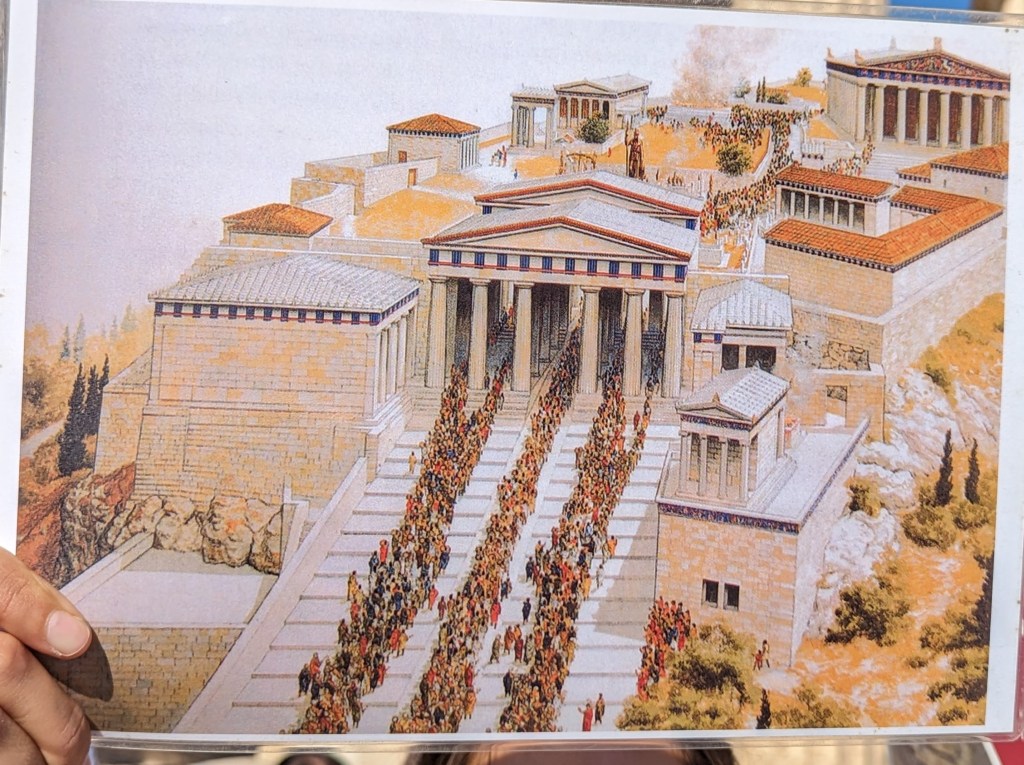
The Parthenon was built in 447 BC for the Hellenic victory over the Persian Empire invaders during the Greco-Persian Wars. It was dedicated to the goddess Athena and served as the city treasury.

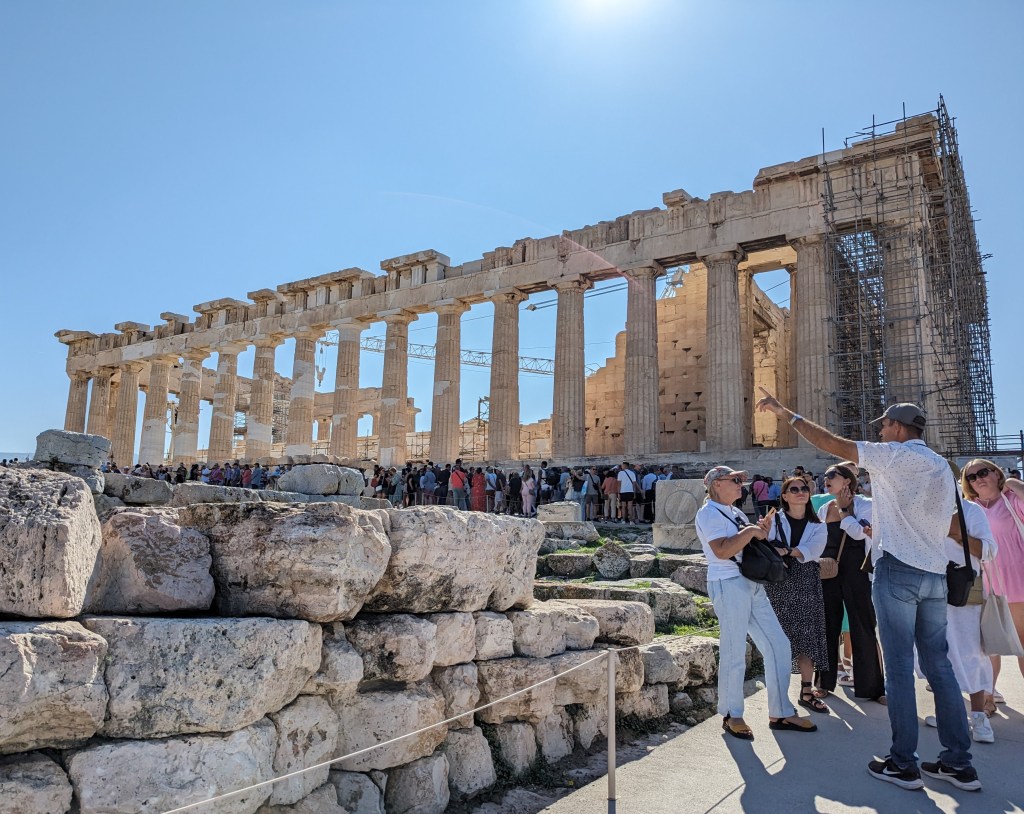
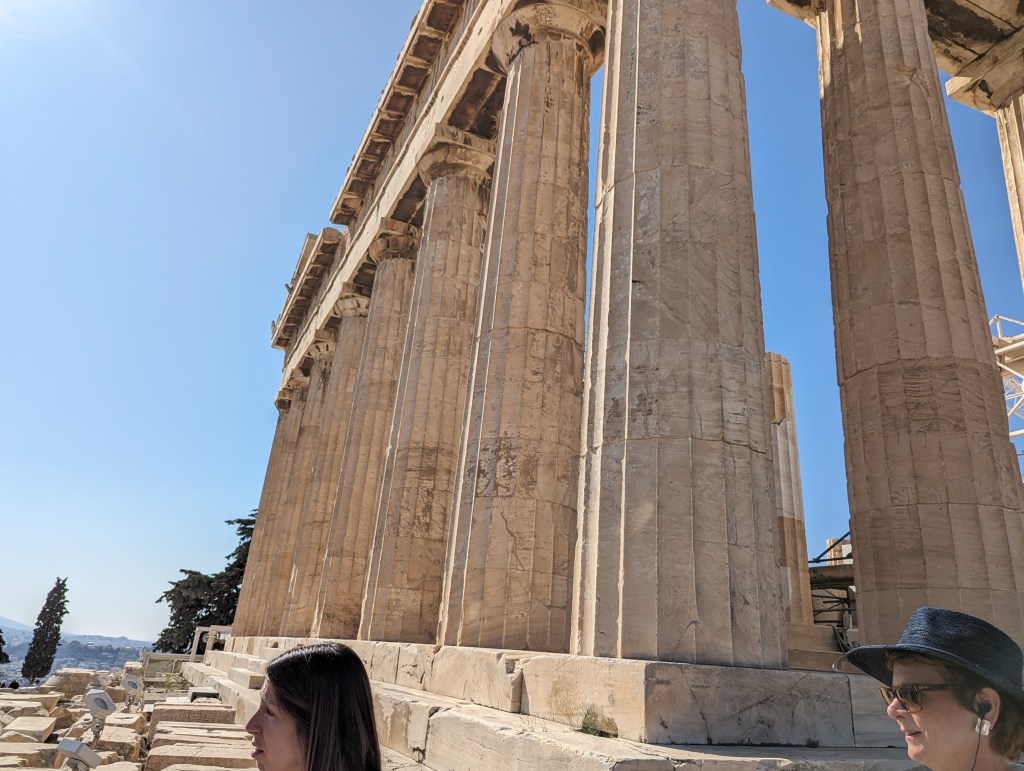

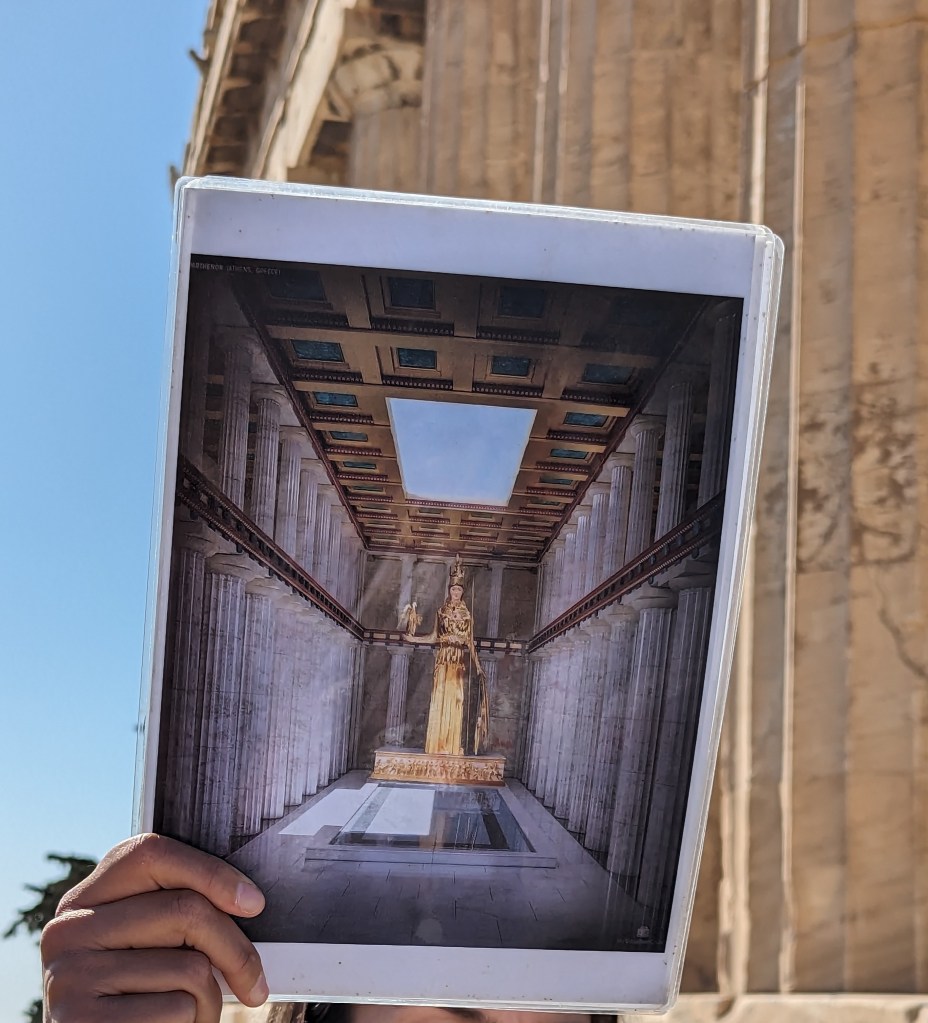
A 38-foot tall statue of Athena Parthenos (Athena the Virgin) stood in the cella (inner chamber) of the Parthenon. It’s attributed to the sculptor Pheidias and a team of craftsmen and dated to the mid-5th century BCE. The statue was probably built around a core of cypress wood, and then paneled with gold and ivory plates. Sometime between the 5th and 7th century, the Parthenon was transformed into a church. It may have been at that time that the statue was either destroyed or taken to Constantinople.
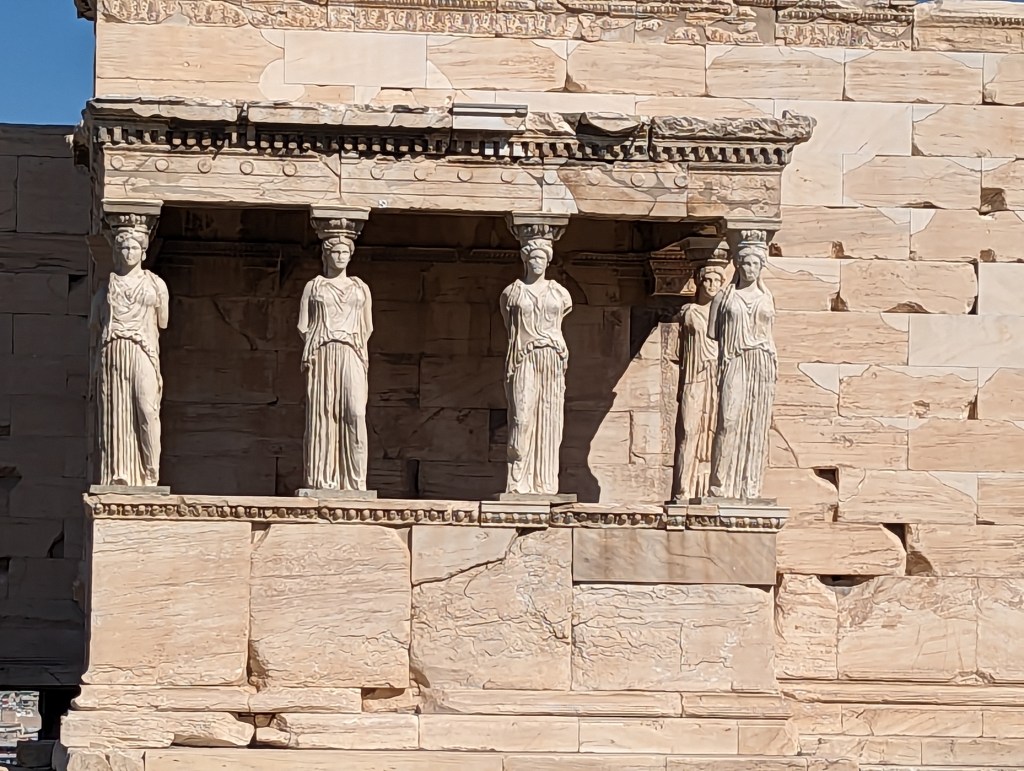
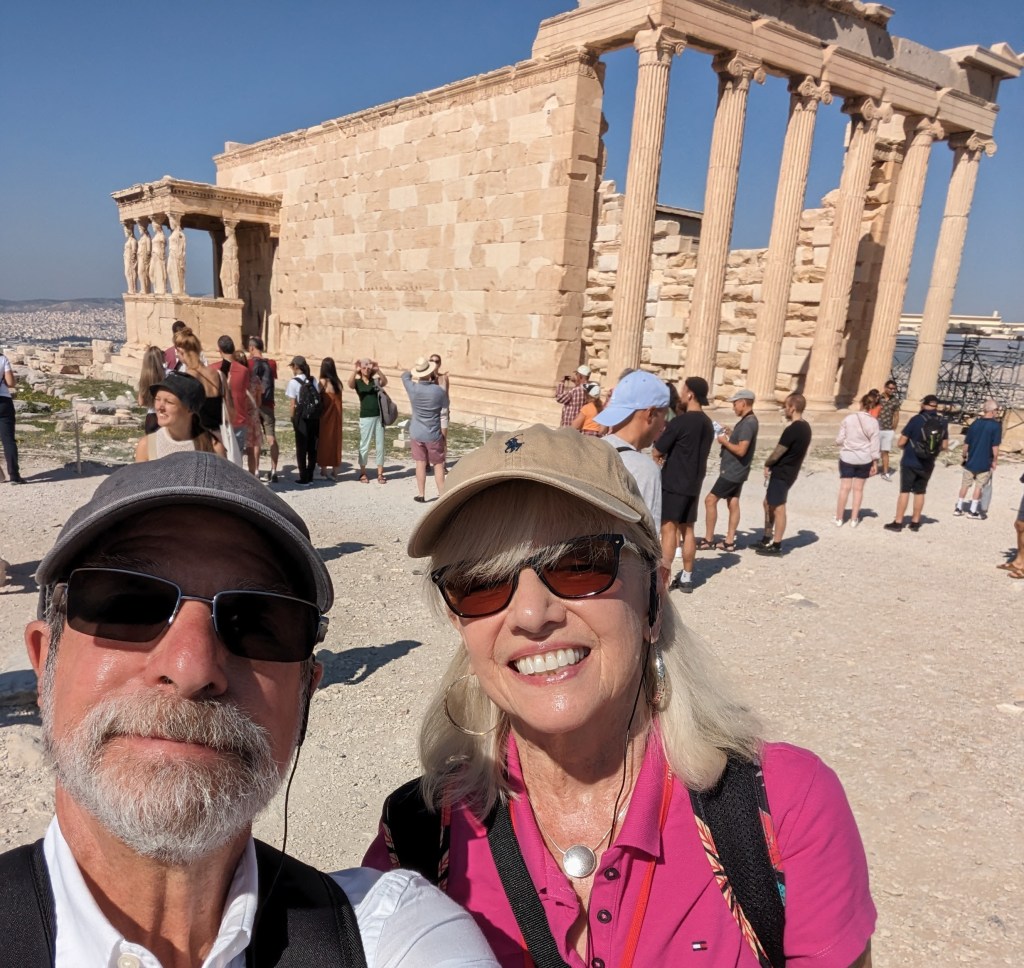
The Erechtheion, also known as the Temple of Athena Polias (goddess of the city) was built in the 430s BC. It was dedicated to the goddess of Athena and made to house a statue of her. The identity of the architect is unknown. The main identifying structure is the Porch of the Maidens, consisting of 6 sculpted female figures or caryatids which support the entablature (cornice, frieze and architrave). The caryatids were young women who worshipped Artemis (goddess of childbirth) in the town of Caryae near Sparta through dance.


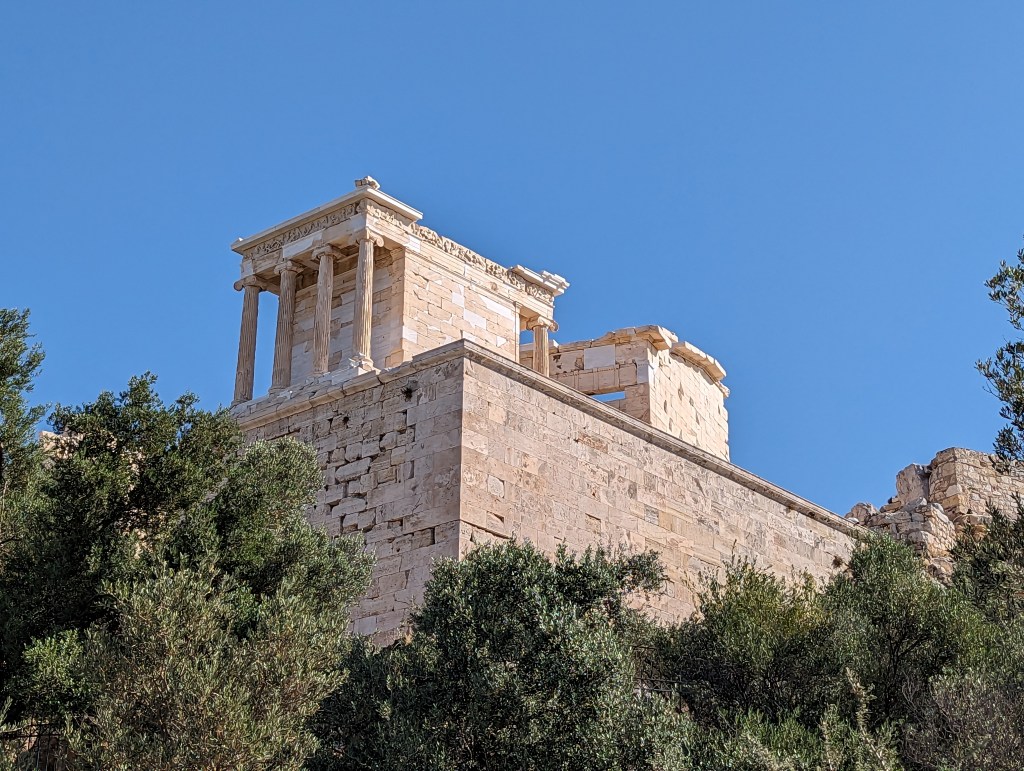
The Temple of Athena Nike (goddess of victory) is the smallest temple on the Acropolis, built 421-05 BCE. It housed a statue of Athena without wings, and was called Athena Apteros (without wings). The ancient Greek writer Pausanias explained that the statue had no wings so that Athena could never leave Athens.
The Odeon of Herodes Atticus is a restored ancient Roman theater (160-174 CE) that hosts Greek and international performances. It was restored in 1952 and seats 5,000.


Professor Hurwit emphasizes the importance of the Acropolis as a symbol of national identity: “The Acropolis stands as what might be called the central repository of Athenians’ conceptions of themselves. These monuments and sculptures presented images of the gods and goddesses—Athena herself above all—and also of the Athenians and their heroes. To walk through the classical Acropolis was to traverse a marble paean [anthem] to Athens itself.”
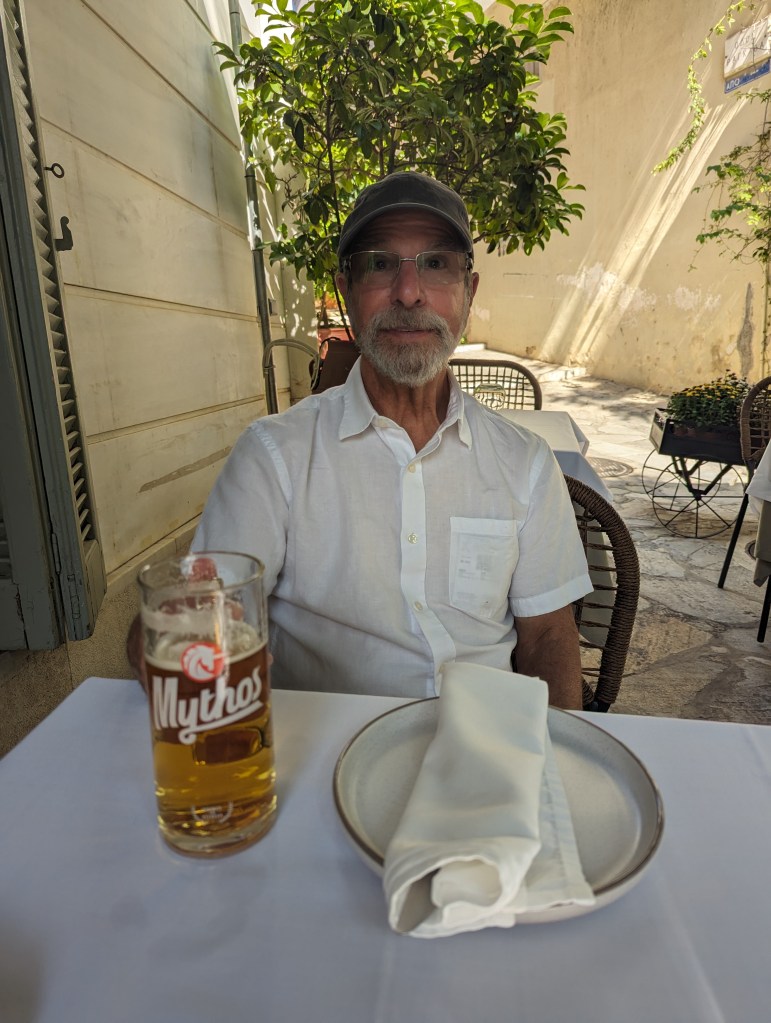
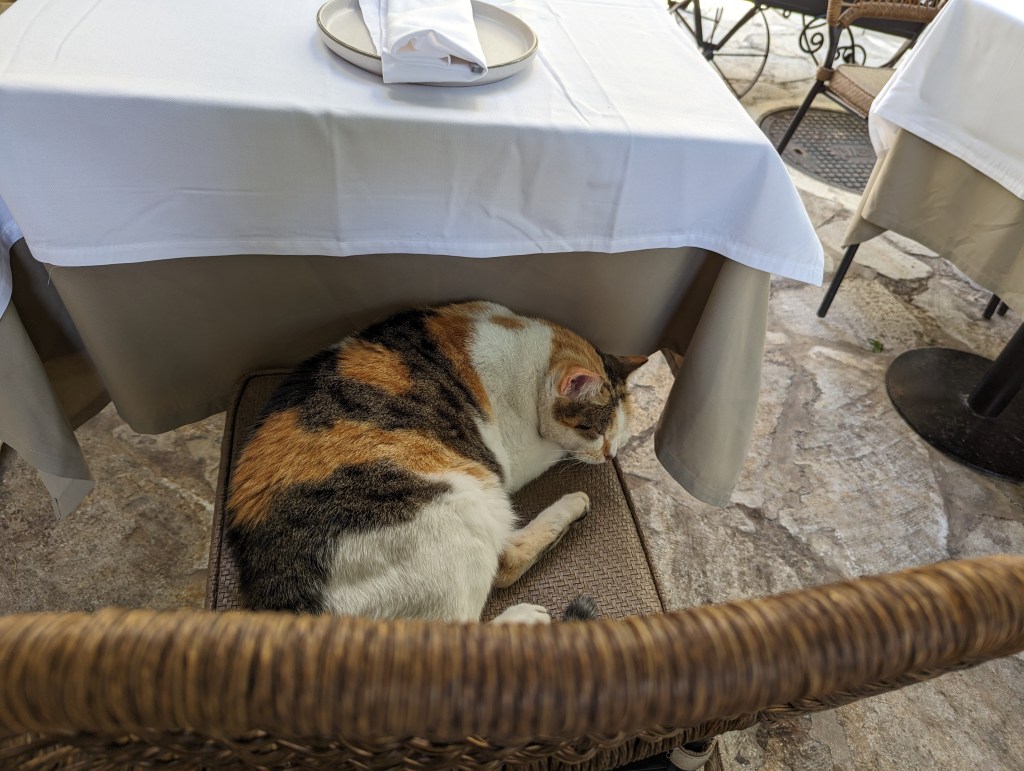
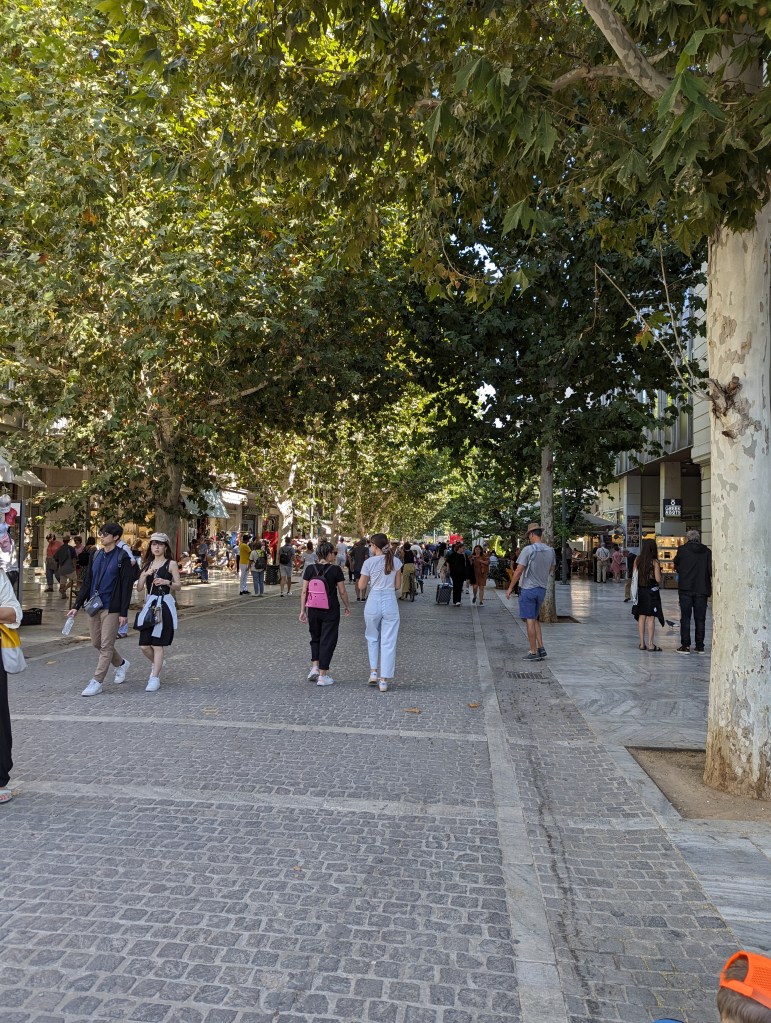
After touring the Acropolis, we walked through the Plaka District, the oldest section of Athens. Most of the streets are for pedestrians only, and are lined with restaurants, jewelry stores, and tourist shops. We stopped to cool off and have a beer. It had been a long but very satisfying day.




 Deb's Blog
Leave a comment